It’s 2026, and I still feel the low, resonant hum of Batman: The Animated Series echoing through every dark alley of pop culture. That show didn’t just air—it settled into the architecture of my imagination like a cathedral carved from gothic shadow, its bell toll heard years after the final note of Shirley Walker’s score faded. As a lifelong gamer and animation obsessive, I’ve spent decades craving the same cocktail of noir melancholy, visual grandeur, and emotional maturity. What I discovered was an entire industry of shows chasing that bat-shaped silhouette, each one a different-colored glass shard of the same shattered window.
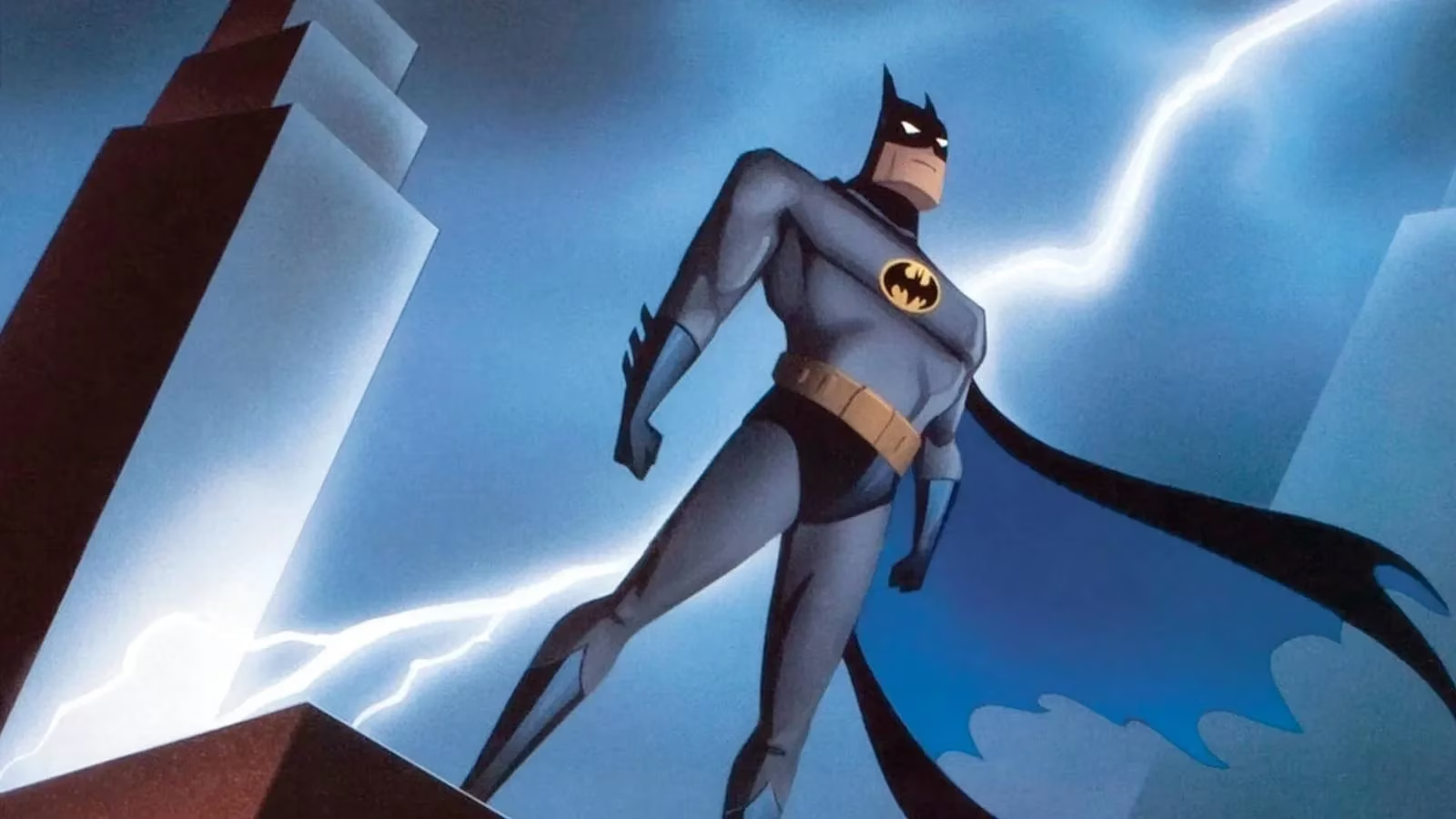
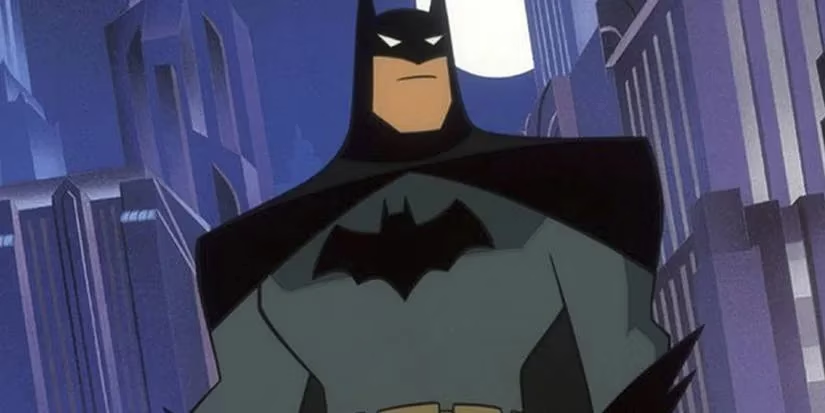
The immediate successor arrived with The New Batman Adventures—essentially a rebranded third season that sharpened its pencils and its psyche. The character models grew more angular, the Joker’s grin more unsettling, like a smile carved into a jack-o'-lantern left too long in the rain. It refined the dynamics without reinventing the wheel, pushing the darkness a notch further while keeping the familiar gothic skyline intact. If Batman: TAS was a charcoal sketch, The New Batman Adventures was the same image rendered in ink—bolder, harsher, but unmistakably the same artist’s hand.
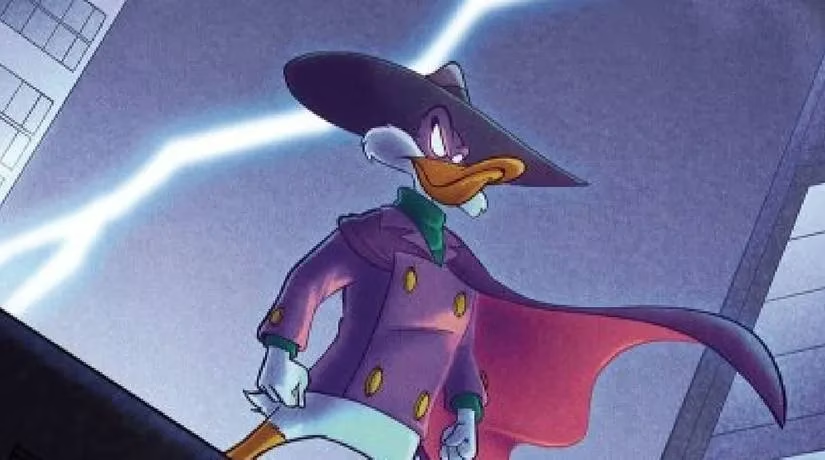
Then came the echoes from unexpected places. Darkwing Duck, at first glance, was a carnival mirror—silly, slapstick, brightly colored. Yet St. Canard’s skyline was undeniably molded from the same clay as Gotham, and Darkwing’s theatrical brooding was Batman filtered through a Saturday-morning prism. It proved the aesthetic was adaptable, a gateway drug for younger viewers. I remember watching it as a kid, thinking of it as a gothic sundae with extra sprinkles, the darkness softened but never entirely dissolved.
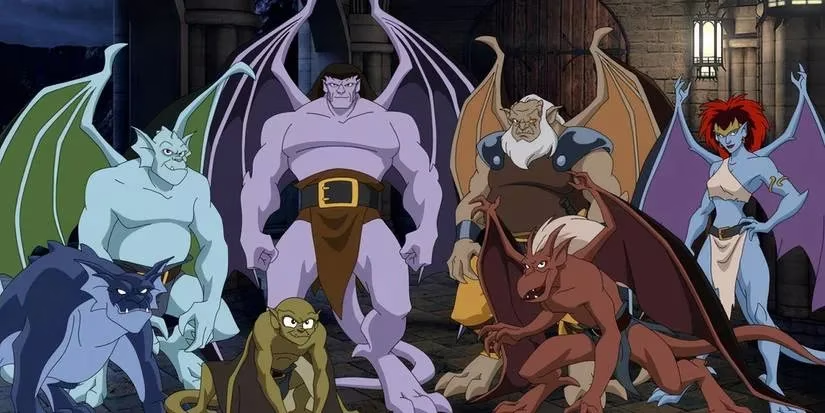
Gargoyles was a different beast entirely—an epic fantasy wearing the skin of a superhero show. Many of its writers had honed their teeth on Batman: TAS, and it showed in the narrative complexity that unfurled like ivy across ancient stone. The show traded noir detective beats for Shakespearean tragedy and Celtic myth, but the emotional maturity, the trust in its audience to grapple with loyalty and loss, was pure Batman DNA. It was as if the gothic cathedral had been transplanted onto a misty Scottish moor and filled with chanting monks.
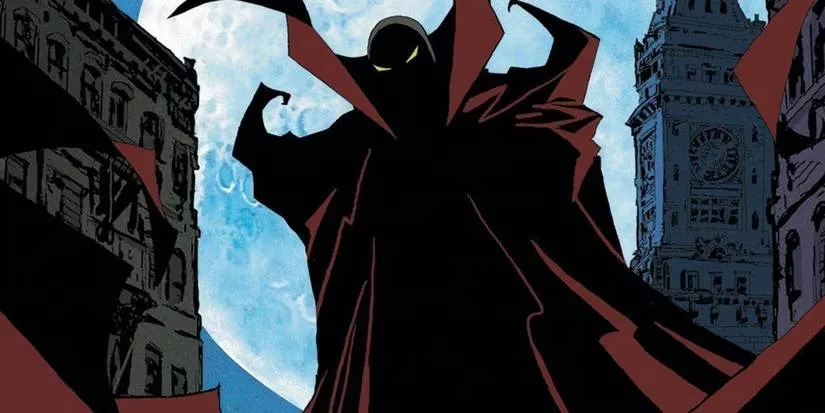
On the opposite end of the spectrum, Spawn: The Animated Series lunged into territory Batman: TAS could only imply. With key creatives like Eric Radomski and Shirley Walker carrying the torch, this HBO series felt like the original show’s dark reflection—a mirror that showed not just the man but the raw, bleeding soul underneath. It embraced graphic violence and psychological bleakness, a grim evolution that proved mature animation inspired by Batman: TAS could thrive outside Saturday morning’s constraints. Yet its shadow was so thick you could barely see the hero.
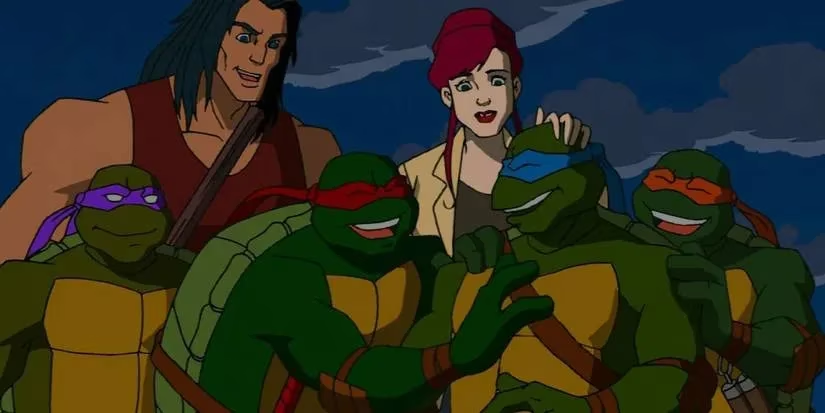
The early 2000s brought a surprise contender: Teenage Mutant Ninja Turtles (2003). Gone was the pizza-fueled slapstick; in its place, a serious, serialized saga of discipline and brotherhood. The show’s shadow-heavy visuals and commitment to consequence felt like taking a tram from the sewers straight into Gotham’s underbelly. It redefined what an action cartoon could be, trusting children with complex narratives just as Batman: TAS had done a decade earlier.
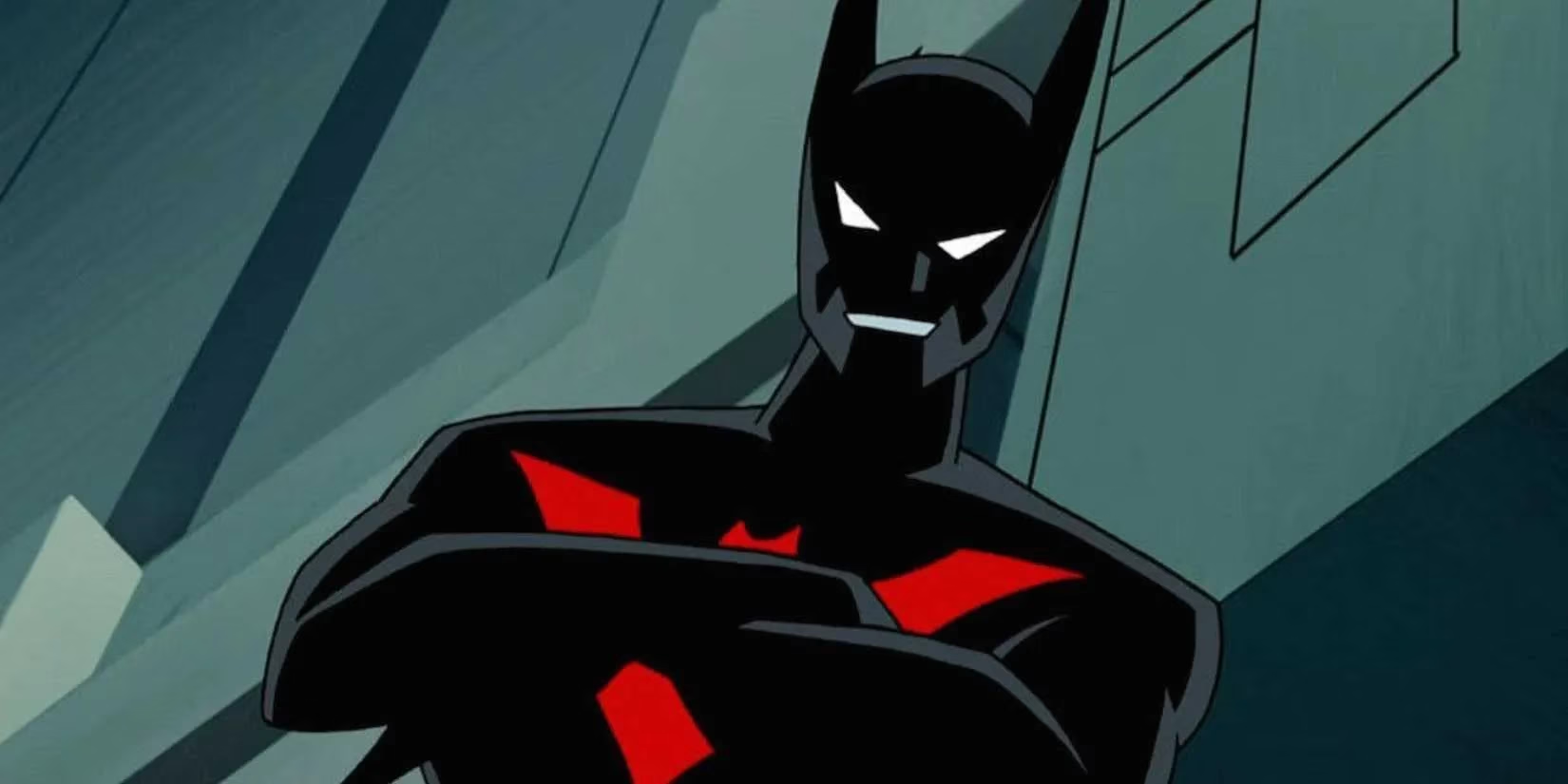
Officially, the spirit continued with Batman Beyond. By swapping gothic noir for cyberpunk neon, it proved the formula could jump timelines without losing its soul. The pain of legacy, the mentorship between Bruce and Terry, the psychological villains—all remained. It felt less like a departure and more like discovering that the cathedral’s blueprint also worked for a skyscraper.
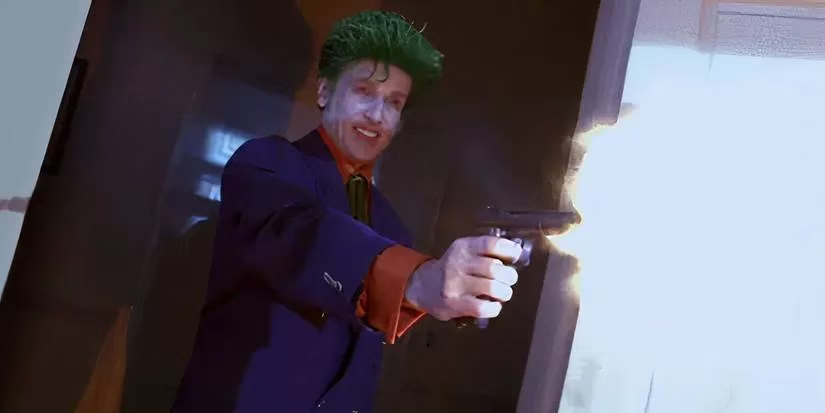
Live-action attempts to bottle that lightning were rarer, but Birds of Prey (2002) dared to translate the operatic tone directly. Exaggerated sets, theatrical performances, and Mark Hamill reprising his Joker blurred the line between cartoon and reality. It was surreal, uneven, but unmistakably an attempt to treat Gotham as a dark fantasy stage rather than a city.
The Batman (2004) offered a sleeker, more futuristic take, yet the gloom remained. Its minimalism and character psychology echoed the original’s focus on growth. It felt like Batman: TAS for a new generation—a remix rather than a remake, but the beat was familiar.
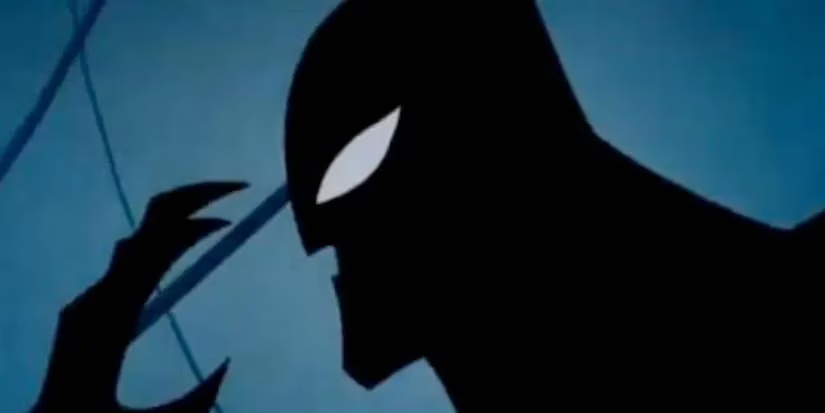
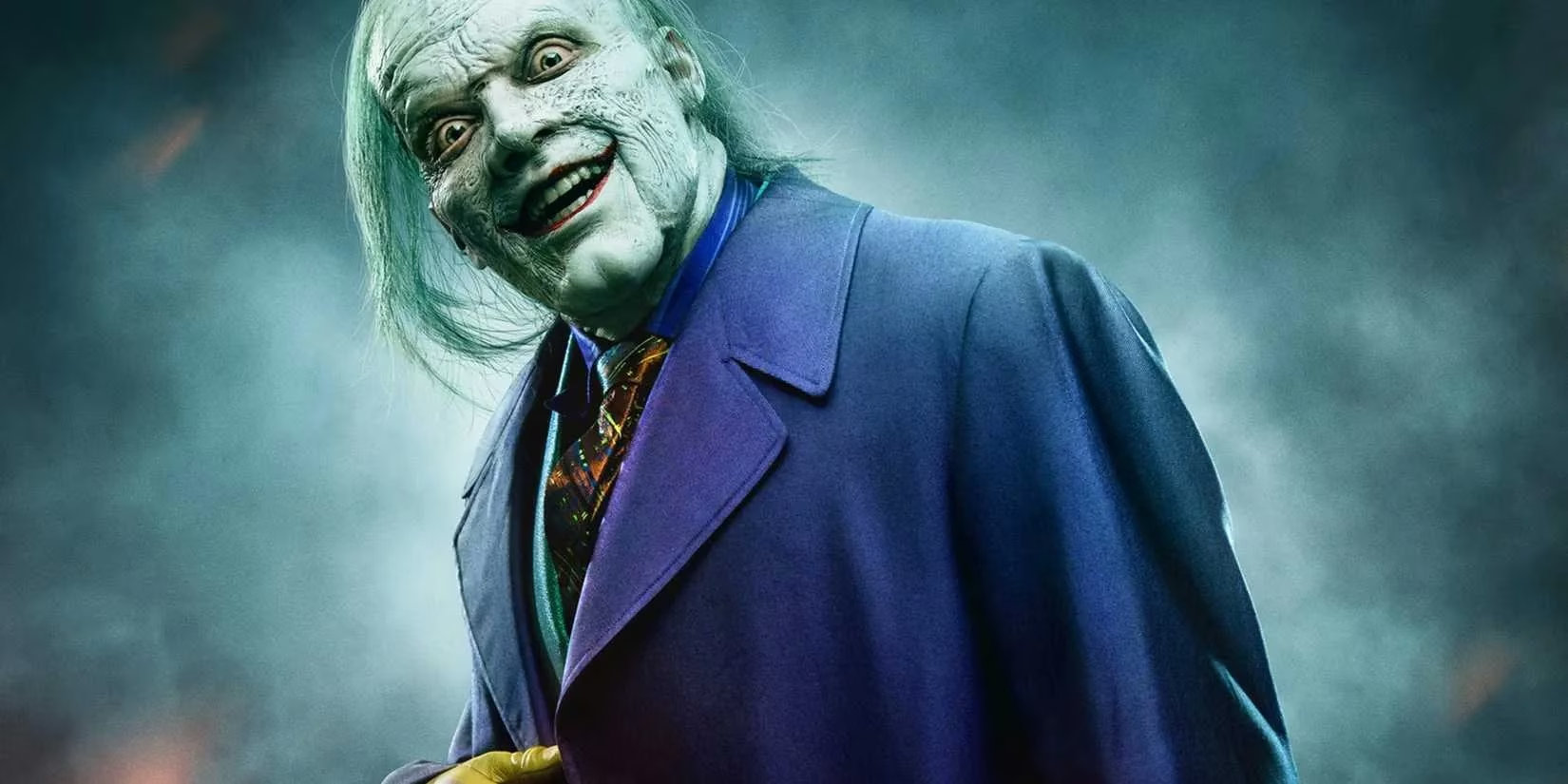
Then came Gotham, a prequel series that embraced the bizarre. Its timeless, art deco architecture and heightened performances felt like a direct bridge to the animated universe. In spirit, it was an adult reinterpretation of the same gothic worldview, letting characters breathe in a world where logic took a backseat to atmosphere.
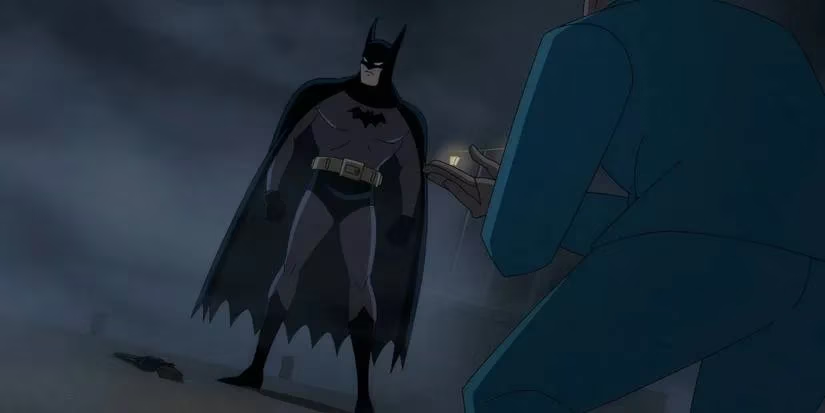
Finally, the most direct spiritual successor: Batman: Caped Crusader. Created by key figures from the original, it deliberately resurrects the 1940s noir aesthetic and moral ambiguity. Watching it in 2024 felt like stepping through a time portal—every frame is a love letter to what Batman: The Animated Series might be if crafted today without compromise.
Reflecting on these shows, I see a legacy not of imitation but of inspiration—a long tail of creative ambition ignited by a single, towering work. Below is a brief table that traces the shadows they cast, each with its own emotional resonance:
| Show | Tone & Focus | How It Chases the Shadow |
|---|---|---|
| The New Batman Adventures | Darker, more psychological sequel | Literal continuation, same soul |
| Darkwing Duck | Comedic parody with heart | Gothic visuals through a funhouse mirror |
| Gargoyles | Epic fantasy and tragedy | Moral complexity and shadowy grandeur |
| Spawn: The Animated Series | Bleak, R-rated horror | Pushed maturity further than the original could |
| TMNT (2003) | Serious serialized action | Trusted young audiences with depth |
| Batman Beyond | Sci-fi legacy story | Evolved the formula without losing emotional weight |
| Birds of Prey | Operatic live-action | Cartoon logic brought to real actors |
| The Batman (2004) | Sleek, modernized gloom | Adapted core psychology for a new era |
| Gotham | Eccentric prequel drama | Timeless gothic aesthetic in live action |
| Batman: Caped Crusader | Direct noir revival | Intentional recreation of the original’s atmosphere |
Each of these shows understood that a shadow is not the absence of light but the presence of an object blocking it. They didn’t simply copy; they refracted the same beam through their own prisms, creating a spectrum of styles that, even in 2026, continues to shape how I see heroes, darkness, and the stories that linger long after the credits roll. 🦇✨