In the rain-slicked alleyways of my memory, there are faces that haunt me more than any specter of the night. Among the grotesque gallery of rogues I’ve faced, one visage is etched with a particular, painful duality. It’s Harvey Dent’s face, or what remains of it, split by fate and acid into the scarred canvas of Two-Face. Of all my adversaries, he is the one I pity most. He wasn't just Gotham's White Knight, the District Attorney who stood in the light; he was Bruce Wayne's friend. He was a confidant to the Batman, a man who understood the thin line between justice and vengeance before he was forced to live on both sides of it. I know the good man is still in there, buried beneath the scars and the rage, and with every flip of that cursed coin, he slips a little further from my reach, from salvation. It's a real gut-punch, you know? Watching a friend disappear into the monster he became.
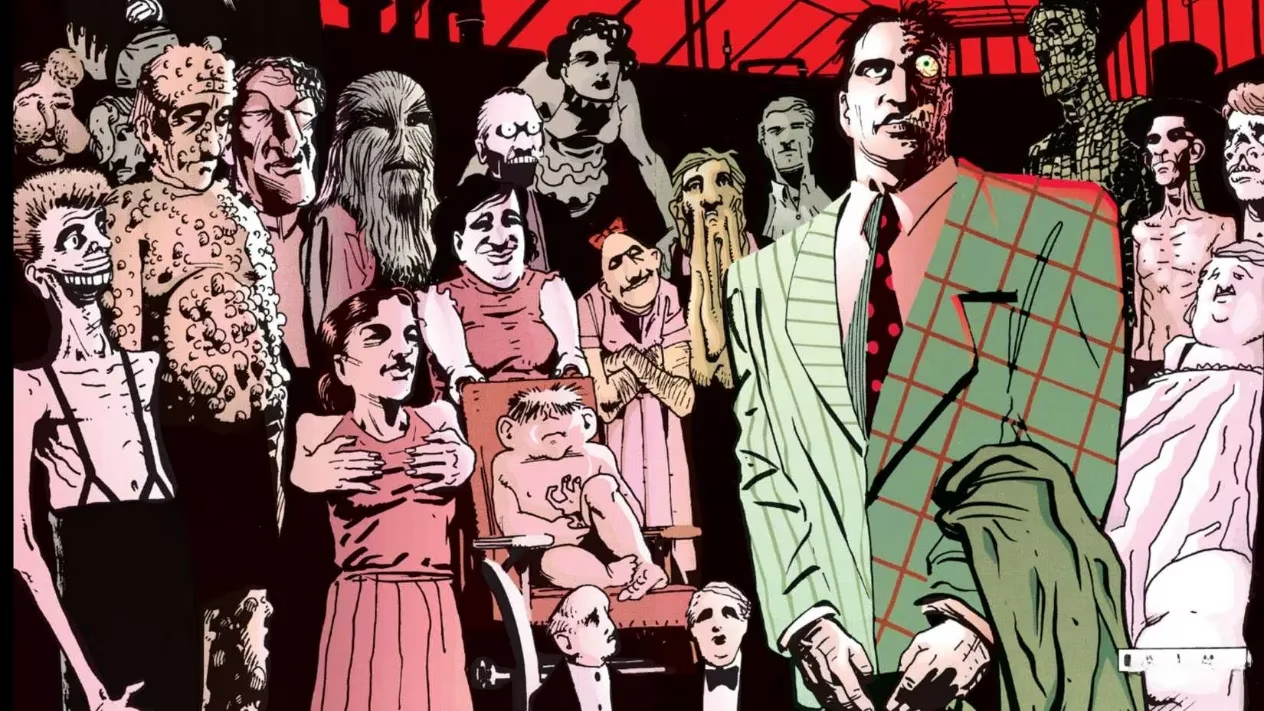
Many tales have tried to capture the shattered soul of Harvey Dent, but one story, Matt Wagner's "Faces," published in Batman: Legends of the Dark Knight, cuts closer to the bone than any other. Wagner drapes the narrative in the shadowy cloak of film noir, a genre that feels like Gotham's native tongue. In this story, Two-Face is a master of misdirection, sending me on a frantic chase across the city to save plastic surgeons while he orchestrates a grand, twisted scheme. His plan? It’s devious, yet cloaked in a warped empathy that makes it all the more tragic. He aims to purchase an island, a sanctuary he names, with chilling irony, "Deformity Nation." His intended citizens are those born with congenital conditions—hypertrichosis, polymelia, microcephalia. In his fractured mind, he is a philanthropist, a savior creating a better world for the outcasts. But the truth is far darker. He sees them, and himself, as irrevocably "other." His leadership isn't offered; it's a duty he imposes, whether they want him or not. It’s the ultimate act of a man projecting his own shattered self-image onto the world.
The story, born in 1992, whispers in the same unsettling key as the revived cultural fascination with circus sideshows. It echoes the uncomfortable legacy of films like Freaks and the modern spectacle of The Jim Rose Circus Sideshow. Like the X-Files episode "Humbug," "Faces" holds up a cracked mirror to humanity's darker instincts. But here, the tragedy is specific: a man from outside the community—a man of privilege, scarred by choice and chance—tries to force himself upon them as their messiah. As the plot unfurls, we see the grim reality: many of these people are being coerced, threatened, or kept in the dark. Two-Face, in his quest for a twisted utopia, ends up replicating the very exploitation of the old sideshows, trampling over their actual desires. Talk about history repeating itself in the worst way.
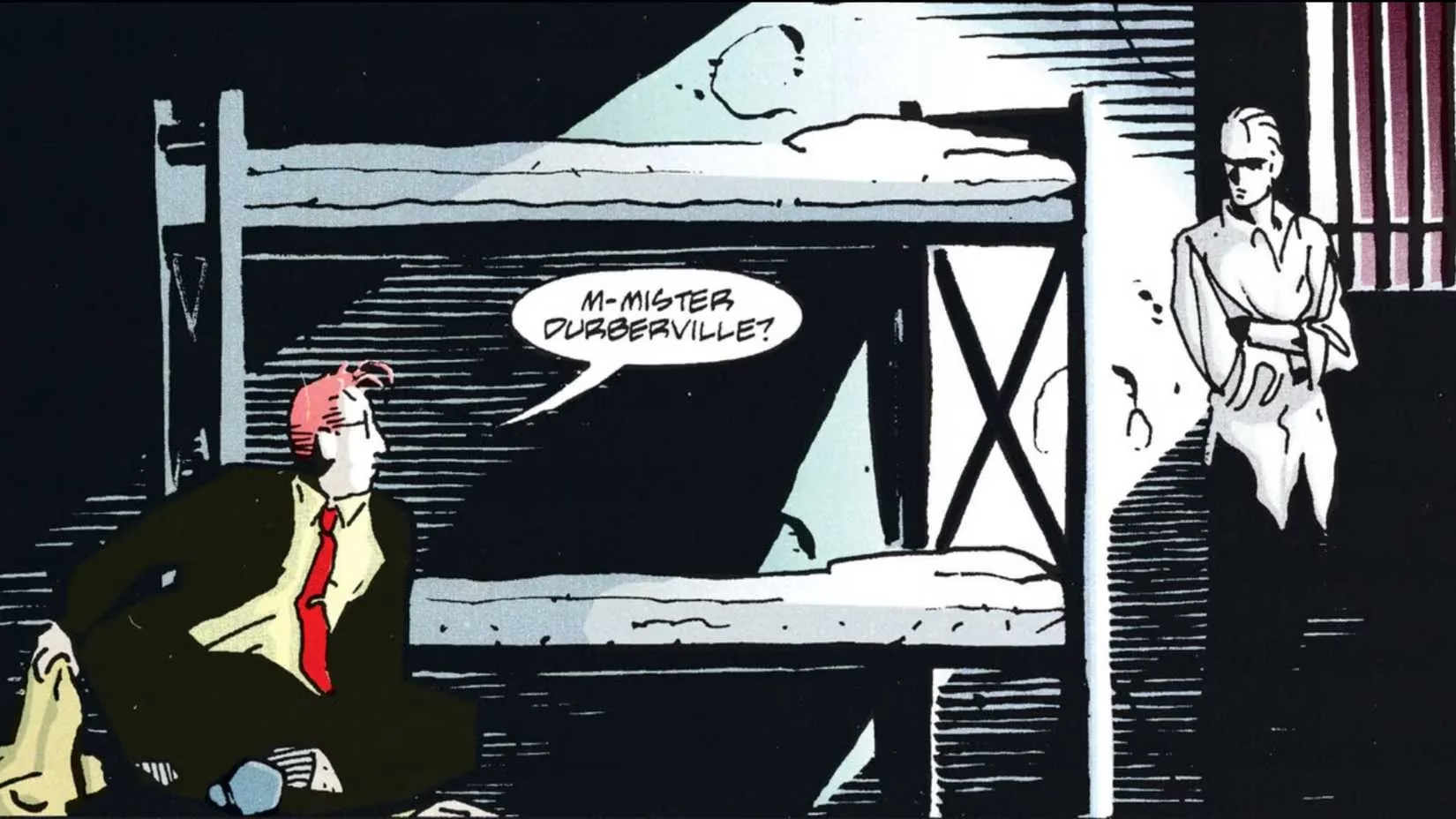
No noir tale is complete without the seduction of the weak and the exposure of buried secrets. The story weaves a web around two men:
-
Nelson Wren: A meek, ambition-starved real estate broker. His turn comes via the oldest temptation—power, symbolized by the beautiful Manon Barbé. Her seduction awakens a hunger for more in Wren, a hunger Two-Face expertly redirects into betrayal.
-
Paul D'Urberville: A billionaire with a pristine public image masking a lifelong secret—a physical imperfection his family has desperately hidden.
Two-Face, ever the master of duality, plays both sides against the middle. He exploits Wren's newfound avarice and unearths D'Urberville's shame. In the wreckage of these two lives, he acquires his island for a mere $1. His grand design has only one final obstacle left: me.
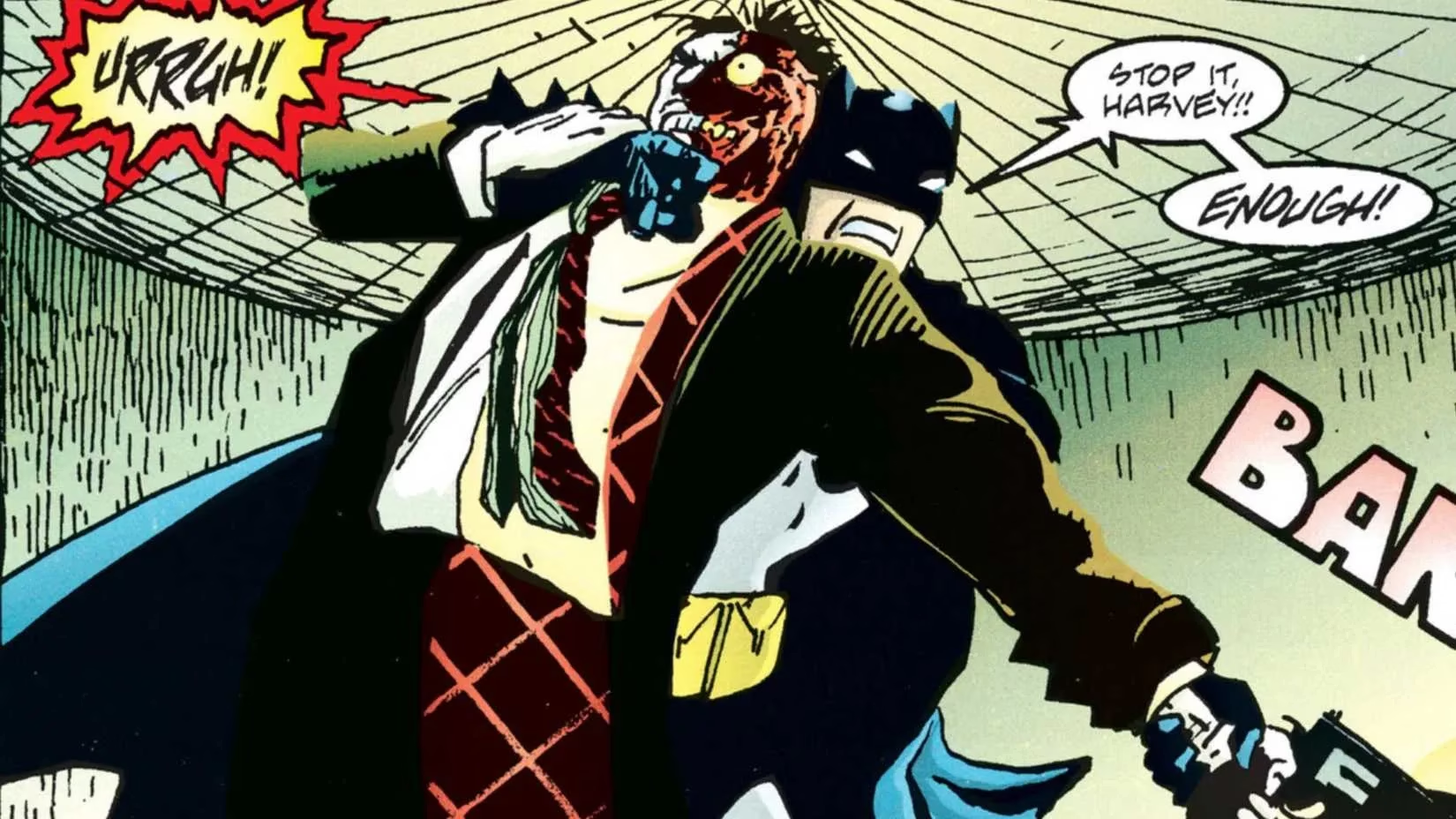
This is where "Faces" transcends a simple crime caper and becomes a profound character study. The conflict between Batman and Two-Face is layered with a painful, residual affection neither of us can fully shed. He is the only rogue in my gallery who shares this history with me. I don't believe he truly wishes to harm me, and I know I go to extremes to avoid causing him permanent injury. This creates the story's core tension: a part of me, the part that remembers Harvey, wants him to find peace. But I cannot allow that peace to be built on the suffering of others. Every life he takes is a stain I feel I must bear; every battle pushes Harvey further into the abyss.
The story's most poignant turn comes not from a fistfight, but from a reflection. Two-Face encounters another "Man With Two Faces," a performer who wears his duality as a costume, not a curse. This man has found acceptance and happiness. This mirror image forces a moment of raw, unvarnished introspection upon Harvey. He is confronted with the truth he's long avoided:
| The Illusion Two-Face Clings To | The Reality "Faces" Reveals |
|---|---|
| Society discarded him because of his scars. | Society didn't turn its back; he turned away from it. |
| His suffering is unique and unparalleled. | Many he claims to help never had the choices he did. |
| He is a victim of fate. | He is a prisoner of his own injured ego and poor choices. |
| He is building a sanctuary. | He is repeating cycles of exploitation. |
His real wound isn't the scarred flesh; it's the shattered pride of a great man who fell. He had a choice, a privilege so many of his intended "subjects" never possessed. And when his coin flipped, it landed on the wrong side. The silence after that realization is louder than any explosion.
And in that silence, I see my own reflection. We are both men shaped by tragedy, hiding behind masks. He hides behind scars and chance, lashing out at a world that hurt him. I hide behind a cape and cowl, a frightened boy working tirelessly to build a world where no child has to feel that fear again. Our pain is the same seed; we just let it grow into different kinds of thorns.
That is the enduring power of "Faces." It does more than tell a gripping Two-Face story; it holds up a mirror to the human condition. It uses the lens of our society's cruel history with "the other" to expose Harvey Dent's tragic flaw: not his face, but his failure of character. It shows how privilege, when shattered, can curdle into entitlement and violence instead of resilience and grace. It’s a story about the faces we choose to show the world, the ones we hide, and the terrifying moment when we are forced to look at both in the same cracked glass.