A gamer sits in the luminous glow of a 2026 holo-display, scanning the latest Marvel Studios slate with the same intensity he once saved for raid boss strategies. The rumor mill on the extranet has spun faster than a quantum drive: Marvel wants to build a deeper cosmic universe, a galaxy-spanning saga that finally escapes the gravitational pull of Earth-bound heroes. The cries for something bolder have echoed through forums since the disappointing Secret Invasion turned the Skrulls into a whisper instead of a scream. But now, with a new comic storyline in hand and a fanbase hungry for epic space opera, the studio seems ready to place its biggest bet yet—and it all starts with a little-known event called Imperial.
To understand the sheer scale of what could unfold, one must picture the Marvel Universe as a massive, interstellar chessboard where every move began with a hidden king. In the 2025 comic event Imperial, Black Bolt—the silent monarch of the Inhumans—partnered with his scheming brother Maximus to manipulate the Grandmaster into a game of galactic assassination. They orchestrated the murder of leaders from multiple alien empires, framed the Intergalactic Empire of Wakanda, and watched as the pieces crashed into each other like ships without navigation shields. The result was an all-out war between the Kree, the Skrulls, the Shi’ar, the Nova Corps, and dozens of other species. It was a story of betrayal on a cosmic scale, and by its final pages, the Kree-Skrull Alliance lay in ruins, a new galactic council rose from the ashes, and only Nova—Richard Rider—refused to bury the truth. It is, in short, the exact kind of tangled, morally gray epic that the MCU has needed since the Infinity Saga ended.
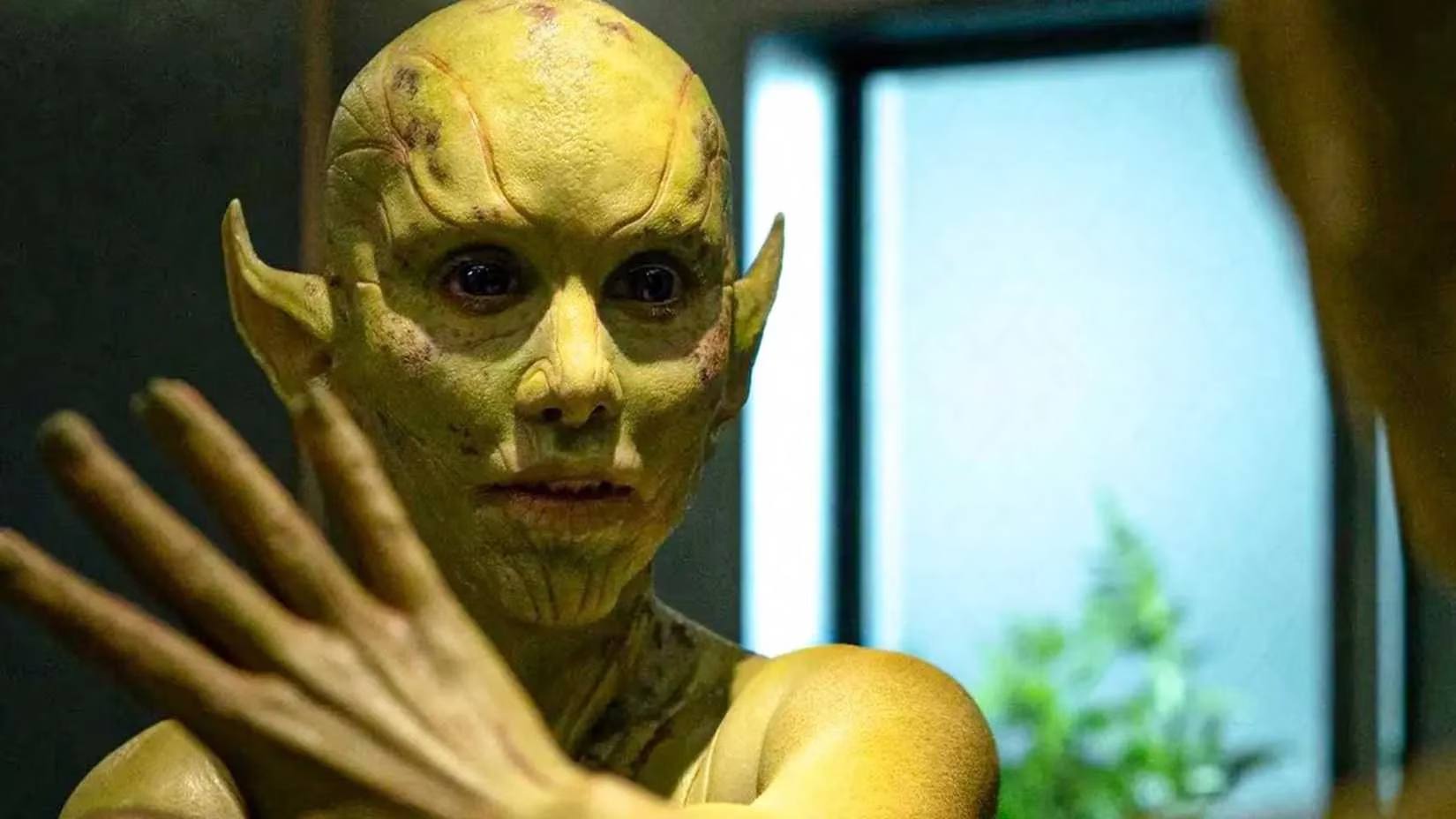
Marvel Studios has, for years, nurtured the seeds of such a war. Audiences met the Kree and the Skrulls, watched the Nova Corps burn in a Thanos-triggered genocide, and glimpsed the colorful chaos of Sakaar. Yet like a ship stuck in spacedock, the franchise never fully engaged its FTL drives. The Inhumans were banished to a television backwater, the Eternals drifted into memory, and the promise of a Celestial judgment on Earth remains unfulfilled. Adapting Imperial would be akin to inserting a master key into a dozen locked doors at once. Suddenly, the MCU could reintroduce Black Bolt not as a hero to root for, but as a complex antagonist driven by a millennia-old grudge against the Kree. His voice, capable of leveling mountains, would be felt rather than heard—a silent, shaking dread that rattles the hulls of warships. The Inhumans would return as antagonists too nuanced to simply hate, much like a villain in a player-driven RPG who believes wholeheartedly in his cause.
For those who follow the lore like a strategy guide, the beauty of Imperial lies in its ability to establish dozens of alien factions in a single war movie. The MCU does not need to slowly introduce the Shi’ar through the X-Men or tease Gladiator in a post-credits scene—the story itself does it, drawing clear battle lines and alliances. The Shi’ar, with their feathered warships and fierce Imperial Guard, would sweep into the conflict like a hawk diving into a flock of startled sparrows. The connection to Professor X via Queen Lilandra could be seeded here, a thread that later weaves into the X-Men tapestry. The Brood, parasitic and terrifying, could skitter through the darkest corners of the narrative, reminding viewers that this universe has threats far more visceral than a Titan with a golden gauntlet.
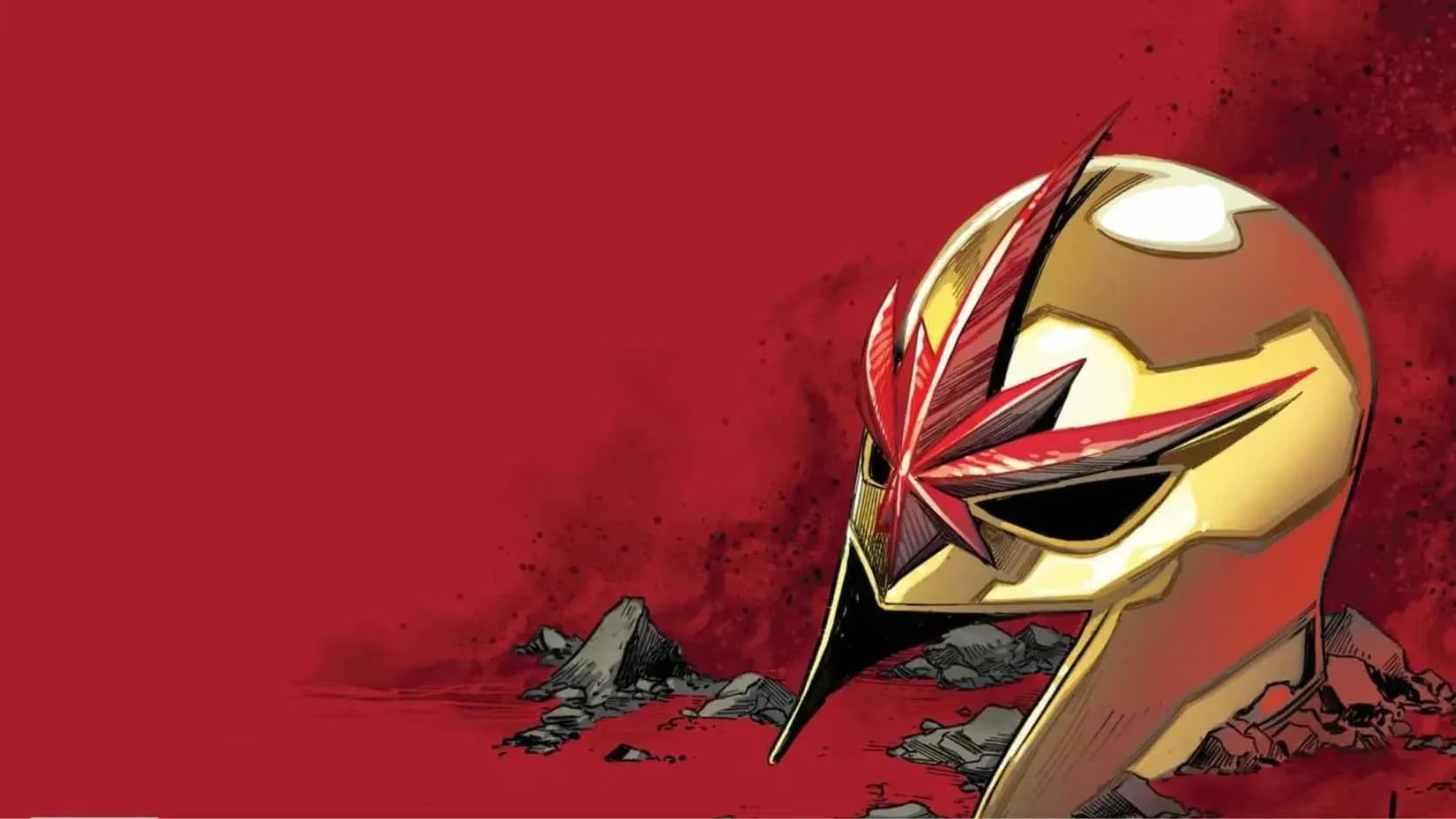
And then there is Nova. For years, fans have waited for Richard Rider to burst onto the screen, a helmeted comet of Worldmind-fueled energy. In the comics, Nova is the ethical center of Imperial, the lone voice refusing to hide the Inhumans’ guilt. Bringing him into the MCU through this story would be like introducing John Wick in the middle of a global assassin war—audiences would instantly understand who he is by what he refuses to do. Paired with a demoralized Star-Lord, who chooses to bury the truth to honor his father’s death, the friendship fracture would add a layer of personal grief to the spectacle of planet-bombing. The gamer heart loves a good RPG party betrayal, and this one would sting with the weight of real history.
The strategic thinking behind Imperial extends beyond one film. It could act as a launchpad for a three-phase cosmic plan. First, the war movie establishes all major players. Then, solo spin-offs—perhaps a Nova Corps revival, a Shi’ar political thriller, or even an Inhumans series that reframes their dark history—deepen the lore. Finally, the true endgame arrives: Annihilation. In the comics, the Annihilation Wave is a tide of insectoid death that eclipses even Thanos in its sheer destructive hunger. Introducing it a few years after Imperial would mimic the structure of the Infinity Saga, but with a more chaotic, unpredictable energy. Instead of a single big bad collecting stones, the MCU would face a natural disaster on a cosmic scale, forcing former enemies to forge desperate alliances. It would be the ultimate raid, requiring every faction the war movie introduced.
The dormant Eternals would find new purpose here. Their film, often dismissed like a misunderstood indie title, planted seeds that have yet to grow. The Celestials’ promised return to judge Earth could be reframed as a response to the galactic war, or perhaps the Annihilation Wave itself draws their gaze. Characters like Eros and Pip the Troll, introduced in a post-credits scene, would finally have room to breathe. Imagine Kingo standing on a battlefield of crystalline debris, his finger-guns sparking against an endless tide of biomechanical horror. The sight would be less a cameo and more a declaration: every corner of Marvel’s universe matters.
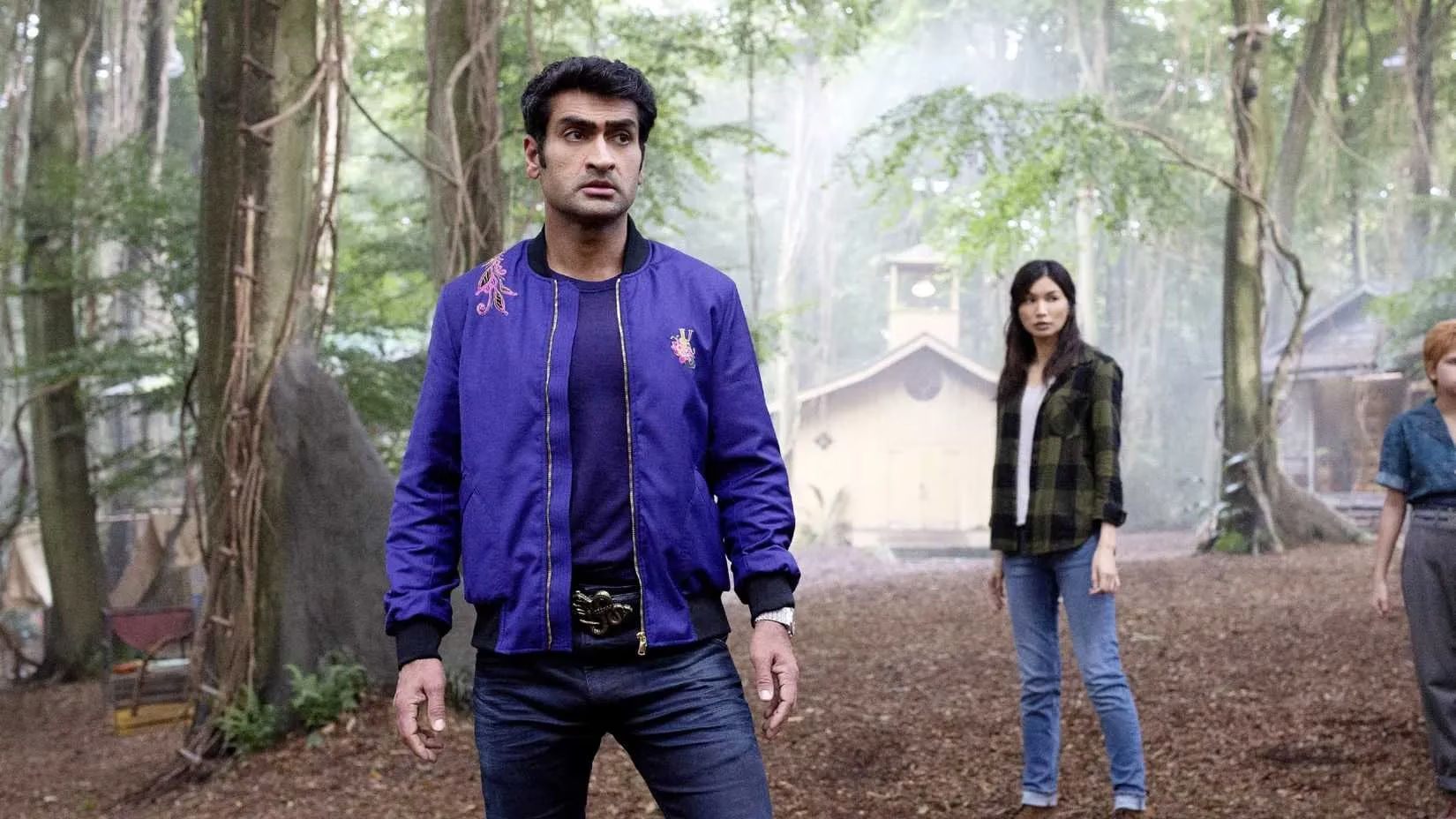
As the holo-display dims and the gamer leans back, the potential becomes a dazzling mosaic. The MCU in 2026 stands at a crossroads, with a roadmap that could either retread tired ground or leap into uncharted space. Adapting Imperial would be more than a new movie—it would be an act of cosmic terraforming, reshaping a franchise into something vast and unpredictable. It would be a promise that the stars themselves are about to go to war, and everyone, from a silent king to the last Nova Centurion, must choose a side. For those who have spent years analyzing patch notes and lore documents, this feels like the next great saga, one where the only certainty is that space will never be quiet again.