Let me tell you a story that still gives me chills, a Hollywood tale so wild and unexpected it feels like it was ripped straight from a blockbuster script. Picture this: the year is 1979, the Oscars are in full swing, and the air is thick with glamour and old-school machismo. In one corner, you have the ultimate symbol of traditional American cinema, the one and only John Wayne, a man whose opinions were as solid and unyielding as the characters he played. And in another, a young, dashing newcomer who had just made the world believe a man could fly—Christopher Reeve. I was there, soaking in the atmosphere, when I witnessed, or rather, heard about, a moment of cinematic history. The Duke himself, not known for handing out compliments like candy, leaned over to the suave Cary Grant, pointed at Reeve, and declared with the gravity of a man passing a torch, "This is our new man. He’s taking over." Can you believe it? John Wayne, the epitome of the classic Western hero, anointing the guy in the blue tights and red cape as the future of Hollywood! It was a mic-drop moment that echoed through the ages, a compliment so massive it could have its own gravitational pull.
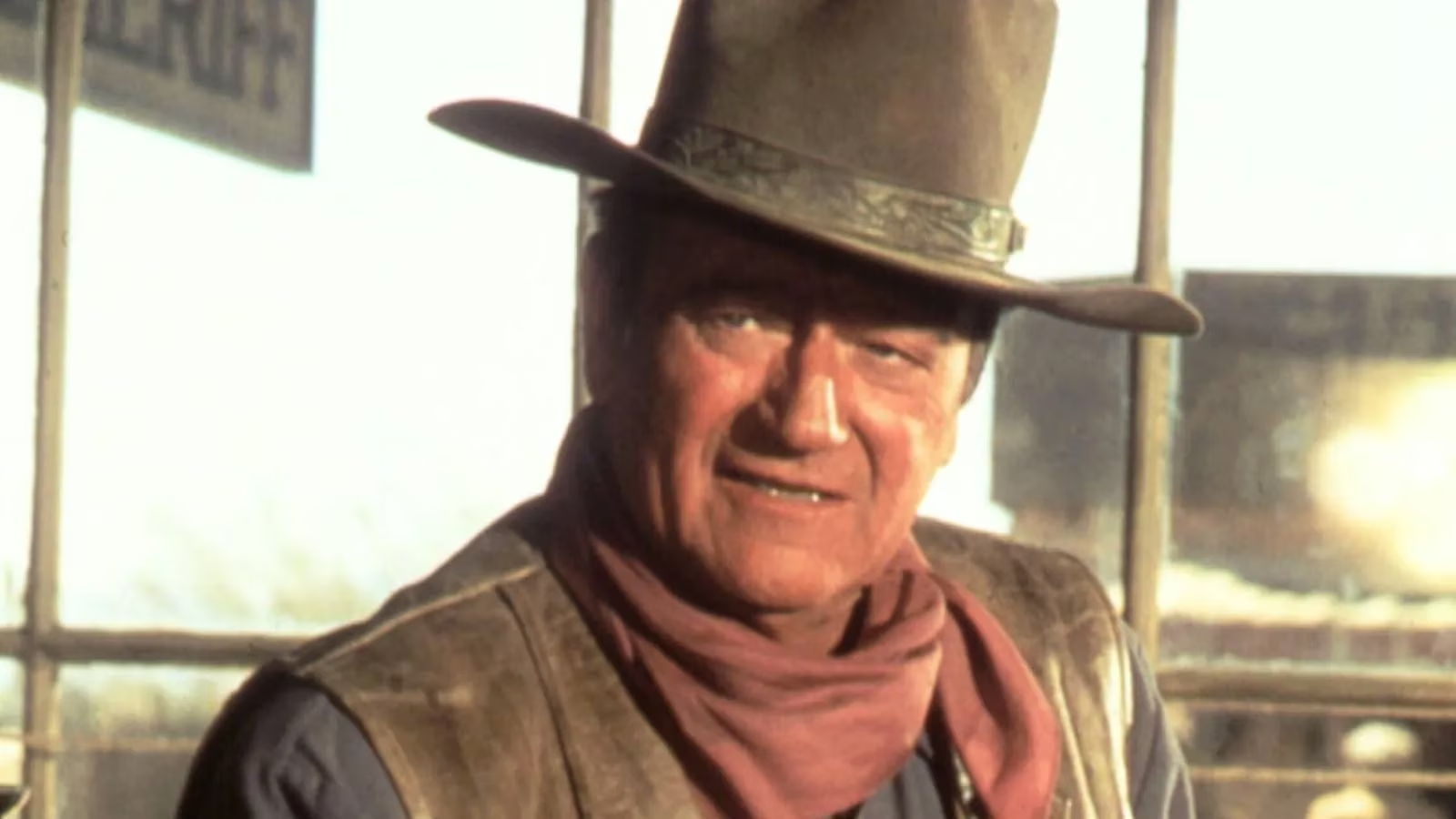
Now, for those who don't know, getting praise from John Wayne was like getting a thumbs-up from Mount Rushmore. This was a guy who famously didn't hold his tongue. He called the Western classic High Noon a 'Communist film' 🤯! His own daughter said he'd roast actors like Gene Hackman, calling him 'awful' every time he popped up on screen. He was a traditionalist through and through. He hated the gritty, morally grey anti-heroes of Clint Eastwood's Westerns. For Wayne, it was all about clear-cut good vs. evil. So, when he saw Superman in 1978, it must have felt like a revelation. Here was a hero who literally stood for 'Truth, Justice, and the American Way.' No wonder The Duke saw in Christopher Reeve the embodiment of everything he cherished about classic heroism. It was a match made in patriotic heaven!
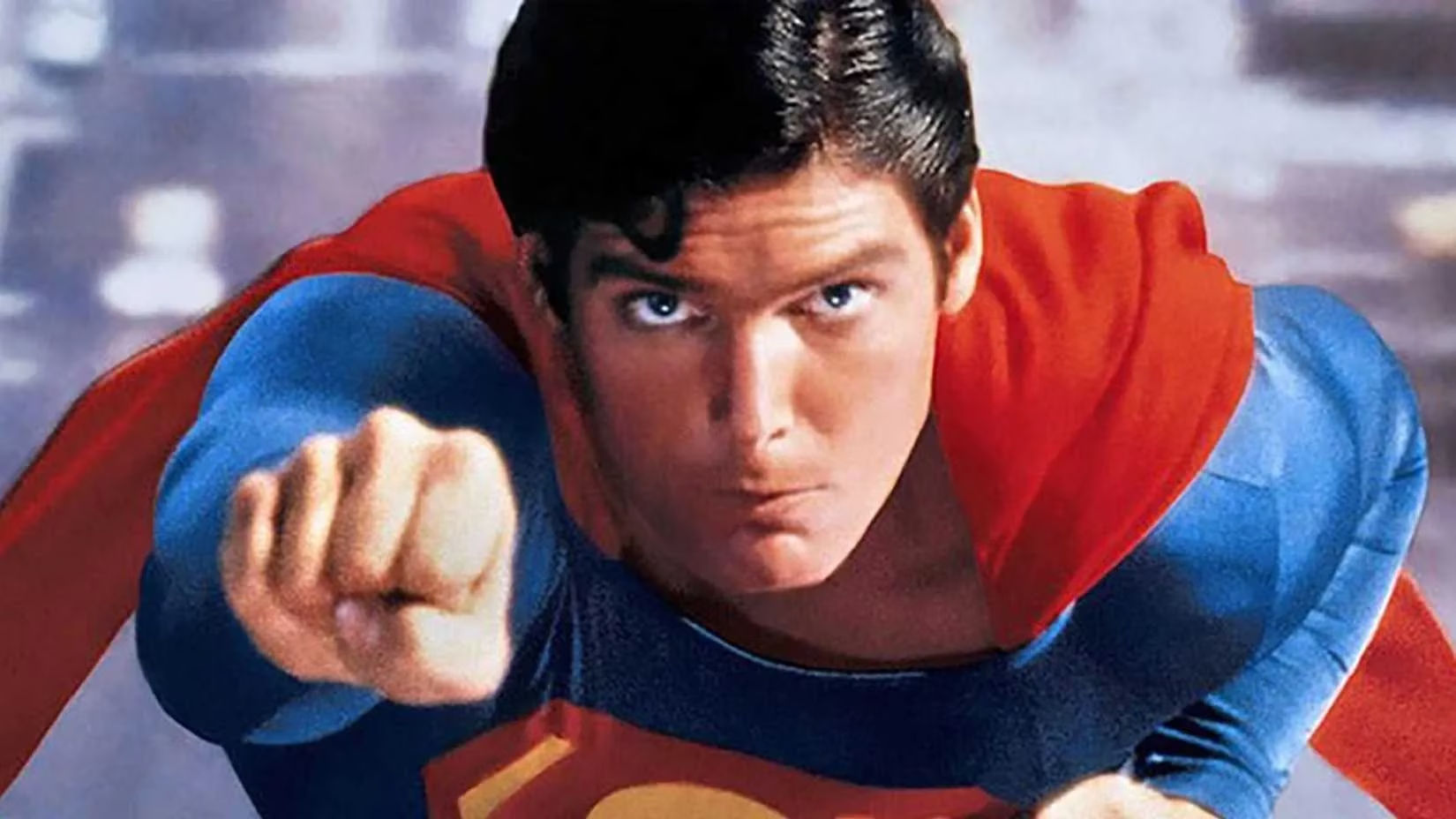
But here's the kicker, the tragic irony that makes this story so poignant. Wayne's prophecy, "He's taking over," was, in a way, a Hollywood curse. The very thing that made Reeve a global icon—becoming Superman—also put him in a Kryptonite-laced box. The man was a fantastic actor, a Juilliard-trained, Cornell-graduate powerhouse with Broadway chops. But after 1978, he was typecast faster than you can say 'Up, up, and away!' Let's break down his post-Superman journey:
-
1979's Somewhere in Time: A romantic drama that got panned initially but is now a cult classic. A solid, but not earth-shattering, follow-up.
-
The Superman Sequels: He kept returning to the cape, but let's be real, the magic of the first one was hard to replicate.
-
The BIG Gap: For over a decade, he struggled to land roles that matched his talent.
It wasn't until 1993—a whopping 15 years after his debut—that he got a role worthy of his skills outside of Metropolis. Enter The Remains of the Day. This wasn't just a movie; it was a masterclass. Playing Congressman Jack Lewis opposite acting giants like Anthony Hopkins and Emma Thompson, Reeve proved he had the dramatic heft. The film scored eight Oscar nominations! Finally, it seemed like he was breaking free.
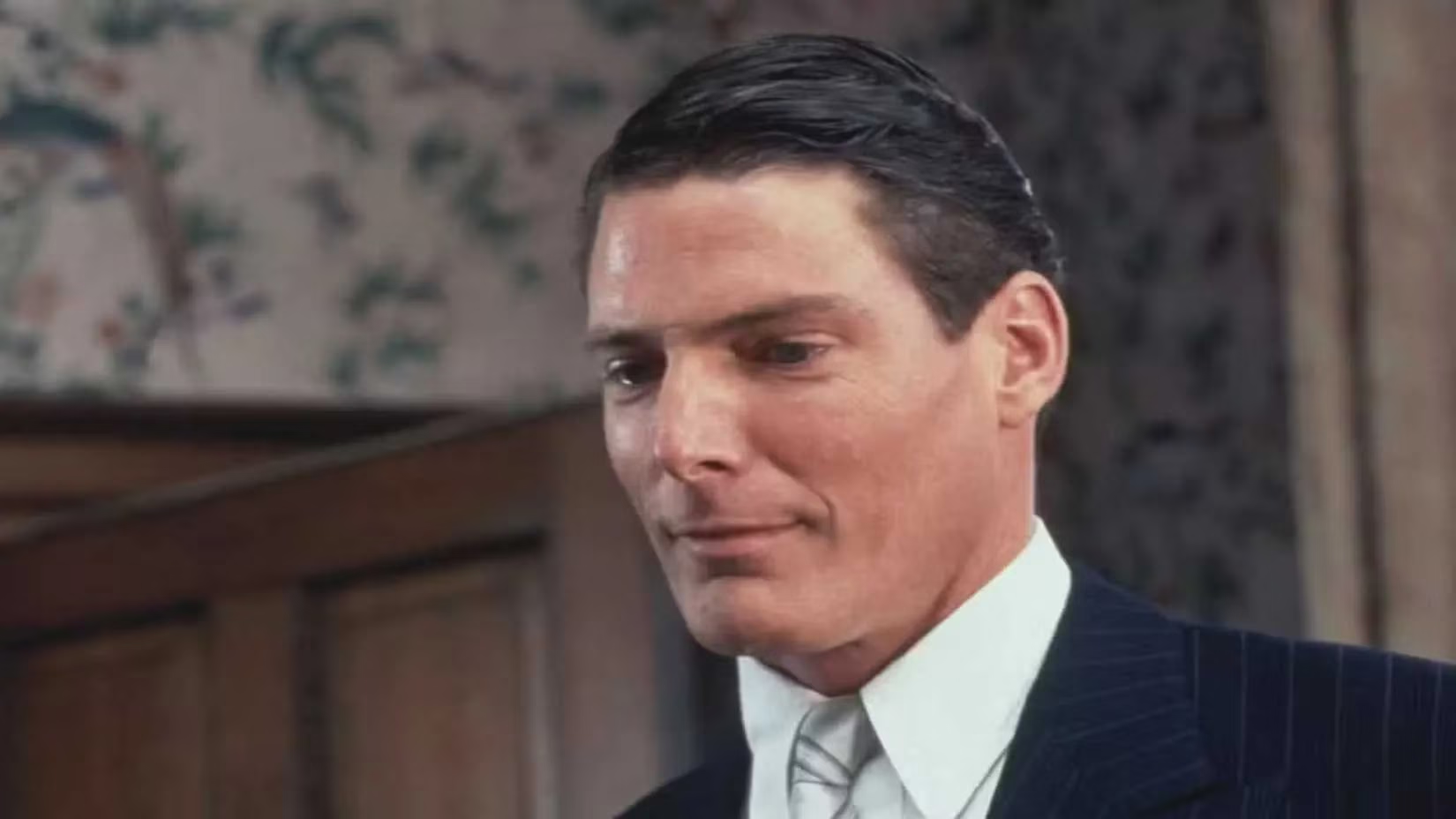
Then, in 1995, he showed a completely different side, diving into horror with John Carpenter's Village of the Damned. It was a fun, creepy flick for Carpenter fans. But 1995 also marked the end of his acting career as the world knew it. A horrific equestrian accident left him paralyzed. For most people, that would have been game over. But not for Christopher Reeve. This is where the story transcends Hollywood and enters the realm of the truly legendary. As his biography Supe Hero details, the accident didn't break him; it transformed him. He went from playing a superhero to becoming one in real life. He became a symbol of resilience, hope, and relentless advocacy. He started the Christopher & Dana Reeve Foundation, lobbied for spinal injury research, directed a movie (In the Gloaming), and wrote books. His spirit was, quite literally, unbreakable.
And for us fans, the ones who grew up watching him soar, there was one last, beautiful gift. In the early 2000s, he returned to the Superman universe on the hit TV show Smallville. Playing Dr. Virgil Swann, the brilliant scientist who deciphered Kryptonian and told a young Clark Kent (Tom Welling) his true origin, was a perfect, poetic full-circle moment. The original Man of Steel was now the wise guide for the next generation. His appearances in 'Rosetta' and 'Legacy' were iconic, a final bow to the role that defined him. He passed away in 2004, but his legacy is untouchable.
| The Two Chapters of Christopher Reeve | Key Achievements | Impact |
|---|---|---|
| Chapter 1: The Actor (Pre-1995) | - Defined Superman for a generation 🦸♂️ - Critical acclaim in The Remains of the Day 🎬 - Showed range in Somewhere in Time & Village of the Damned |
Became a global icon, though struggled with typecasting. Proved his immense talent beyond the cape. |
| Chapter 2: The Advocate & Icon (Post-1995) | - Founded a leading paralysis research foundation 💙 - Became a global symbol of courage and determination - Inspired millions with his advocacy and writing |
Transcended his film roles to become a real-life hero. His impact on medical research and public perception of disability is immeasurable. |
So, was John Wayne right? Did Christopher Reeve 'take over'? In the traditional leading-man, box-office-star way Wayne might have imagined, perhaps not. The industry's typecasting was a villain even Superman couldn't defeat. But in a much grander, more profound sense, Wayne was 100% spot-on. Reeve took over our hearts. He took over the definition of courage. He took over the narrative of what it means to be a hero, both on and off the screen. In 2026, looking back, his legacy isn't just about one role; it's about the indomitable human spirit. John Wayne saw a 'new man' that night in 1979. What he might not have guessed was just how deep that man's heroism would truly go. That's not just a compliment; that's a prophecy fulfilled in the most extraordinary way possible. Now that's a Hollywood ending for the ages. 😎✨