As we move through 2026, the entertainment landscape continues to be dominated by discussions about creative freedom versus franchise commitments. The recent swirl of speculation linking visionary filmmaker Jordan Peele to the Marvel Cinematic Universe has ignited a passionate debate among fans and industry observers alike. While the rumors suggested a potential collaboration, possibly involving Mahershala Ali's long-gestating Blade project, the social media team from Peele's production company initially fanned the flames with a simple eyeball emoji 👀 before later downplaying the theories. As someone who closely follows the trajectories of our most distinctive cinematic voices, I find myself firmly in the camp that hopes this particular rumor never materializes into reality. The prospect, while undeniably intriguing on a surface level, represents a potential misallocation of a singular creative talent.
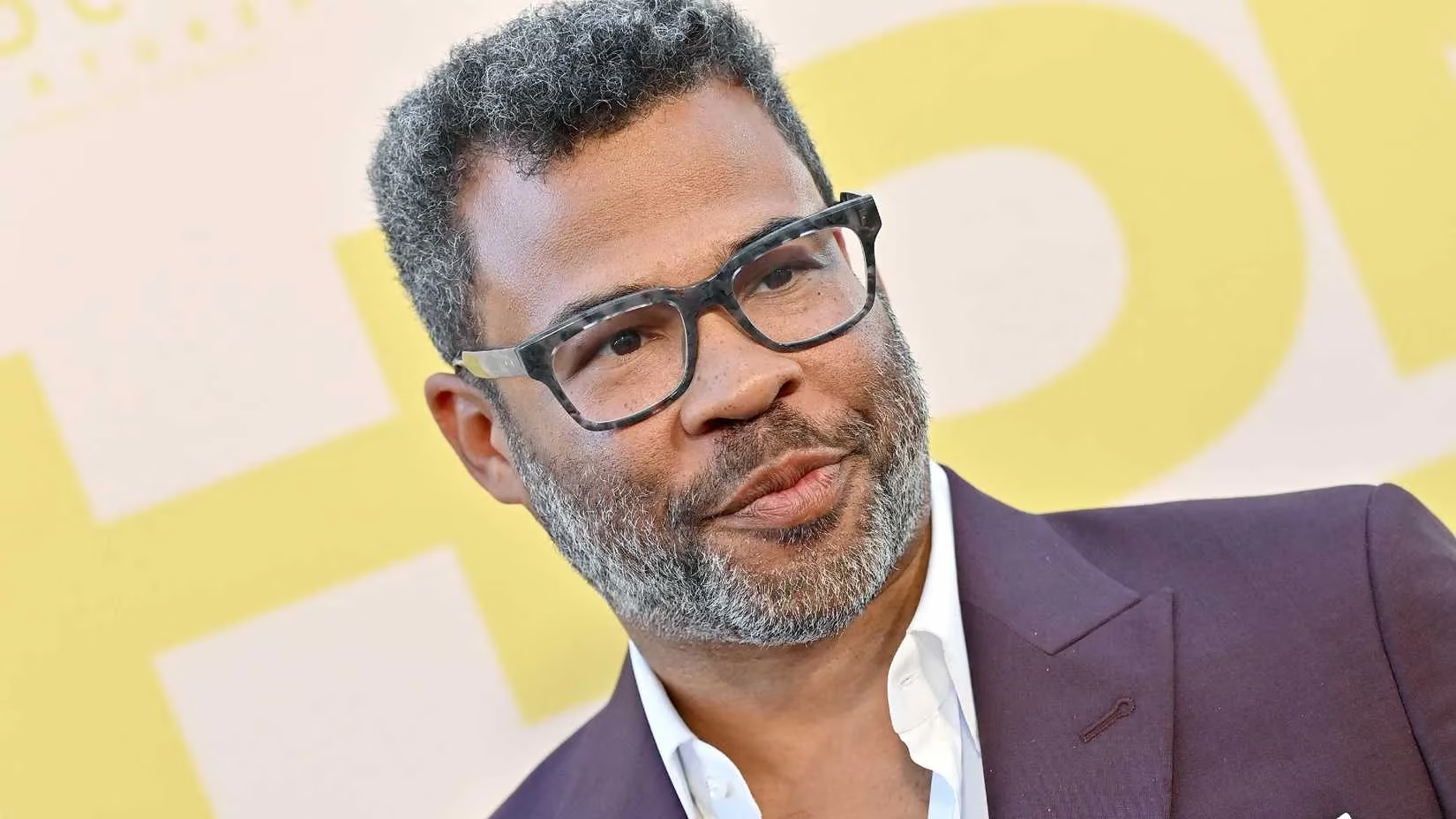
Jordan Peele's journey from comedic force to a master of modern horror and speculative fiction is one of the most remarkable career pivots in recent Hollywood history. His filmography—comprising the socially charged terror of Get Out, the doppelgänger dread of Us, and the skyward sci-fi horror of Nope—has cemented his status as a filmmaker who operates within popular genres while imbuing them with profound thematic weight. His talent for crafting wildly entertaining narratives that also serve as incisive commentary on society, race, and the human condition is precisely why his name gets attached to major properties. Fans have long envisioned him as an ideal shepherd for the MCU's X-Men, a role now filled by Jake Schreier for Thunderbolts. The hypothetical list of Marvel characters that could benefit from Peele's touch is extensive and exciting:
-
Mahershala Ali's Blade: Rescuing the vampire hunter from development hell with a fresh, horror-infused perspective.
-
Horror-Adjacent Properties: Applying his signature style to characters like Ghost Rider or a Midnight Sons ensemble.
-
Legacy & New Heroes: Orchestrating Luke Cage's MCU return, introducing Blue Marvel, or elevating Bishop within the X-Men mythos.
Each of these possibilities sparks the imagination. Yet, this is where the core conflict lies. The allure of seeing a beloved auteur reinterpret a beloved icon is powerful, but it comes with a significant, often understated, cost.
The High Price of a Marvel Commitment
Signing on to direct a Marvel Studios film is not merely agreeing to make a movie; it is integrating oneself into a vast, multi-year industrial machine. The schedule is notoriously demanding, with extensive pre-production, lengthy shoots, and prolonged post-production phases often intertwined with visual effects pipelines that span the globe. For a filmmaker like Peele, who also produces and nurtures other projects through his company, Monkeypaw Productions, this represents years of dedicated focus on a single, corporately owned narrative. His availability to develop, direct, or produce original, personal films would be severely restricted. Furthermore, success often begets obligation; a hit would inevitably lead to discussions about sequels, potentially tying up his creative calendar for the better part of a decade.
This dynamic is far from ideal for an artist of Peele's caliber. He belongs to an elite, rarefied group of directors—alongside contemporaries like Christopher Nolan, Denis Villeneuve, Greta Gerwig, and Ryan Coogler—whose very involvement can "eventize" a film. Their names alone generate immense audience interest and cultural buzz. Hollywood, and audiences worldwide, are in desperate need of the original, ambitious event films that only these filmmakers can will into existence. As my colleague pointed out, anything Peele could theoretically do with the Blade IP, he could accomplish with even greater creative freedom in an original vampire film, akin to Ryan Coogler's recent original project, Sinners.
The State of Peele's Original Work in 2026
The timing of these rumors is particularly poignant. It's widely known that Peele has been developing his fourth original feature film with Universal Pictures for several years. However, the project has reportedly encountered obstacles, with the studio recently removing it from their planned 2026 release schedule. While no plot or casting details have emerged, this slowdown could understandably make the siren song of a guaranteed Marvel blockbuster—with its built-in audience and substantial financial reward—seem appealing. It could be viewed as a lucrative placeholder while he works through the creative challenges of his next personal story.
Yet, choosing that path would be a short-term gain for a long-term creative loss. Should the rumors prove true and Jordan Peele does helm an MCU movie, it will undoubtedly be a monumental moment for Marvel Studios, marking one of their most prestigious director acquisitions. The film would likely be brilliant, tense, and thought-provoking. However, for those of us who value cinematic innovation and the unique voice of artists operating outside shared universes, a profound sense of disappointment would linger. We would be gaining a fascinating Marvel chapter but losing precious time and creative energy that could have been spent forging entirely new worlds and narratives.
In an era where franchise filmmaking increasingly dominates studio slates, the preservation of original, auteur-driven cinema is more crucial than ever. Jordan Peele is not just a director for hire; he is a genre-defining storyteller and a cultural commentator. His next wholly original piece of art is not just another movie—it's a potential cultural touchstone. While the idea of him tackling a superhero or vampire hunter within the MCU is a captivating "what if," the film industry's greater need is for him to continue answering his own unique questions, not those posed by a pre-existing comic book mythology. The true victory for cinema in 2026 and beyond will be seeing visionaries like Peele wield their hard-earned clout to greenlight their own singular visions, reminding us all of the unparalleled power of an original story, told without constraints.