In the ever-evolving landscape of the Marvel Cinematic Universe, the world's relationship with its enhanced inhabitants is once again shifting underfoot. The Sokovia Accords, that seismic international agreement which once fractured the Avengers, may have been repealed, but its spirit of regulation and control has mutated into new, more insidious forms. As the MCU barrels toward 2026, a fresh wave of policies and public sentiment is coalescing, creating an environment where superpowers are not just monitored but actively marginalized—a development that functions like a carefully laid fuse, slowly burning toward the inevitable introduction of Marvel's most persecuted heroes: the X-Men.
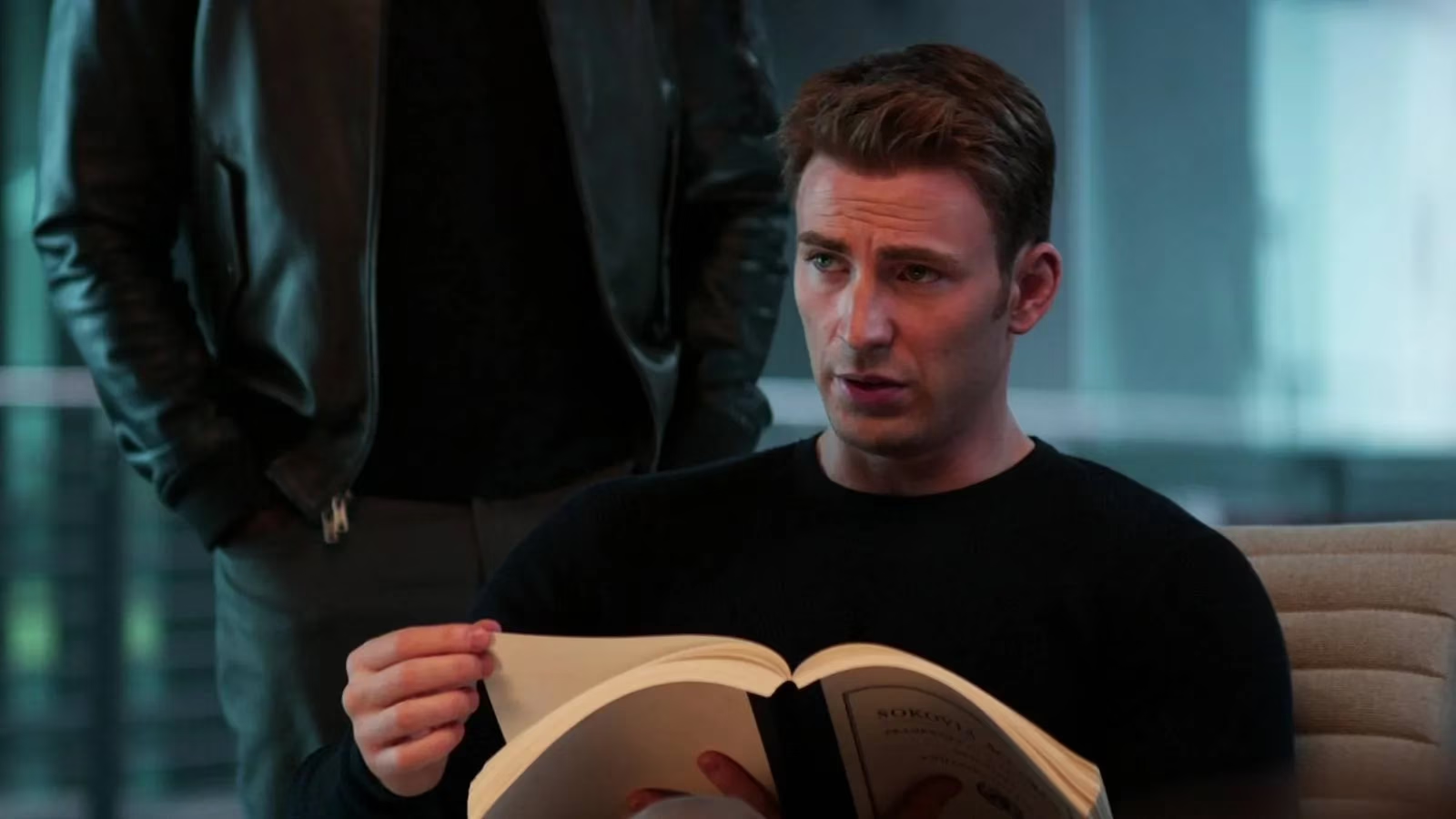
The Sokovia Accords were born from catastrophe, a direct response to the destruction wrought by Ultron in Sokovia. Ratified by the United Nations, they established a framework for the registration and control of enhanced individuals, turning superheroes into instruments of state oversight. This bureaucratic straitjacket became the wedge that drove Earth's Mightiest Heroes apart, with Iron Man and Captain America's ideological clash culminating in the team's dissolution—a schism that, like a poorly set bone, left the heroes weakened and vulnerable to Thanos's snap. Although the Accords were eventually repealed following the universe-restoring events of Avengers: Endgame, as confirmed in She-Hulk: Attorney at Law, they left an indelible scar on the public consciousness, normalizing the idea that those with powers must be managed.
Now, the upcoming Disney+ series Wonder Man, set for release in January 2026, is introducing the next phase of this societal reckoning: the Doorman Clause. Promotional materials for the series present this as a new Hollywood policy, with trade magazine covers declaring, "Hollywood bans all super powers." The clause mandates that "actors must certify they have no super powers" under this new rule, effectively instituting a wholesale ban on super-powered individuals from participating in in-universe film and television productions. This is a stark evolution from the Sokovia Accords' registration model; where the Accords sought to catalog and deploy powered beings, the Doorman Clause seeks to erase them from public view in one of the world's most visible industries. For the series' protagonist, Simon Williams (Yahya Abdul-Mateen II)—an actor who gains ionic-based superpowers—this clause presents a direct and personal conflict.
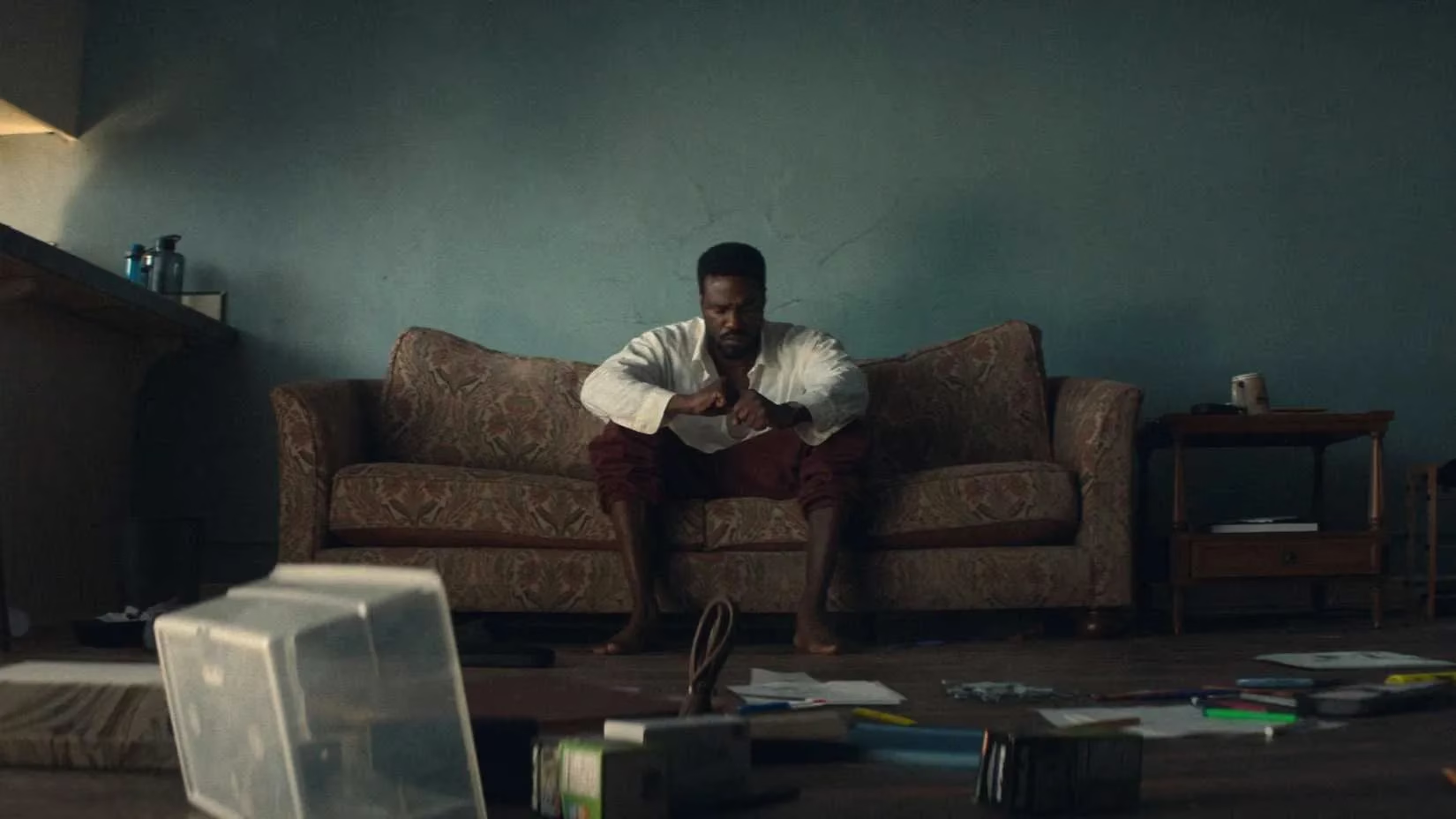
The Doorman Clause is not an isolated incident but rather a single piece in a growing mosaic of anti-powered sentiment. On the opposite coast, in New York City, Mayor Wilson Fisk has established his Anti-Vigilante Taskforce (AVTF), declaring all vigilante activity illegal in the finale of Daredevil: Born Again. This move not only reignites Fisk's war with Daredevil but also codifies a deep-seated distrust of masked, super-powered intervention into city law. Together, these developments paint a picture of a society increasingly comfortable with systemic discrimination against the enhanced.
The Gathering Storm: A World Primed for Mutant Prejudice
This coordinated rise in regulation and prohibition is far from accidental. Like a master gardener preparing soil long before planting seeds, Marvel Studios is meticulously conditioning the MCU's world to make the central conflict of the X-Men—mutant persecution—feel organic and inevitable. The prejudice mutants face in the comics is not born in a vacuum; it requires a society already primed to fear and ostracize the different. The Doorman Clause and Fisk's AVTF are constructing that very foundation.
-
The Doorman Clause acts as economic and cultural segregation, barring powered people from a major profession and reinforcing the idea that they are "other" and unfit for public life.
-
The Anti-Vigilante Taskforce represents legal and political persecution, using the apparatus of the state to criminalize super-powered aid, framing heroes as dangerous outlaws.
These policies are the societal petri dishes in which anti-mutant sentiment can fester and grow. When mutants—individuals born with their abilities as an inherent part of their biology—finally emerge in the MCU, the world will already have a lexicon and a legal framework for fearing them.
The Path to 2027 and Beyond: The X-Men's Inevitable Dawn
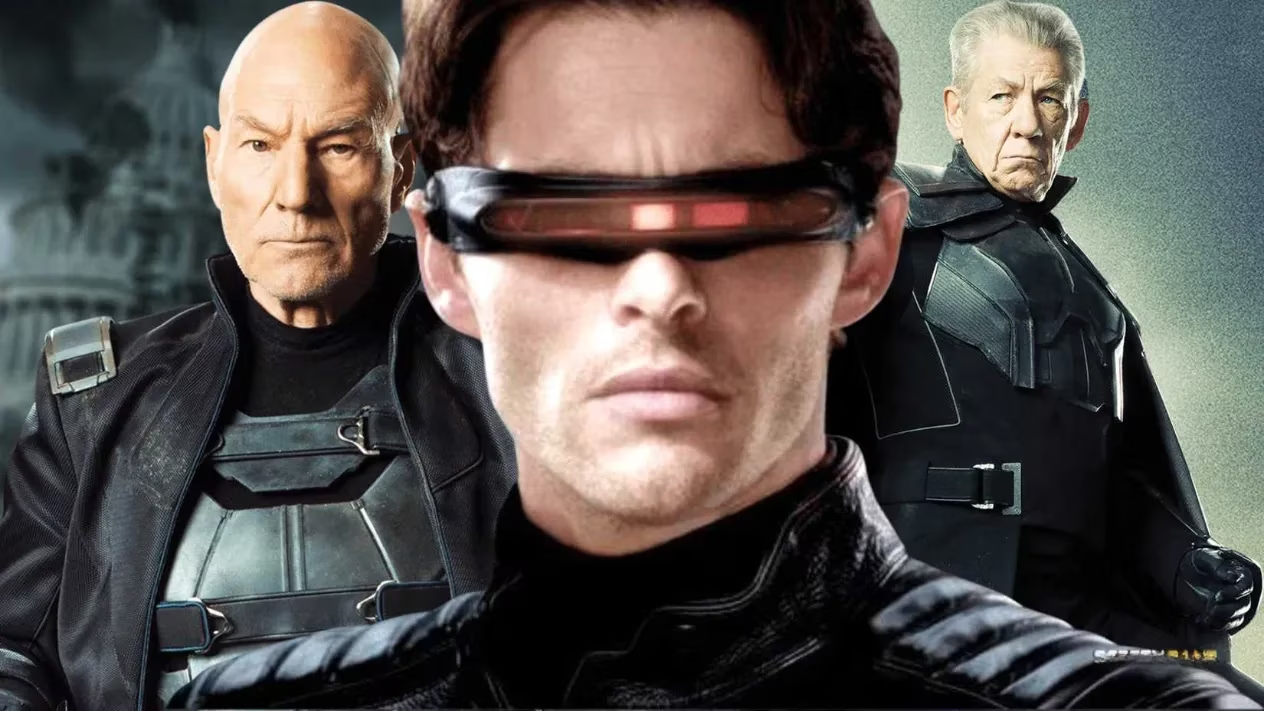
Marvel Studios President Kevin Feige has confirmed that an X-Men film is in development, with Thunderbolts* director Jake Schreier attached. While not officially on the immediate slate, it is widely anticipated to follow Avengers: Secret Wars in 2027, heralding the start of a new saga focused on mutants. The narrative groundwork being laid now is crucial. The public's journey from celebrating the Avengers to distrusting vigilantes and banning powered actors must feel like a logical progression, a societal immune system slowly turning against its own enhanced cells.
The Doorman Clause, in particular, is a brilliant narrative device. Hollywood, a world built on illusion and performance, becomes the stage where the reality of having powers becomes a professional death sentence. This mirrors the classic mutant dilemma of "passing" as normal or facing persecution—a theme Wonder Man seems poised to explore with Simon Williams navigating his dual identity.
| Policy/Movement | Location | Mechanism | Narrative Purpose |
|---|---|---|---|
| Sokovia Accords (Repealed) | Global | Registration & UN Control | Established the precedent of government oversight over enhanced beings. |
| Doorman Clause | Hollywood | Industry-Wide Ban | Creates cultural & economic discrimination; introduces fear of "the other" in everyday life. |
| Anti-Vigilante Taskforce | New York City | Criminalization & Police Action | Establishes legal persecution and state-sanctioned hostility toward powered individuals. |
As 2026 unfolds, the MCU continues to weave a complex tapestry where heroism is increasingly viewed through a lens of suspicion. The era of unambiguous celebration is over, replaced by a fragile peace as brittle as antique glass. The actions of authorities like Fisk and the institutions behind the Doorman Clause are not just plot points for individual series; they are the tremors before a tectonic shift. They are preparing a world where the arrival of mutants won't be a simple introduction of new heroes, but the ignition of a long-smoldering social conflict. The stage is being set, piece by piece, for the X-Men to arrive not as saviors in a welcoming world, but as the next chapter in a society's fraught relationship with power itself—a chapter where the lines between hero, vigilante, and menace are blurred beyond recognition.