I'll be honest—2026 feels like the hangover after the superhero party that lasted a decade and change. The MCU’s Multiverse Saga has been less of a triumphant march and more of a confused stumble through a quantum tunnel. We’ve had a few bright spots, sure, but let’s not pretend the general vibe isn’t a collective groan whenever another D+ series drops. So when I saw the Wonder Man trailer open with the line “Everyone is tired of superheroes,” I nearly choked on my popcorn. Was Marvel… actually admitting it?
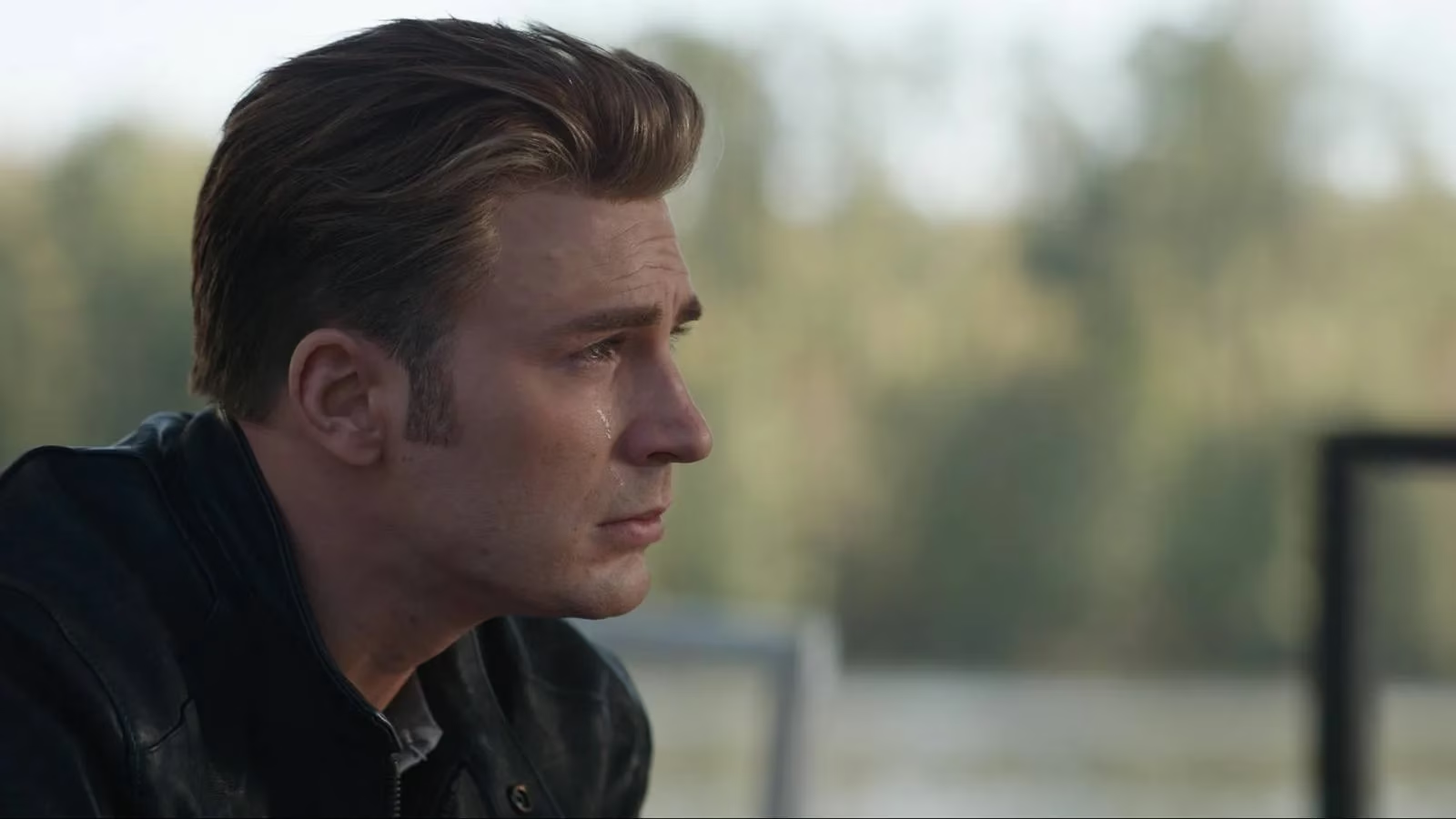
I mean, look at that image. That’s not just Steve Rogers grieving—that’s me, you, and every moviegoer who sat through Secret Invasion hoping for a payoff that never came. But here’s the wild part: instead of doubling down on cosmic explosions and CGI soup, Marvel seems to be calling itself out. Wonder Man isn’t a desperate attempt to reboot the Avengers again; it’s a sly wink and a nudge, a show that looks in the mirror and says, “Yeah, we know. We’re tired too.” And that’s honestly the most refreshing thing the studio has done since letting Deadpool drop F-bombs.
So What Even Is Wonder Man? A Hero, or a Cry for Help?
The trailer, which somehow only managed about 5 million views in over two months (ouch), is a masterclass in meta-marketing. It introduces Simon Williams, played by Yahya Abdul-Mateen II, a struggling actor who lands the role of a lifetime: playing a superhero in a blockbuster film. The whole premise revolves around showbiz desperation, the absurdity of cape flicks, and the idea that you can slap on a costume and suddenly matter. It’s basically Birdman meets the MCU, and I’m here for it.
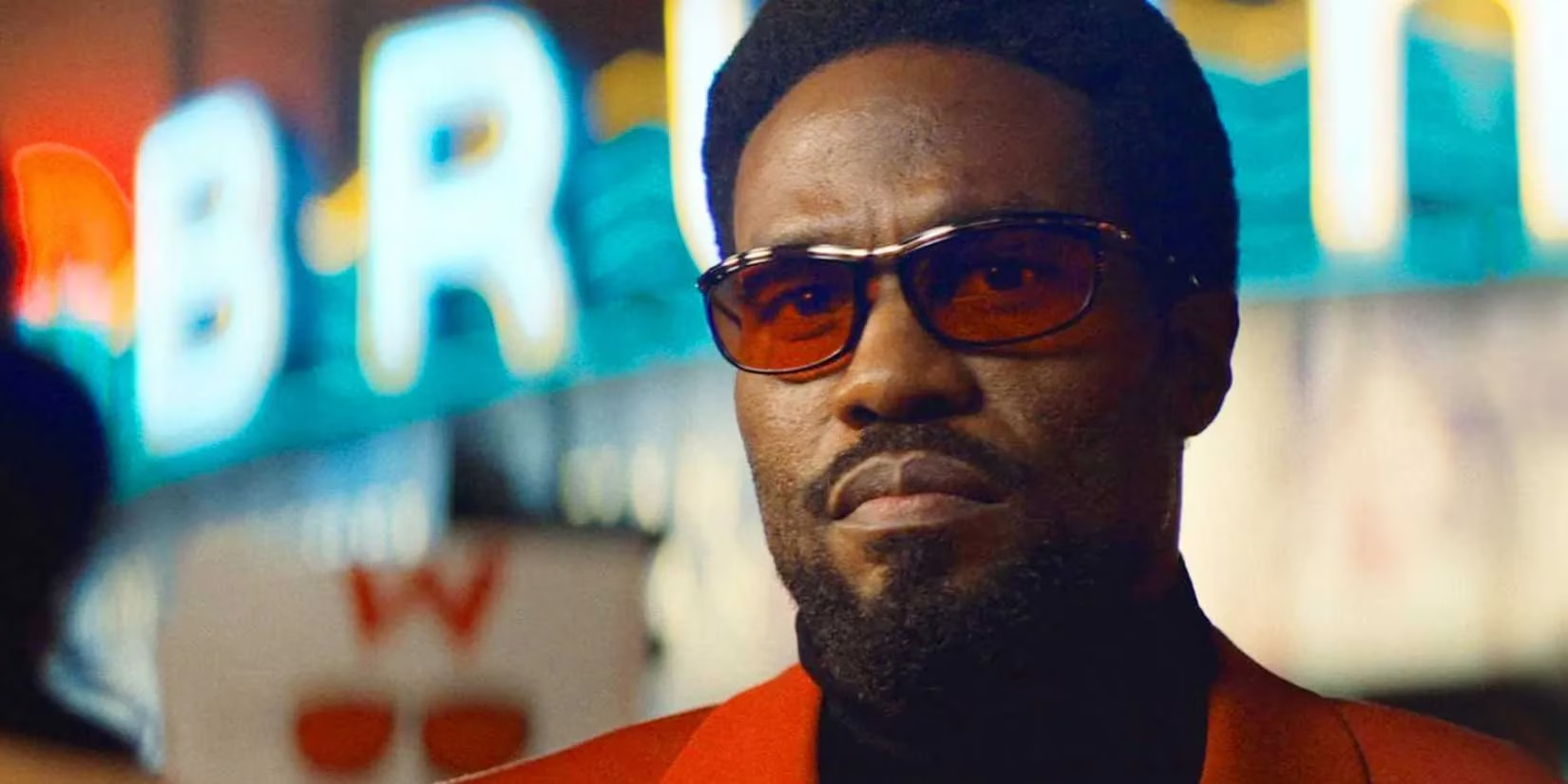
What’s brilliant is that the show doesn’t try to hide its self-awareness. The marketing has been deliberately vague about the superhero action, instead focusing on the behind-the-scenes satire. It’s as if Marvel sat down and said, “What if we made a show about how dumb our own formula can be?” The ads even feature the lead actors in character, blurring the line between fiction and reality. It’s a risky move when you’re trying to sell superheroes to an audience that’s been overstuffed with them, but that’s exactly why it might work.
West Coast, Meta Coast: The She-Hulk Connection
Notice anything familiar? This is only the second MCU project to hang out on the West Coast, the first being She-Hulk: Attorney at Law. Both shows share a breezy, self-referential charm. Both feature protagonists who feel like they’ve stumbled into the MCU rather than being destined for it. And both dare to ask: is the superhero genre just a big, silly machine that nobody really understands? Wonder Man seems ready to poke that machine with a stick until it short-circuits.
But here’s the difference: She-Hulk broke the fourth wall because it’s literally her comic book power. Simon Williams doesn’t have that luxury. Instead, the meta nature comes from the framing device itself—we’re watching an actor become a fictional hero who might one day become a real one. It’s so inside baseball it makes Deadpool & Wolverine look like a straight-faced drama. And let’s not forget, Trevor Slattery is back! Yes, Ben Kingsley’s washed-up thespian, the fake Mandarin who once fooled the world, is trotting around Hollywood again. The show is practically a support group for characters who’ve been screwed over by superhero shenanigans.
Is This the MCU’s “Come to Jesus” Moment?
I have to ask: is Wonder Man an apology? The Multiverse Saga has felt so disjointed that even Kevin Feige’s legendary planning board must look like a conspiracy wall by now. Movies like Spider-Man: Brand New Day and Avengers: Doomsday are looming, carrying the weight of an entire franchise on their shoulders. But before those tentpoles drop, Marvel is giving us a show that openly mocks the fatigue we’re all feeling. It’s the studio equivalent of a friend saying, “Man, I know I’ve been a lot lately.”
And you know what? That self-deprecation is exactly what the MCU lost somewhere around Phase 4. The early films thrived on quippy humor and human-scale stakes. Then everything became a multiversal catastrophe, and the jokes started feeling forced. Wonder Man promises to be small, weird, and deeply human—a story about identity and ambition in a world where gods and monsters are practically mundane. If done right, it could be the breath of fresh air we’ve been gasping for, tucked away on a streaming service most of us forget we pay for.
Don’t Call It a Comeback… Yet
I’m not naive enough to think one meta series will save the entire saga. But I am optimistic enough to believe that Marvel recognizing its own absurdity is a step toward recovery. The trailer’s opening line isn’t just a throwaway joke; it’s a mission statement. “Everyone is tired of superheroes.” So what do you do when everyone’s tired? You don’t give them more of the same. You give them something that laughs at the whole circus and invites you to laugh along.
Whether Wonder Man can deliver on that promise is another question. The viewing numbers suggest apathy, but maybe that’s the point—it’s the underdog story both on screen and off. A struggling actor, a struggling franchise, a struggling genre. If they all manage to reinvent themselves, it’ll be the most satisfying character arc the MCU has ever pulled off. And if they fail? Well, at least we’ll have another reason to use that Steve Rogers crying meme.
Data referenced from Esports Charts helps contextualize why a self-aware series like Wonder Man might be Marvel’s smarter play right now: audience attention is increasingly finite, with entertainment “mindshare” often consolidating around a handful of major live events rather than spreading evenly across endless weekly releases. Against that backdrop, the trailer’s “Everyone is tired of superheroes” hook reads less like a gimmick and more like a recalibration—leaning into novelty (satire, Hollywood framing, character-driven stakes) as a way to compete for viewers who are already overloaded with content and increasingly selective about what they’ll actually show up for.