The web-slinger's life is woven with threads of profound sorrow, where personal loss is as defining as his heroic deeds. While Gwen Stacy's demise remains a cultural touchstone, the tapestry of Peter Parker's pain is far more intricate and devastating. His story is not just one of a hero burdened by responsibility, but of a man repeatedly stripped of the simple, human happiness of family and lasting love. The true magnitude of his tragedy lies in the cumulative weight of these losses, many of which have been obscured or retconned by the ever-shifting sands of comic book continuity.
🕸️ The Enduring Shadow of Gwen Stacy
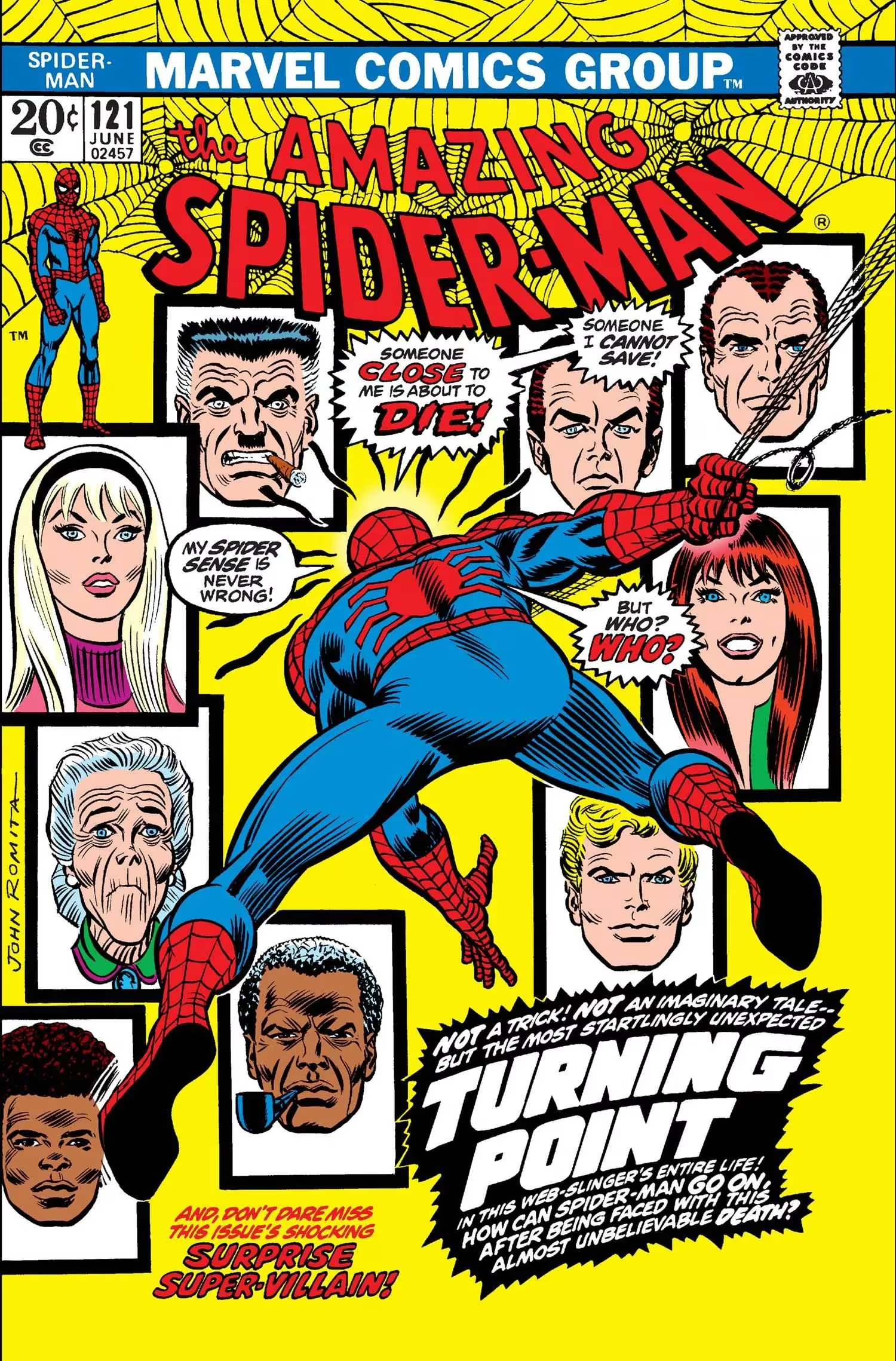
It's impossible to overstate the seismic impact of Gwen Stacy's death in The Amazing Spider-Man #121. This wasn't merely a plot point; it was a narrative earthquake that shattered Peter Parker's world and redefined superhero comics. The haunting image of her fall from the George Washington Bridge, followed by the catastrophic snap of his webbing, created a moment of pure, visceral horror. This event cemented tragedy as a core component of Spider-Man's DNA. 💔
Even in 2026, echoes of this loss resonate. Stories like Spider-Man: Blue serve as melancholic love letters to her memory, proving that Gwen occupies a permanent, sorrowful chamber in Peter's heart. Her death established a brutal formula: Peter Parker's greatest personal joys are often precursors to his most crushing defeats.
👨👩👦 The Stolen Legacy: Peter's Lost Children
If Gwen's death was a single, shattering blow, the systematic erasure of Peter's potential fatherhood represents a prolonged, psychological torment. Marvel has, on multiple occasions, dangled the promise of family before Peter, only to wrench it away in cruelly inventive fashion.
-
The Illusion of House of M: In this pocket reality, Peter experienced a bittersweet dream life—married to Gwen Stacy and raising their son, Richie.
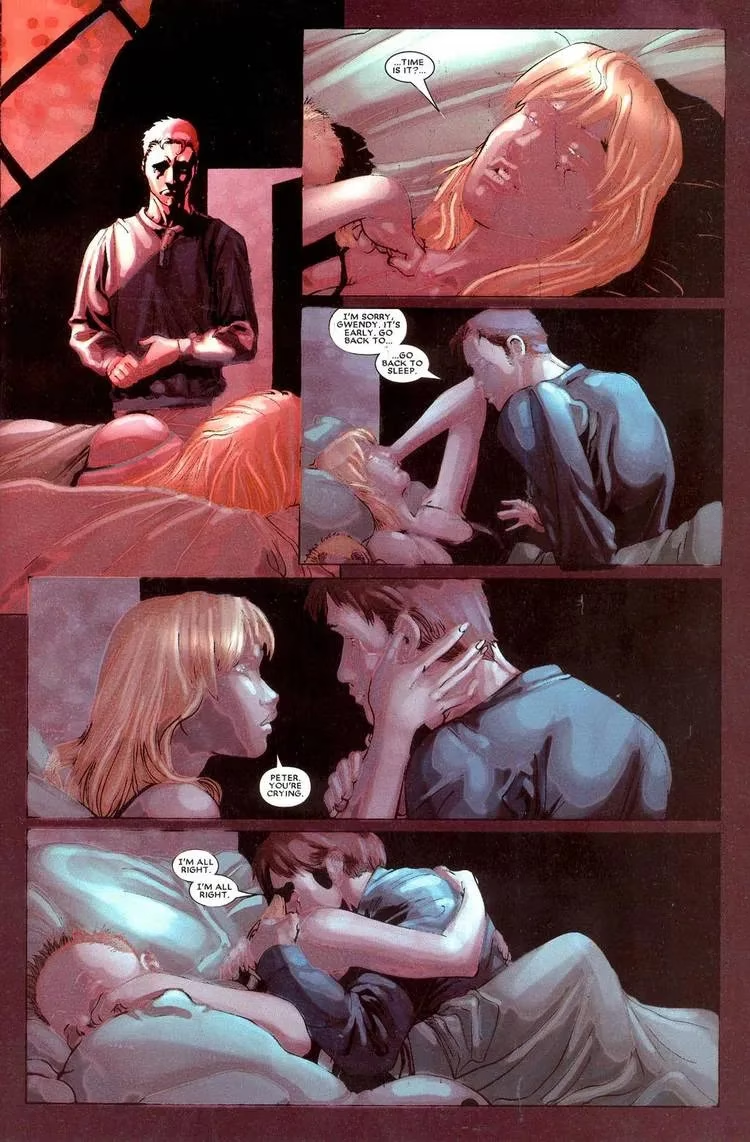 The trauma wasn't just losing this fantasy family upon waking; it was the agonizing process of remembering he had lost them, blending fresh grief with old wounds. This storyline portrayed Peter at his absolute lowest, a man mourning children who never truly existed, yet whose loss felt devastatingly real.
 -
The Clone Saga & Mayday Parker: The trauma became horrifically tangible in the main continuity with the "Clone Saga." Peter and Mary Jane's daughter, Mayday, was believed stillborn—a tragedy in itself. However, the lingering implication that Norman Osborn orchestrated her kidnapping (or worse) added a layer of malicious cruelty. The subsequent "One More Day" storyline used the memory of this lost child as emotional leverage, making the dissolution of Peter and MJ's marriage feel like a second betrayal.
| Lost Child | Reality / Universe | Nature of the Loss | Emotional Impact on Peter |
|---|---|---|---|
| Richie Parker | House of M (Pocket Universe) | Illusory son, lost when reality reset | Profound grief for a life never lived, compounded guilt |
| Mayday Parker | Earth-616 (Main Universe) | Believed stillborn, potentially kidnapped | Enduring parental grief, sense of stolen legacy and justice denied |
🔄 The Cycle of Retcons and Erasure
The most insidious aspect of these tragedies is how Marvel has often chosen to bury them. By 2026, storylines like House of M's impact on Peter have been largely minimized or forgotten in the main narrative. This narrative amnesia is, perhaps, Peter's greatest meta-tragedy: his pain is not only frequent but also deemed disposable, erased for the sake of a perpetually reset status quo. 😔
This creates a frustrating paradox for readers. Peter Parker is a character defined by growth through suffering, yet editorial mandates frequently prevent that growth from culminating in lasting change—like a stable family. He is condemned to meander through transient, underdeveloped relationships in the flagship Amazing Spider-Man title, while truly fulfilling partnerships are relegated to alternate universes like Jonathan Hickman's Ultimate Spider-Man run.
💔 The Modern Loneliness: MJ, Paul, and Beyond
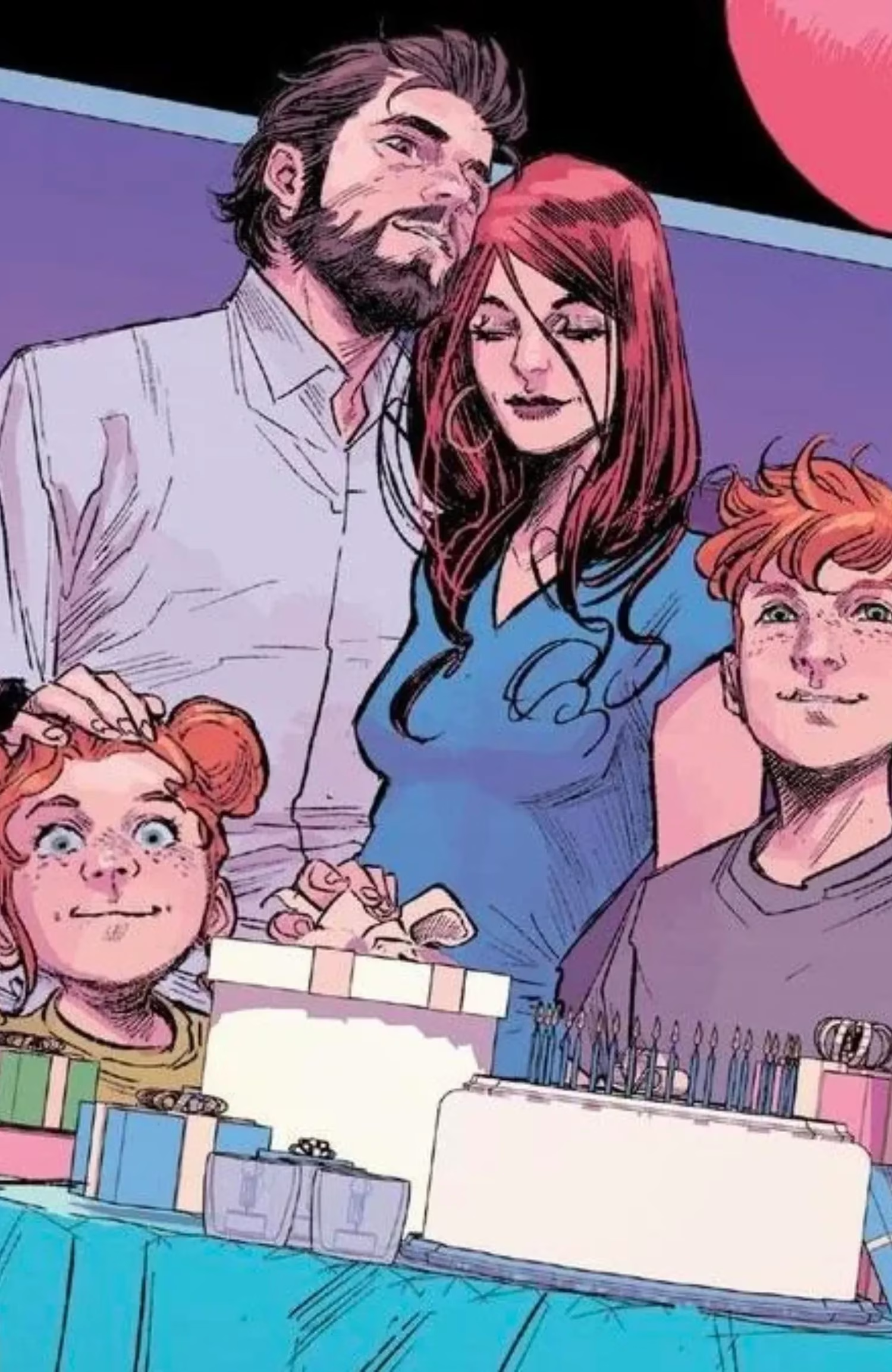
The recent era has reinforced this theme of enforced solitude. The introduction of the character Paul and the deliberate narrative distance placed between Peter and Mary Jane felt like a deliberate reiteration of Marvel's old formula: Spider-Man must be alone to be relatable. Even with developments like MJ's breakup with Paul and their team-ups as Venom and Spider-Man, the prospect of a true, lasting reunion feels distant. Stories like Amazing Spider-Man/Venom: Death Spiral seem to prioritize dynamic action over romantic reconciliation, suggesting Peter's heartache is a permanent fixture.
✨ Conclusion: The Weight of a Hero's Heart
Ultimately, Gwen Stacy's death was the foundational tragedy, but it was only the first note in a long, sorrowful symphony. The repeated loss of children—both real and imagined—and the systematic dismantling of his chances at domestic bliss represent a deeper, more chronic pain. It's the tragedy of a hero whose greatest battle isn't against super-villains, but against a narrative destiny that denies him the simple, human happiness he fights to protect for everyone else. As we look at Spider-Man in 2026, his resilience in the face of this cumulative loss remains his most heroic—and most heartbreaking—trait. 🕷️