Superhero television has long served as a fertile proving ground for actors who would later dominate film and prestige drama. Before the Marvel and DC cinematic universes turned comic book stories into global blockbusters, many of these shows relied on unknown or up-and-coming performers. In hindsight, that casting strategy created a remarkable time capsule of future A-list talent. How many viewers, watching a minor guest spot in the 1990s or early 2000s, could have predicted an Oscar nomination, a franchise-leading role, or a generation-defining television performance? The answer is astonishingly few, yet the evidence is everywhere.
Superboy and the Art of the Early Glimpse
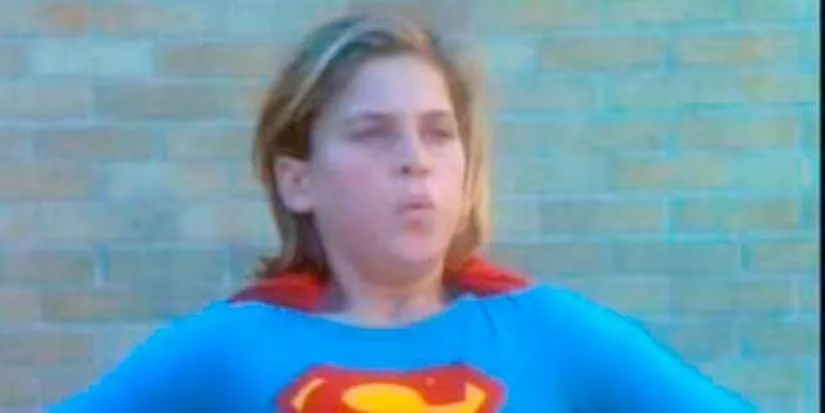
A continuation of Superman’s college years, Superboy blended youthful drama with low-stakes superhero storytelling. The series centered on Clark Kent’s formative adventures and featured future stars in modest roles. Joaquin Phoenix, credited as Leaf Phoenix, appeared as Billy Hercules in the episode “Little Hercules.” During a memorable daydream sequence, Phoenix donned the iconic spandex and used the Man of Steel’s powers. Who could have foreseen that the same actor would later earn acclaim for Joker, Gladiator, and Walk the Line? Meanwhile, Stacy Haiduk portrayed Lana Lang throughout the series, years before becoming a staple of daytime television through Days of Our Lives and The Young and the Restless. At the time, these performances seemed unremarkable, but their later careers recontextualize the show’s legacy.
Misfits: Scrappy Beginnings, Prescient Casting
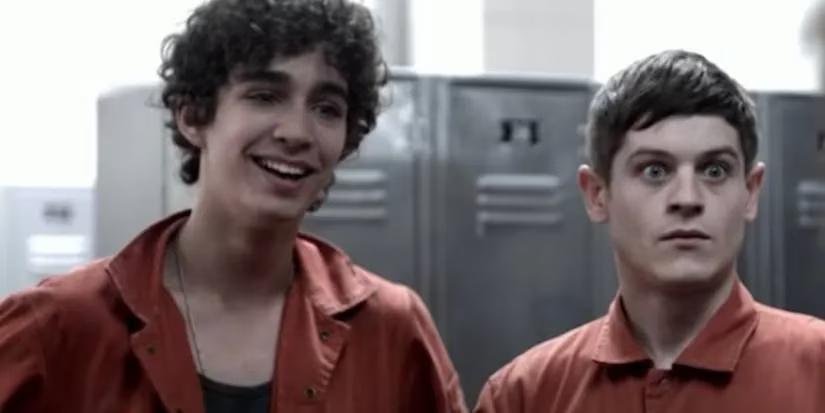
The British series Misfits followed a group of troubled young offenders who gained bizarre superpowers after a freak storm. Its breakout stars transformed the show into a launchpad for international success. Iwan Rheon played Simon Bellamy, a socially awkward character whose arc became one of the show’s most tragic and compelling storylines. Rheon later achieved global fame as Ramsay Bolton on Game of Thrones. Robert Sheehan starred as the loudmouthed, immortal Nathan Young, quickly becoming the show’s comedic centerpiece. After Misfits, Sheehan built a diverse career, culminating in mainstream popularity as Klaus Hargreeves on Netflix’s The Umbrella Academy. What once felt scrappy and niche now looks remarkably forward-thinking.
The Flash: A Convergence Point for Future Sci-Fi Icons
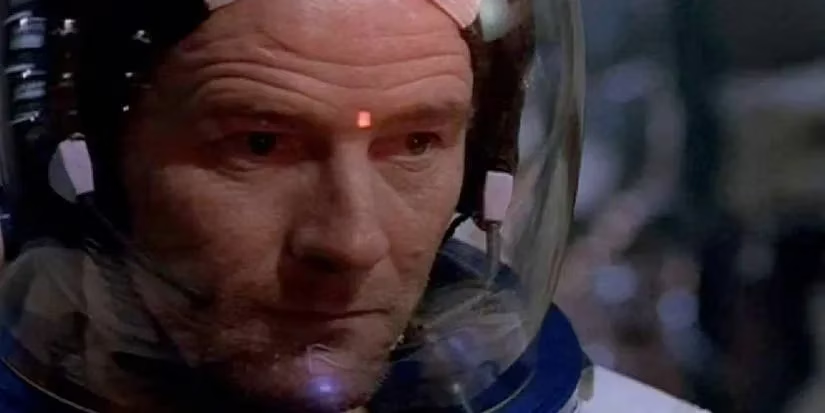
CBS’s ambitious early attempt to bring DC superheroes to primetime television, The Flash, was short-lived but featured several actors who would later become industry powerhouses. Bryan Cranston appeared as the criminal Philip Moses, long before redefining television acting with Breaking Bad and Malcolm in the Middle. Angela Bassett played investigative reporter Linda Lake, decades before earning Oscar nominations and leading roles in What’s Love Got to Do with It and Black Panther. Jeri Ryan portrayed Felicia Kane, a recurring antagonist, years before achieving fame as Seven of Nine on Star Trek: Voyager. In retrospect, The Flash looks like an unlikely meeting point for future sci-fi and drama icons. Could any casting director have assembled such a lineup intentionally? It seems improbable, yet the evidence remains.
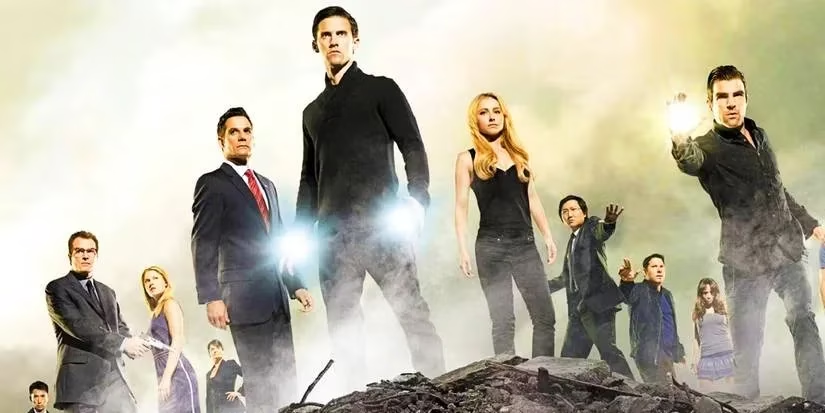
Heroes: A Zeitgeist-Capturing Ensemble of Future Stars
Heroes captured the mid-2000s zeitgeist by presenting ordinary people discovering extraordinary abilities through serialized, emotionally driven storytelling. Its ensemble cast became a launching pad for multiple future stars. Zachary Quinto’s chilling turn as Sylar transformed him into a genre icon and led to his casting as Spock in the Star Trek reboot films. Kristen Bell appeared as Elle Bishop, further cementing her rising profile before becoming a major comedy and animation star. Hayden Panettiere’s Claire Bennet made her one of television’s most recognizable faces. Greg Grunberg later became a staple of J.J. Abrams productions, while Justin Baldoni went on to success as an actor-director. Most surprisingly, Sydney Sweeney’s early appearance as a young girl now feels surreal given her current A-list status. Heroes may not have delivered a perfect superhero ending, but its casting impact remains undeniable.
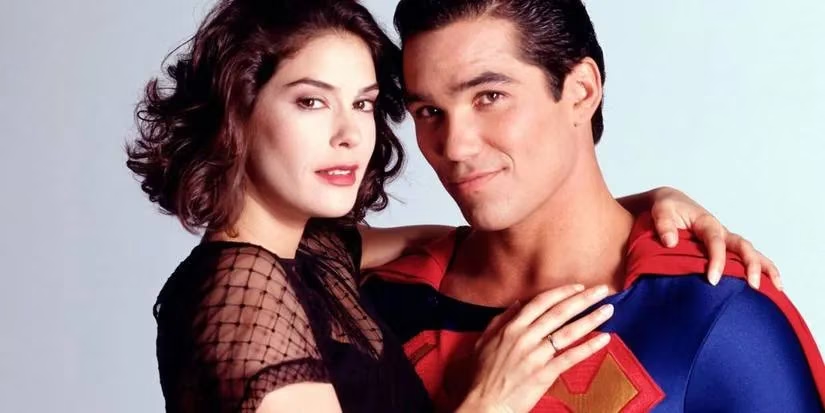
Lois & Clark: A Time Capsule of Pre-Fame Talent
The romantic, character-driven take on Superman, Lois & Clark: The New Adventures of Superman, emphasized workplace comedy and interpersonal drama as much as superhero spectacle. Leading the series, Teri Hatcher played Lois Lane, a role that boosted her star power before her iconic run on Desperate Housewives. Beyond the leads, the show became a surprising magnet for future stars. Drew Carey appeared as tabloid rival Herbie Saxe, years before launching The Drew Carey Show. Denise Richards showed up as Angela, later becoming a major 1990s film star. Howie Mandel brought impish energy to Mr. Mxyzptlk long before dominating game shows. Richard Belzer portrayed Inspector Henderson prior to his legendary Law & Order: SVU tenure. Even blink-and-miss-it appearances from Hal Sparks and Brad Garrett gained new significance as both became comedy staples. What once felt like stunt casting now reads as a time capsule of pre-fame talent.
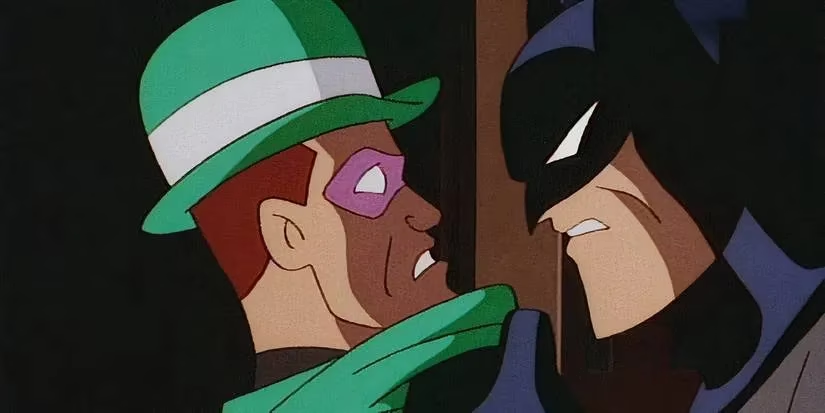
Animated Universes with Extraordinary Depth
Widely regarded as one of the greatest superhero adaptations ever made, Batman: The Animated Series featured an astonishing roster of characters played by future stars. Emmy-winning Will & Grace star Megan Mullally voiced Cindy, Robin’s girlfriend. Jeffrey Tambor appeared as a SWAT team leader prior to acclaimed roles in Arrested Development and Transparent. Ron Perlman’s impeccable portrayal of Clayface predated his rise as a genre legend. John Glover delivered a definitive superhero performance as the Riddler before decades of prestige television work, notably Smallville. Kate Mulgrew’s Red Claw role came before her iconic turn as Captain Janeway in Star Trek: Voyager. Elisabeth Moss voiced Kimmy, Lloyd Ventrix’s daughter, long before Mad Men and The Handmaid’s Tale. Even Seth Green’s appearance as Wizard foreshadowed a prolific career in animation and comedy.
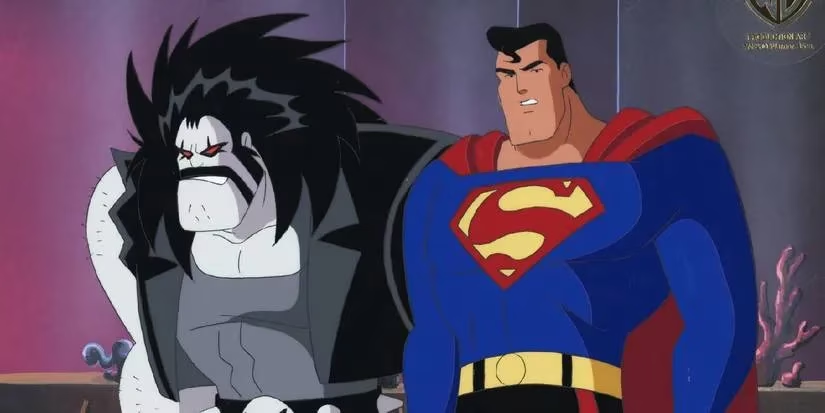
Following the success of Batman: The Animated Series, Superman: The Animated Series expanded the DC animated universe with another impressive lineup of future stars. Brad Garrett voiced two distinctive characters, Bibbo Bibbowski and Lobo, shortly before becoming a sitcom staple in Everybody Loves Raymond. Lisa Edelstein played Mercy Graves prior to her breakout on House. Ron Perlman returned as Jax-Ur, reinforcing his genre credentials. Ted Levine voiced Sinestro before mainstream fame from The Silence of the Lambs and television dramas. Frasier’s Peri Gilpin’s Volcana performance predated her legendary sitcom career. William H. Macy’s cameo as a film director now feels astonishing given his later acclaim. Sabrina’s Melissa Joan Hart voiced Saturn Girl during her peak teen stardom, while Stephen Root’s Unity role foreshadowed decades of character-actor excellence. Like its predecessor, Superman: The Animated Series elevated superhero animation to unexpected heights.
Smallville: The Ultimate Casting Goldmine
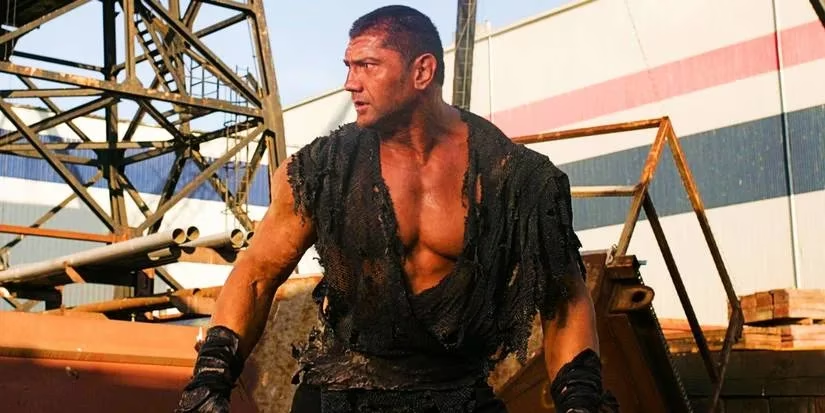
Smallville redefined superhero television. Focusing on Clark Kent’s life before becoming Superman, it blended teen drama with comic book mythology in a way that shaped the genre for a decade. Across ten seasons, the series became a revolving door for future stars who appeared years before achieving mainstream or franchise fame. Kelly Brook appeared in four episodes during season 1 as Victoria Hardwick, Lex Luthor’s manipulative love interest, years before becoming a major international model and television personality. Alan Ritchson debuted as Aquaman in several episodes, marking one of the earliest live-action portrayals of the character and foreshadowing his later success as a leading action star. Jensen Ackles joined in season 4 as Jason Teague before becoming synonymous with Supernatural. Shawn Ashmore appeared as Eric Summers, later going on to play Iceman in the X-Men films. Amy Adams’ performance as Jodi Melville in “Cravings” now stands out as one of the most famous early guest roles given her multiple Oscar nominations. Lizzy Caplan played Tina Greer, a shape-shifting antagonist, while Adam Brody portrayed Justin Gaines in “Crush.” Cobie Smulders appeared as Shannon Bell in “Bound,” later rising to superhero stardom as Maria Hill in the MCU. Dave Bautista showed up as Aldar in “Static,” years before wrestling fame and Guardians of the Galaxy. Lost’s Ian Somerhalder played Adam Knight, a resurrected teenager sent by Lionel Luthor to spy on Clark, while The Vampire Diaries’ Paul Wesley appeared as Lucas Luthor. Collectively, Smallville now feels like a casting goldmine in retrospect.
A Legacy That Keeps Rewarding
Looking back at these superhero shows, a pattern emerges: the genre has never simply been about capes and superpowers. It has consistently provided a space where emerging actors can test their range, build screen presence, and sometimes deliver early performances that now feel almost prophetic. Was it luck, or did the fantastical settings allow actors to take risks they might not have attempted in more grounded dramas? Either way, the legacy is clear. From animated voice work to live-action guest spots, the superhero television landscape of the past three decades contains hidden seeds of today’s biggest careers. Revisiting these shows is not just nostalgic; it is a study in how stardom often begins in the most unexpected places.