I have chased the cape through rain-slicked rooftops more times than I can count—not in flesh, but in the silent, flickering cathedral of a monitor at 3 a.m. As a player who has worn the cowl across decades of digital Gothams, I’ve come to know the Dark Knight’s heartbeat: a rhythm calibrated to the one line he will not cross. Yet there is a ghost in the code, a sepia-toned memory from 1940 that most players never see. It is the moment Batman stopped being a hero and became a hangman. And in that dangling shadow, I learned what truly separates him from the void he hunts.
Long before the first Arkham game taught me to glide like a living papercut across the moon, Batman was a creature of pulp and gunpowder. In the debut issue of his own solo title, Batman #1 (1940), he performed an execution so cold it still leaves frost on my joystick. He was not the guardian I know, the one who treats every thug’s breath as a sacred prayer. No—this Batman strafed a van with machine guns mounted on his Batplane, turning henchmen into smoldering punctuation. But the true horror was quieter, more intimate. After the crash, a single survivor stumbled onto the road, a man with no malice in his marrow, merely the puppet of a cruel experiment. Batman descended, looped a rope around the wanderer’s neck, and ascended again, the body jerking into the sky like a broken pendulum. His internal monologue was not a scream of anguish but a flat note: “He’s probably better off this way.”
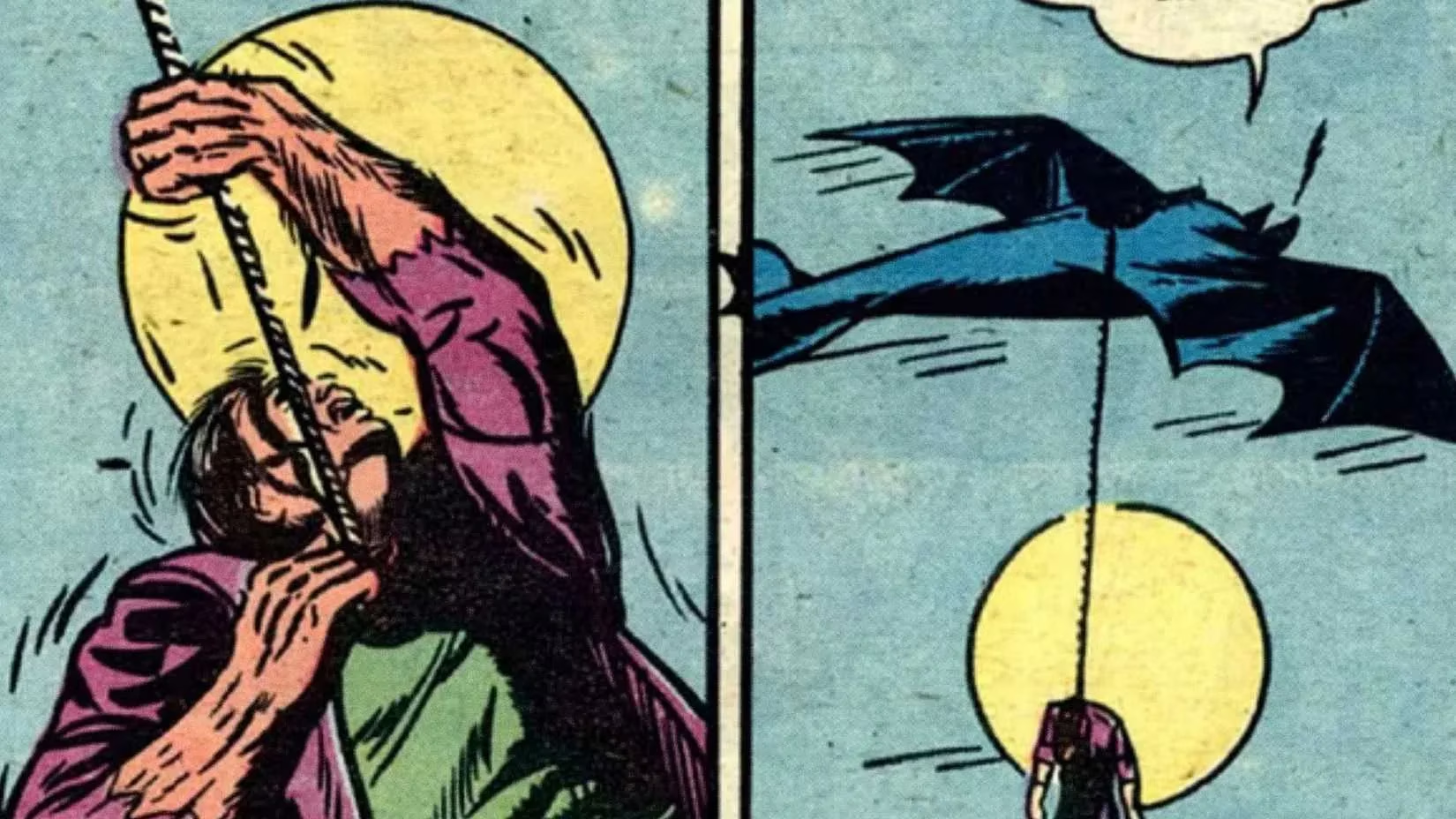
I have replayed that panel in my mind like a corrupted save file. The corpse dangling from the Batplane was not a final boss—it was a mirror. In that snapshot, the no-kill rule did not exist; it was still a blank space waiting to be written. This act is the ultimate benchmark, a moral null zone where Batman functions not as a scalpel of justice but as a guillotine. The rope became an inverted umbilical cord, severing him from the humanity he would later spend a century trying to reclaim. It reminds me of those glitched moments in simulation games where the physics engine breaks and a character flails into infinity—only here, there was no patch, no reset. That death was permanent, and it sculpted everything that followed.
Shortly after those early, blood-spattered stories, DC editorial stepped in like a developer issuing a critical patch. They installed a strict no-kill rule, turning Batman from a grim executioner into an ethical vigilante. This wasn’t a mere cosmetic change; it was a full engine rebuild. The Dark Knight’s psychology was recoded, his combat animations shifted from lethal finishers to precise, non-lethal strikes. I’ve felt that shift in every game—from the rhythmic beatdowns of Arkham City where I could watch thugs’ heart rates on detective mode, to the deliberate counters of Gotham Knights that emphasized bruise over bullet. The rule became his gyroscopic anchor, a silent, whirring core that keeps him upright amid the centrifugal force of rage.
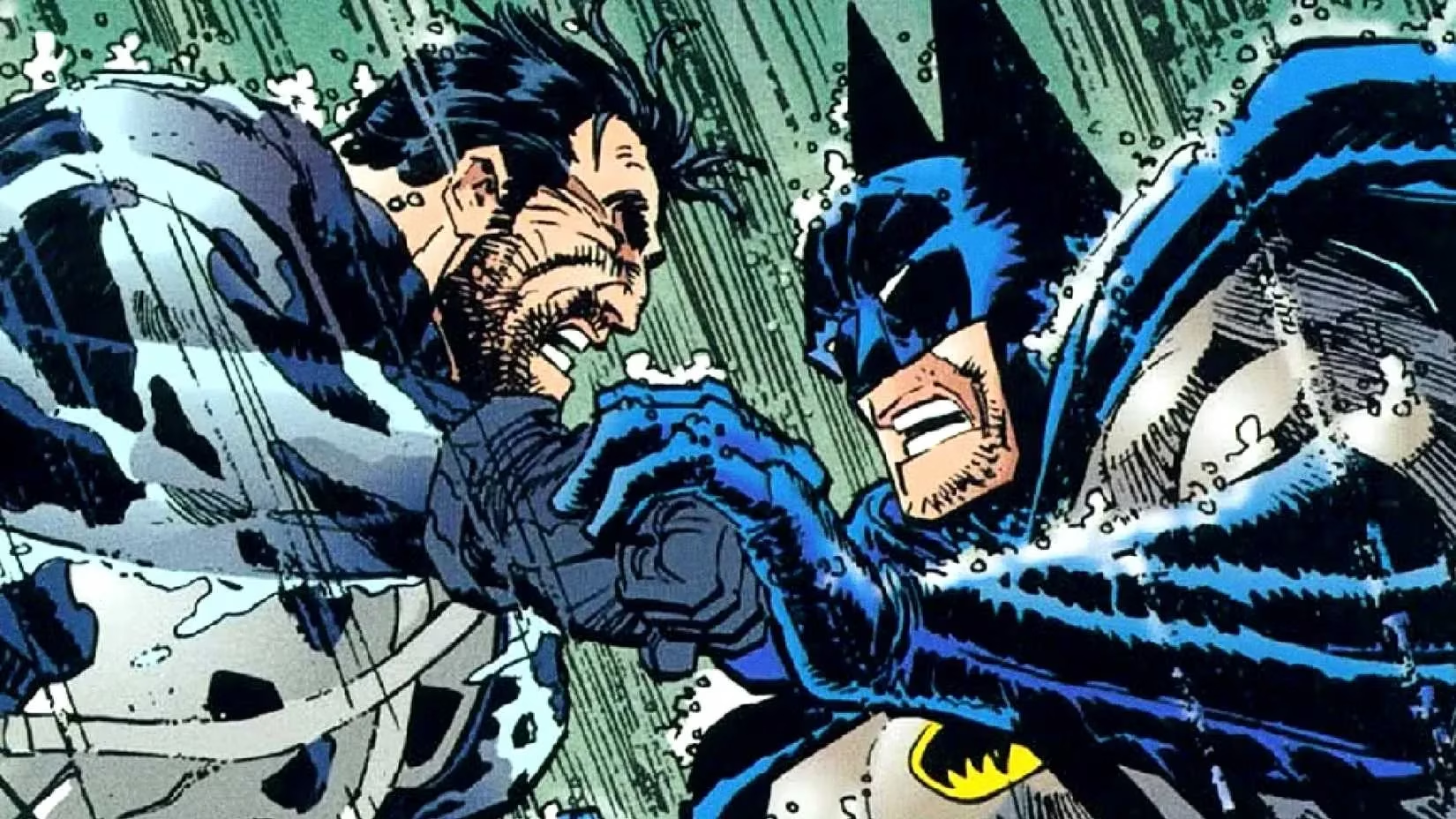
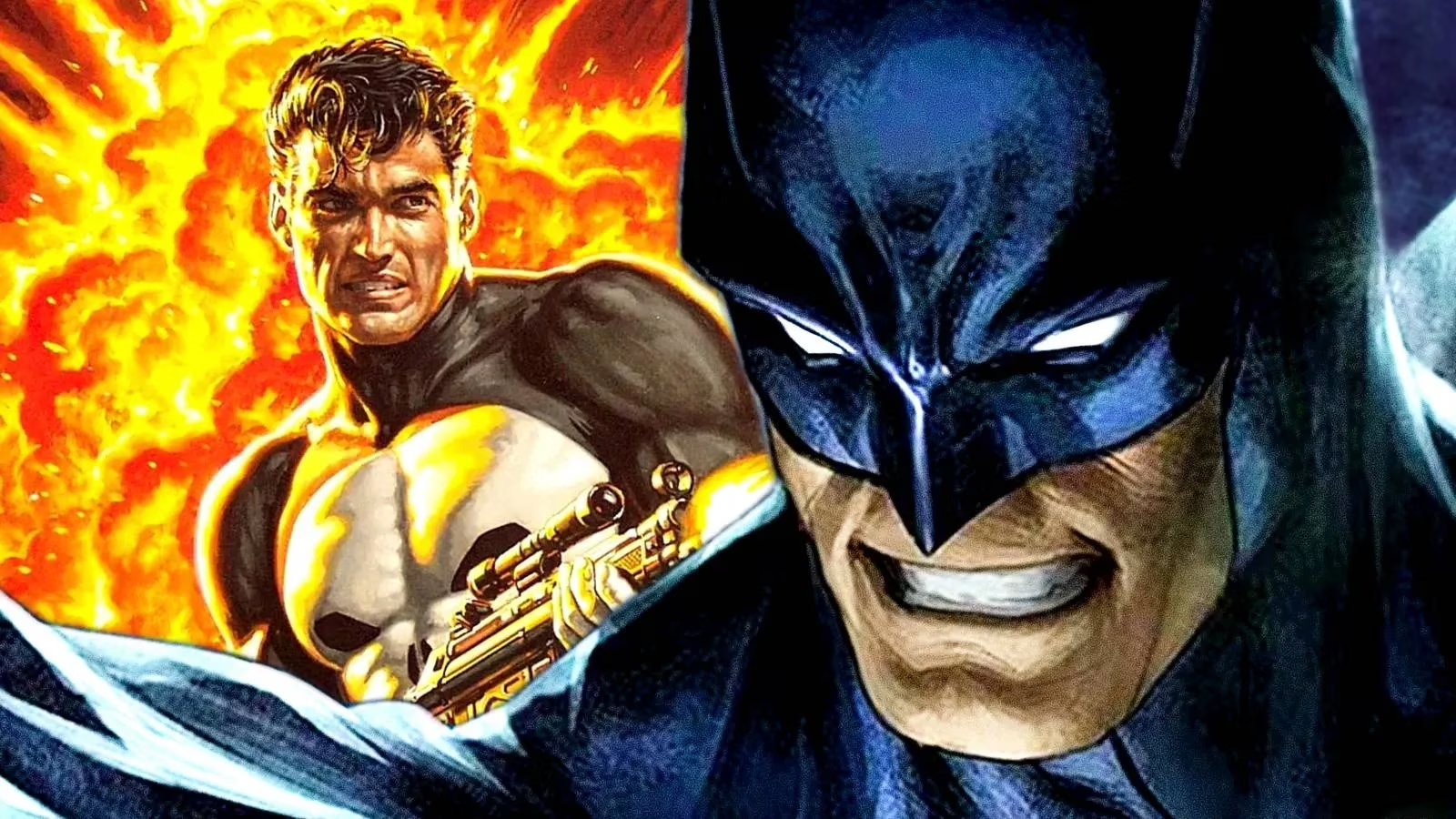
And this is where the Punisher enters my crosshairs. As a gamer, I’ve walked both paths: crouching in the shadows as Batman, and wading through the grim corridors of The Punisher (2005) with a white skull on my chest, every room a red algebra of vengeance. Frank Castle is Batman’s photographic negative, the hero unmoored. If Batman is a lighthouse built on a rock of self-denial, the Punisher is a star that collapsed into its own gravity, burning everything within its reach but illuminating nothing. They share the same fuel—families incinerated by senseless crime—but their engines propel them in opposite trajectories. Castle views crime as a war of attrition, a meat grinder where the only victory is the permanent removal of the enemy. Bruce Wayne treats it as a systemic illness, requiring surgery with eyes wide open, never closed in the finality of death.
Both are trapped in a perpetual combat loop, a self-sustaining cycle of violence that can never fully discharge. Yet the Punisher remains a hollowed-out shell, a ghost running on fumes in a war zone that follows him like a polluted sky. His mission brings no peace, just an endless loading screen of grief. Batman, by refusing to kill, preserves a thin but unbreakable fiber of his humanity. That fiber lets him grow—it allows the Bat-Family to exist, for wounds to scar over instead of fester, for healing to become a co-op mission rather than a solitary death march. The Punisher is a derailed train screaming across a salt flat, its whistle a permanent wail. Batman is a steady ship navigating a storm with a broken compass, always aiming for a dawn when the sea will calm and his journey can finally end.
I’ve often wondered, holding my controller in that blue-lit room, which one I would become if tragedy rewrote my own source code. The answer terrifies me, because the line between them is thinner than a pixel. Without the no-kill rule, Batman would be indistinguishable from Marvel’s cold-blooded executioner—a detail that Batman #1 proved with stomach-churning clarity. That 1940 murder is not a glitch to be ashamed of; it’s the origin story of the rule itself, the bloody thread that stitches the cape together. Every time I land a silent takedown and see the Zzz indicator float above an unconscious foe, I’m replaying that choice: not to become the monster. I’m replaying the moment a murdered man, swinging beneath the wings of a plane, became the first and last to die by Batman’s deliberate hand—a sacrifice that birthed a universe where hope, not a body count, is the high score.
And so, as the credits roll on another night in Gotham, I put down the controller. The screen dims. Somewhere in the dark, a rope still swings, a ghost that taught a hero how to stand.