Marvel Studios is meticulously preserving a pivotal 12-year creative partnership that once revolutionized the Marvel Cinematic Universe, a strategy coming to full fruition with the highly anticipated Avengers: Doomsday. The period following the monumental Infinity Saga has presented its share of narrative and logistical challenges for the sprawling franchise, characterized by a multiverse of stories that sometimes lacked the cohesive through-line of earlier phases. As the Multiverse Saga barrels toward its climax, the studio's focus has sharpened on ensuring the final approach to Avengers: Doomsday is executed with the precision and emotional weight that defined its most celebrated chapters. This has manifested in an unusually early marketing campaign, commencing a full year before the film's premiere—a tactical shift signaling the project's paramount importance. At the heart of this endeavor is the reunion of a foundational creative team: directors Joe and Anthony Russo and star Chris Evans, reprising his role as Steve Rogers. This reunion is not merely nostalgic but a deliberate recalibration, an attempt to harness the specific alchemy that produced some of the MCU's most critically and commercially successful films.
The Russo Brothers' MCU Legacy: From Winter Soldier to Doomsday
Twelve years after Joe and Anthony Russo first boarded the MCU with Captain America: The Winter Soldier, they return to the helm for Avengers: Doomsday. Their 2014 film is widely regarded as a watershed moment for the franchise; it was a political thriller disguised as a superhero movie that fundamentally altered the MCU's tone and scope. The film did more than advance Steve Rogers' story—it served as the narrative and thematic keystone for the next three colossal entries in the Infinity Saga: Captain America: Civil War, Avengers: Infinity War, and Avengers: Endgame. Their filmmaking approach, characterized by grounded stakes, complex character morality, and sprawling yet intimate action, became the gold standard for MCU culminations.
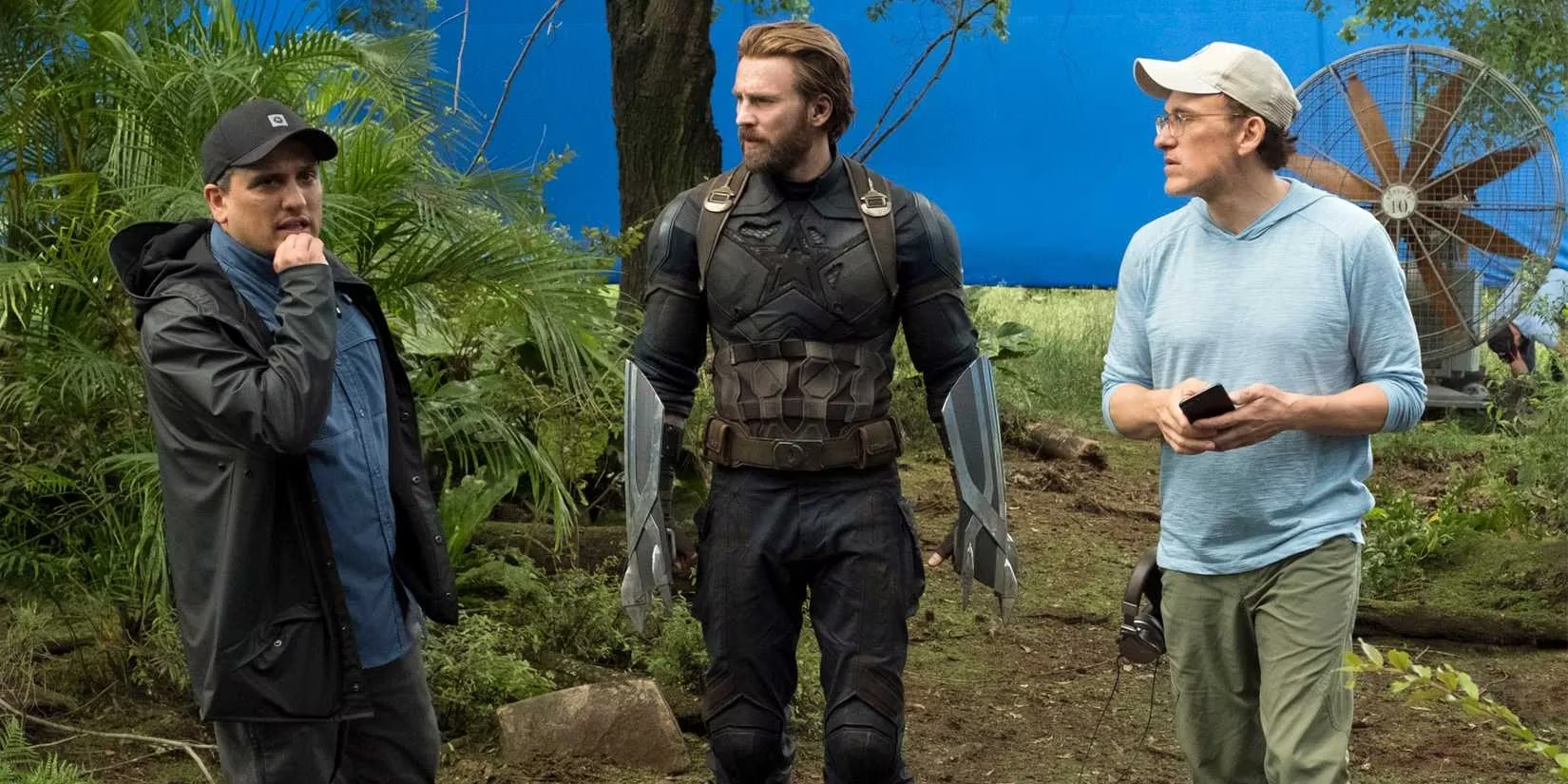
The significance of their return for Doomsday cannot be overstated. Since their debut over a decade ago, no other filmmakers have creatively steered the core narrative of Steve Rogers. Their continued collaboration with Chris Evans represents a 12-year unbroken creative chain, a rarity in modern blockbuster filmmaking where directors are often swapped between sequels. This continuity provides a crucial thread of authorial intent. While Steve Rogers' retirement in Endgame was a poignant and seemingly definitive endpoint, the decision to bring him back is mitigated by the trust placed in the Russos. They have repeatedly demonstrated a profound understanding of the character's core—his unwavering morality, his tactical genius, and his profound sense of duty—often putting him through ethical wringers that forged him into the MCU's moral compass. Their return is like a master watchmaker being entrusted with the same intricate timepiece they originally assembled, expected to repair and enhance its mechanism with intimate knowledge of every gear and spring.
Steve Rogers' Return: Navigating a Poignant Legacy
The confirmed return of Chris Evans as Steve Rogers is arguably the most emotionally charged element of Avengers: Doomsday. Captain America: The First Avenger provided a solid foundation, but it was the Russo brothers who transformed Steve from a patriotic symbol into one of the most fully realized and human characters in the entire superhero genre. They achieved this by consistently challenging his black-and-white worldview, placing him in morally gray conflicts that tested his ideals to their limit.
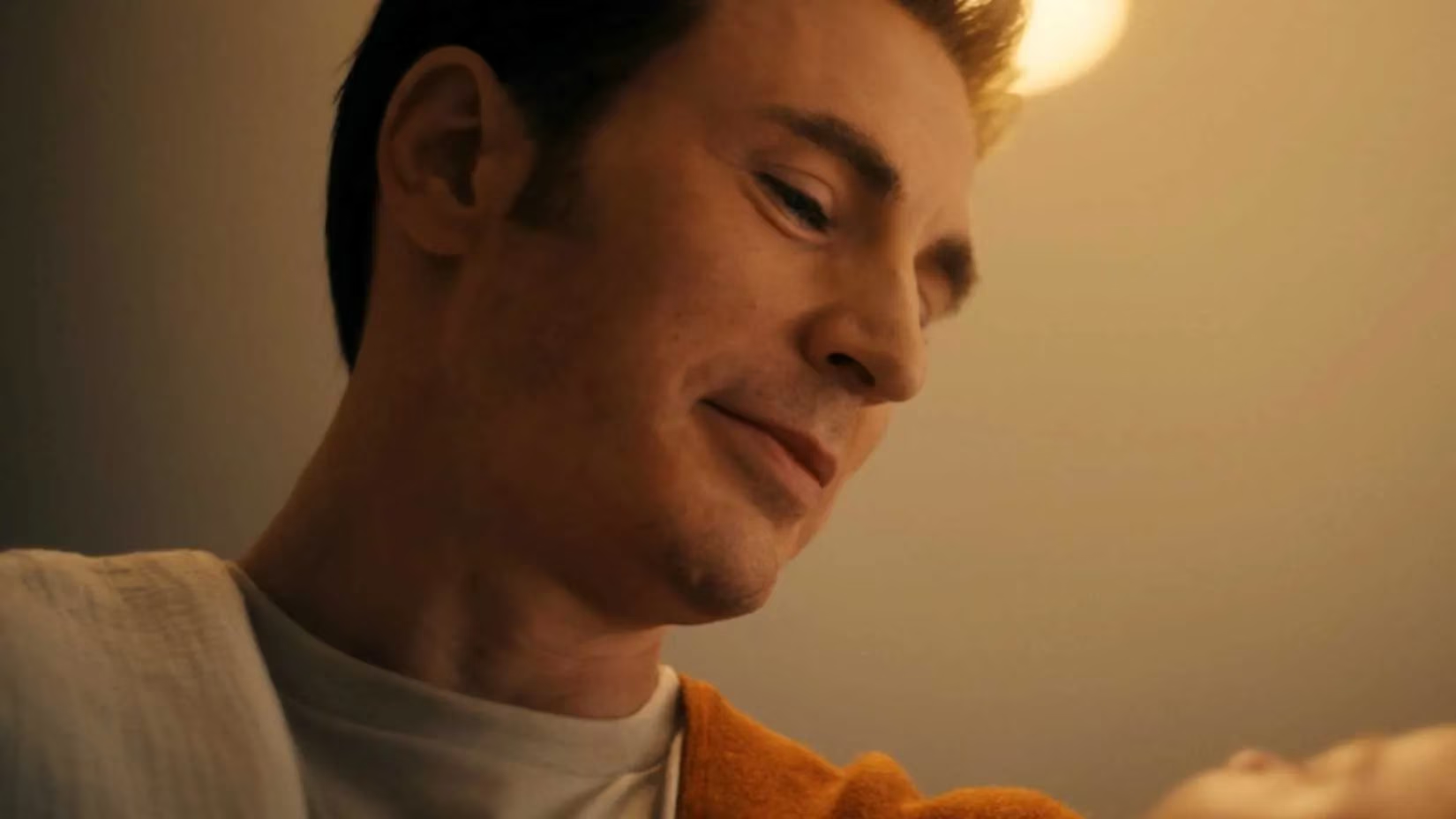
Admittedly, resurrecting a character who received such a perfect narrative closure is a venture fraught with risk. The concern among fans is that his return could feel like a narrative backtracking, undoing the emotional resonance of his departure. However, the involvement of the Russos acts as a vital safeguard. They have proven their deep care for Steve's arc, treating his journey with a novelistic consistency. If Marvel Studios was determined to revisit the character, entrusting his next chapter to the directors who defined his modern incarnation is the optimal scenario. Their stewardship suggests that his return will not be a mere cameo but a purposeful evolution of his story, perhaps exploring the consequences of a retired hero being forced back into a world even more fractured than the one he left. His legacy in the MCU now stands not just as a soldier, but as a living monument, and the Russos are the architects best suited to decide when and why such a monument must be moved.
Avengers: Doomsday: Culminating the Multiverse Saga
Avengers: Doomsday represents more than just another team-up film; it is the designated grand finale of the tumultuous Multiverse Saga. Compared to the linearly structured Infinity Saga, the current saga has been a more sprawling and experimental tapestry, introducing variants, incursions, and a vast array of new characters. The Russos' task is to weave these disparate threads into a coherent and satisfying climax—a challenge akin to conducting a symphony where every musician is playing from a different sheet of music, requiring a conductor with both a grand vision and an understanding of each individual instrument's role.
The film's key details underscore its scale and importance:
| Category | Details |
|---|---|
| Release Date | December 18, 2026 |
| Directors | Anthony Russo, Joe Russo |
| Producers | Anthony Russo, Joe Russo, Kevin Feige |
| Featured Cast | Chris Evans (Steve Rogers), Chris Hemsworth (Thor), Vanessa Kirby (Sue Storm) |
This production framework highlights the centralized creative control returning to the Russo brothers, coupled with Kevin Feige's overarching guidance. Their return signals a back-to-basics approach for the climax, prioritizing the character-driven storytelling and clear, high-stakes conflict that made their previous Avengers films landmarks. The early marketing push suggests a campaign designed to rebuild focused anticipation, guiding audiences through the final phase of a saga that has, at times, felt overwhelming in its scope.
A Calculated Homecoming for the MCU's Future
In conclusion, the reunion of the Russo brothers and Chris Evans for Avengers: Doomsday is a calculated strategic move by Marvel Studios. It is an acknowledgment that the franchise's future success may be partially rooted in honoring and redeploying the partnerships that forged its past triumphs. The 12-year streak of collaboration between this director-actor trio is a unique asset, providing a layer of narrative integrity and audience trust as the MCU navigates its most complex storyline yet. Their combined return functions like a compass recalibrating to true north, offering a reliable directional guide after a period of expansive exploration. While the Multiverse Saga has expanded the cinematic universe's boundaries in unprecedented ways, Doomsday seeks to ground its conclusion in the proven character work and directorial prowess that first captivated global audiences. The message is clear: as the MCU confronts its doomsday, it is placing its faith in the architects of its finest hours to ensure the saga ends not with a whimper, but with the same resonant, character-defined bang that has defined its greatest achievements.