The cinematic landscape in 2026 is a tapestry woven with threads of legacy and whispers of change. Marvel Studios' Avengers: Doomsday campaign unfurls not with a single, thunderous roar, but with a series of intimate sighs and one earth-shattering tremor. It is a marketing symphony composed in a minor key, its quietest movements revealing a profound shift in the audience's soul. The first notes were gentle, almost elegiac: Steve Rogers, his hands cradling the fragile promise of a new life, his gaze lost in the faded fabric of a bygone uniform. Then came Thor, not a god of thunder, but a father kneeling in prayer, his voice a murmur to the All-Father about the weight of raising a daughter named Love. These were portraits of heroes in repose, moments stolen from the epic, and they were met with a quiet, respectful nostalgia—a recognition of past glories, but not the frantic heartbeat of anticipation.
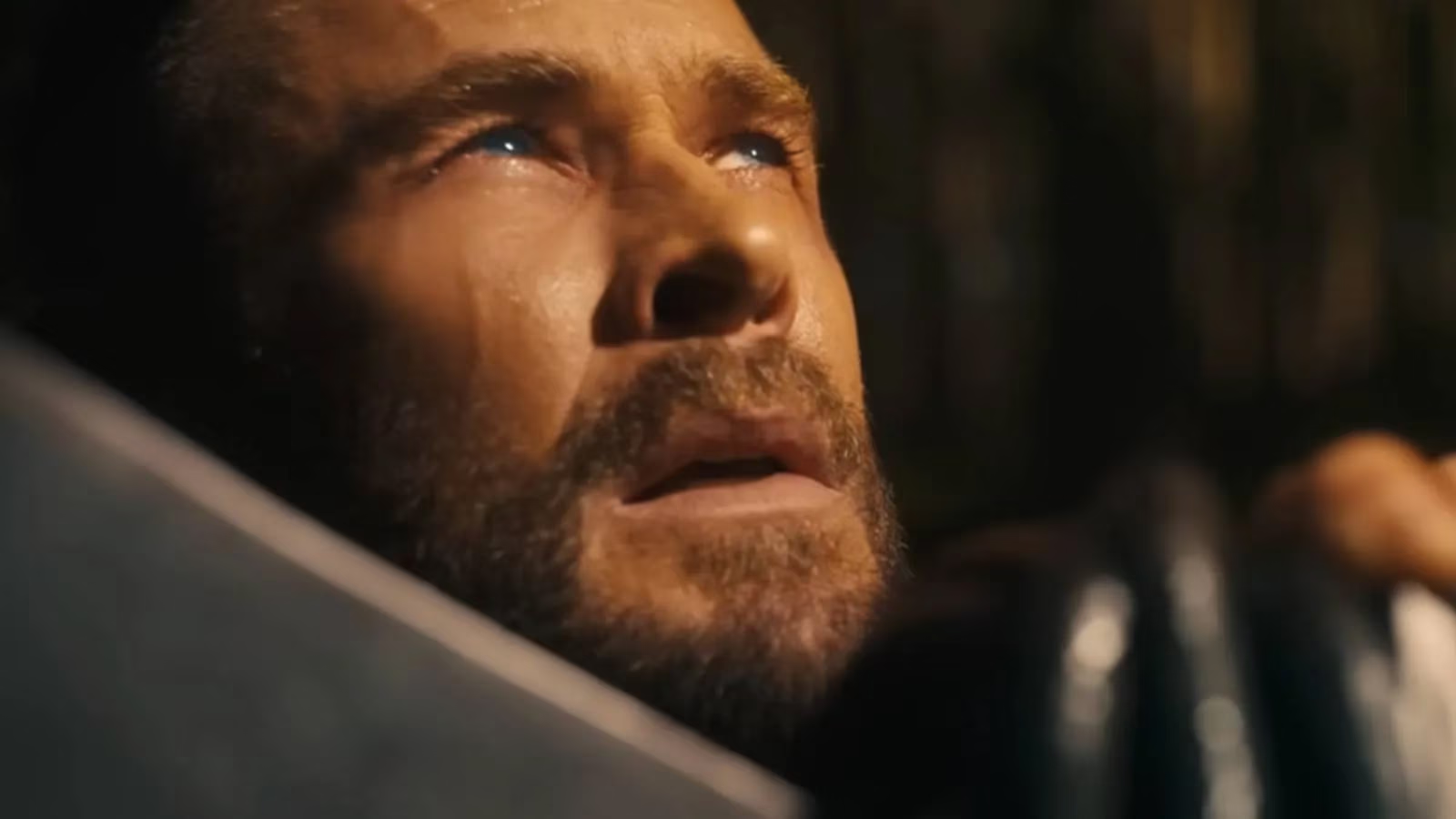
Then, the third teaser arrived, and the quiet contemplation shattered like glass. It was a bolt from a blue sky, a surge of raw, unbridled power that instantly recalibrated the entire conversation. Focused on the X-Men, this fragment of film did not whisper; it roared. Featuring the return of Patrick Stewart's Professor Xavier and Ian McKellen's Magneto, it was a direct, visceral injection of a different cinematic lineage into the heart of the Marvel Cinematic Universe. Social media, that great barometer of cultural pulse, spiked feverishly. For years, the question of how mutants would arrive had been a theoretical puzzle; now, it was an emotional reality, immediate and laden with the gravity of decades.
The response was a complex cocktail of feelings:
-
Nostalgia: The sight of Stewart and McKellen, their performances etched into cultural memory, brought a wave of warm recognition.
-
Novelty: Their presence within the MCU framework was thrillingly new, a collision of worlds long kept apart.
-
Redemption: Most powerfully, the teaser offered a long-awaited correction, a chance to set right what many felt had gone astray.
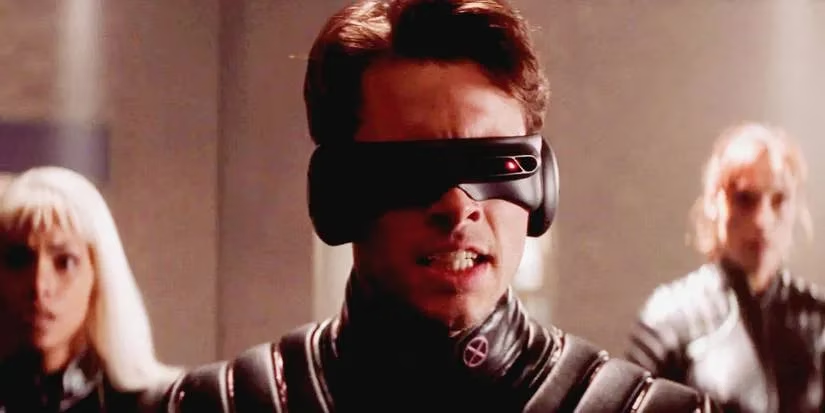
This last element crystallized in the portrayal of James Marsden's Cyclops. No longer the sidelined, often frustrated figure of the Fox films, here he stood resplendent in a costume ripped from the comic book page. His optic blasts were not neat, controlled beams but explosive, ferocious torrents of energy. This was Scott Summers as the confident, formidable field leader he was always meant to be—a powerhouse finally unleashed. The teaser felt less like an introduction and more like a vindication.
Yet, within this thrilling spectacle lies a poignant and uncomfortable truth for Marvel. The muted reaction to the deeply personal Steve Rogers and Thor teasers stands in stark contrast to the frenzy around the X-Men. It speaks to a quiet disconnection. For many, the journeys of Steve and Thor reached perfect, poetic conclusions; their return, however beautifully rendered, risks feeling like a nostalgic echo rather than a necessary new verse. The audience's heart, it seems, is yearning for a different kind of story.
| Teaser Focus | Emotional Core | Audience Reaction | Implied Narrative |
|---|---|---|---|
| Steve Rogers | Legacy, Fatherhood, Quiet Reflection | Respectful, Muted Nostalgia | A look back, a closing chapter |
| Thor | Parenthood, Responsibility, Prayer | Appreciative, Contemplative | Personal evolution beyond godhood |
| X-Men | Crossover, Redemption, Raw Power | Feverish Excitement, Viral Hype | A new beginning, a course correction |
The X-Men teaser succeeds because it offers something the current MCU struggles to provide: the potent alchemy of novelty married to deep-seated familiarity. These are not heroes whose stories have been told and retold within the same continuity; they are icons from a parallel cinematic universe, arriving with their own history, their own emotional weight, and the thrilling promise of a new context. The excitement is fundamentally retrospective, a powerful pull toward characters who existed outside the MCU's once-dominant gravitational field. This shift in audience desire—looking backward with more fervor than forward—signals a potential crisis of momentum for the franchise. If the loudest cheers are for imports, what does that say about the vitality of the native soil?
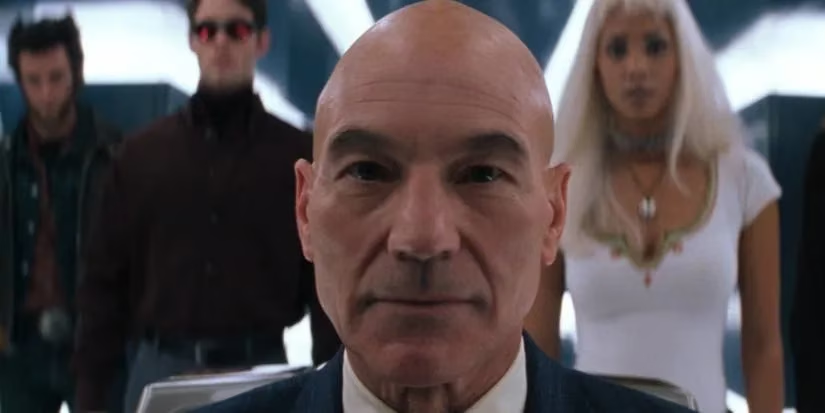
Paradoxically, this very trend, which highlights the MCU's present challenges, may also illuminate the path to its renewal. Marvel Studios appears acutely aware of where the lightning has struck. The studio's reported pivot toward a Mutant Saga is not merely a new storyline; it is a strategic acknowledgment and a potential lifeline. Avengers: Doomsday and its follow-up, Avengers: Secret Wars, can function as grand, celebratory send-offs for the Fox-era X-Men. They offer closure, a chance to honor these beloved iterations and give them the meaningful finale they deserve. This act of respect buys immense goodwill and rekindles emotional investment from a generation of fans.
The true test, however, lies in the dawn after the farewell. Kevin Feige's暗示 of a mutant-centric future is the crucial next step. By using these upcoming films to gracefully conclude one chapter, Marvel clears the stage to introduce entirely new, MCU-native versions of the X-Men. It is an opportunity to shed the narrative weight of recent, uneven phases and start afresh. The goal is clear: to prevent the iconic Fox performances from becoming a shadow that stifles new growth. The rapturous response to the teaser proves the appetite for Marvel storytelling remains voracious when the narrative feels purposeful, respectful, and new. If Marvel can channel the raw energy of this crossover into a coherent, forward-looking Mutant Saga, then Avengers: Doomsday may be remembered not as a symptom of fatigue, but as the precise, calculated tremor that heralded a new age. It is the moment the old gods were honored, so that new ones might rise.