A decade after his debut in the shimmering world of the MCU, Tom Holland's Peter Parker swings with a familiarity that belies the vast, unexplored wilderness of his own mythos. By 2026, he has been a cornerstone, a friend, and an Avenger, yet the cinematic web he spins has only brushed against the profound, often darker threads woven through decades of comic book history. Beneath the familiar skyline of New York, whole sagas of horror, psychological torment, and visceral survival lie dormant, waiting for the screen to grant them breath. The journey of the wall-crawler on film has been one of meteoric ascent, but the true depths of his legacy—a legacy painted in symbiote black, clone confusion, and primal fear—remain a shadowy continent, its most compelling stories echoing in the silence between movie releases.
The Symphony of Slaughter: Maximum Carnage
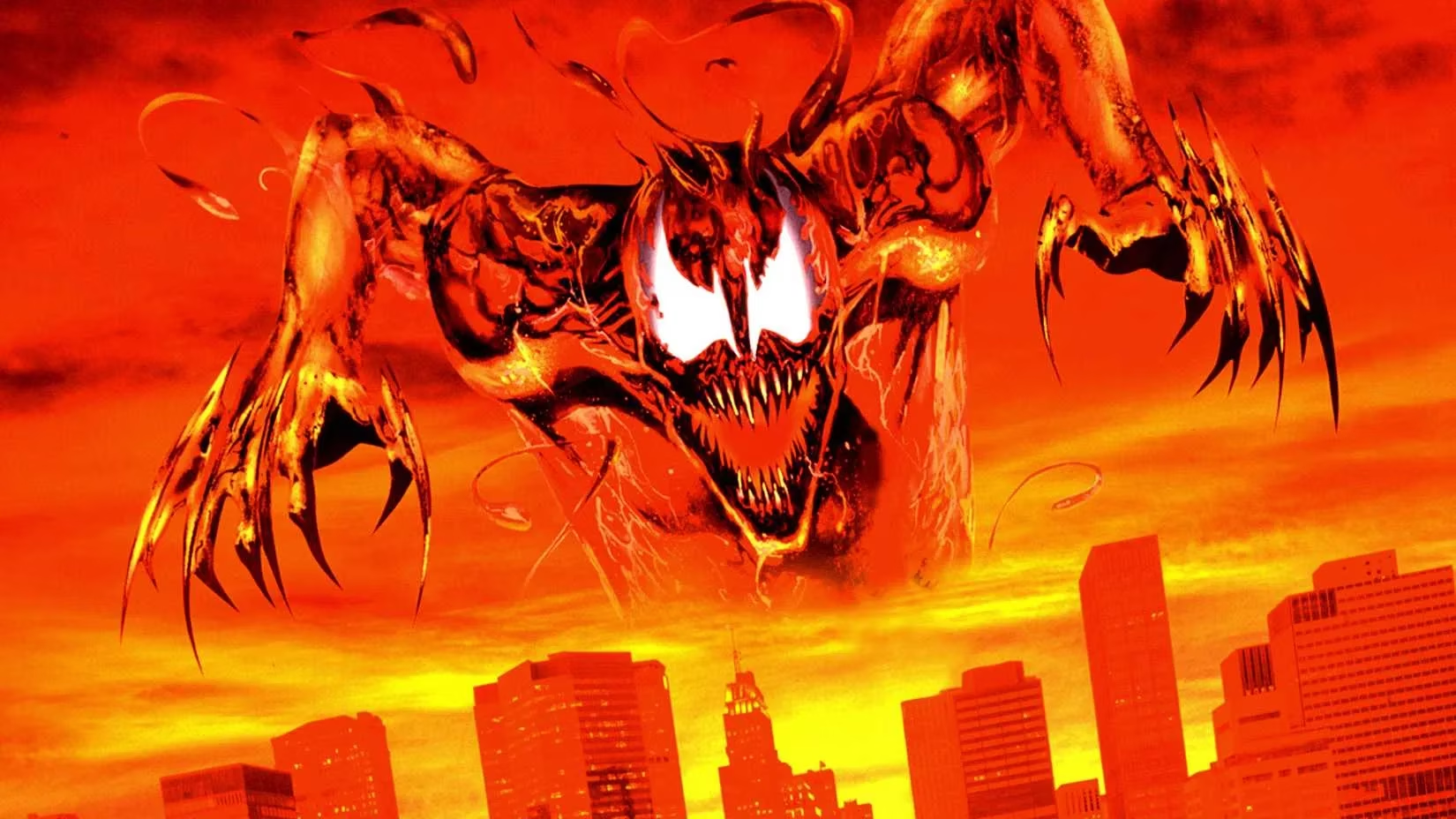
In the annals of crimson chaos, Maximum Carnage stands as a brutal opera where murder is not merely an act but a twisted philosophy. Cletus Kasady, a mind like a shattered prism casting only red light, escapes confinement to assemble a family of symbiotes and killers, unleashing a citywide massacre that stains the streets. This is no simple villain plot; it is an existential tide, forcing Spider-Man into an alliance as fragile as a spider's silk in a hurricane, joining with Venom, Black Cat, and others not out of camaraderie but sheer, desperate necessity. The narrative becomes a crucible for Peter's morality, as he clashes with allies over how to contain a chaos that delights in its own propagation. A proper adaptation would allow Carnage to be the uncontrollable force of nature he was meant to be, not a candle snuffed out before its flame can truly dance. He should be a relentless, psychic wildfire, pushing Spider-Man beyond the comforting binaries of heroism, forcing him to confront a violence that speaks only the language of the blade. Such a showdown would need to be visceral, a story that proves the Spider-Man mythos can bear the weight of an R-rated, emotionally exhausting epic where the hero's greatest battle is against the despair such mindless evil sows.
The Mirror's Labyrinth: The Clone Saga
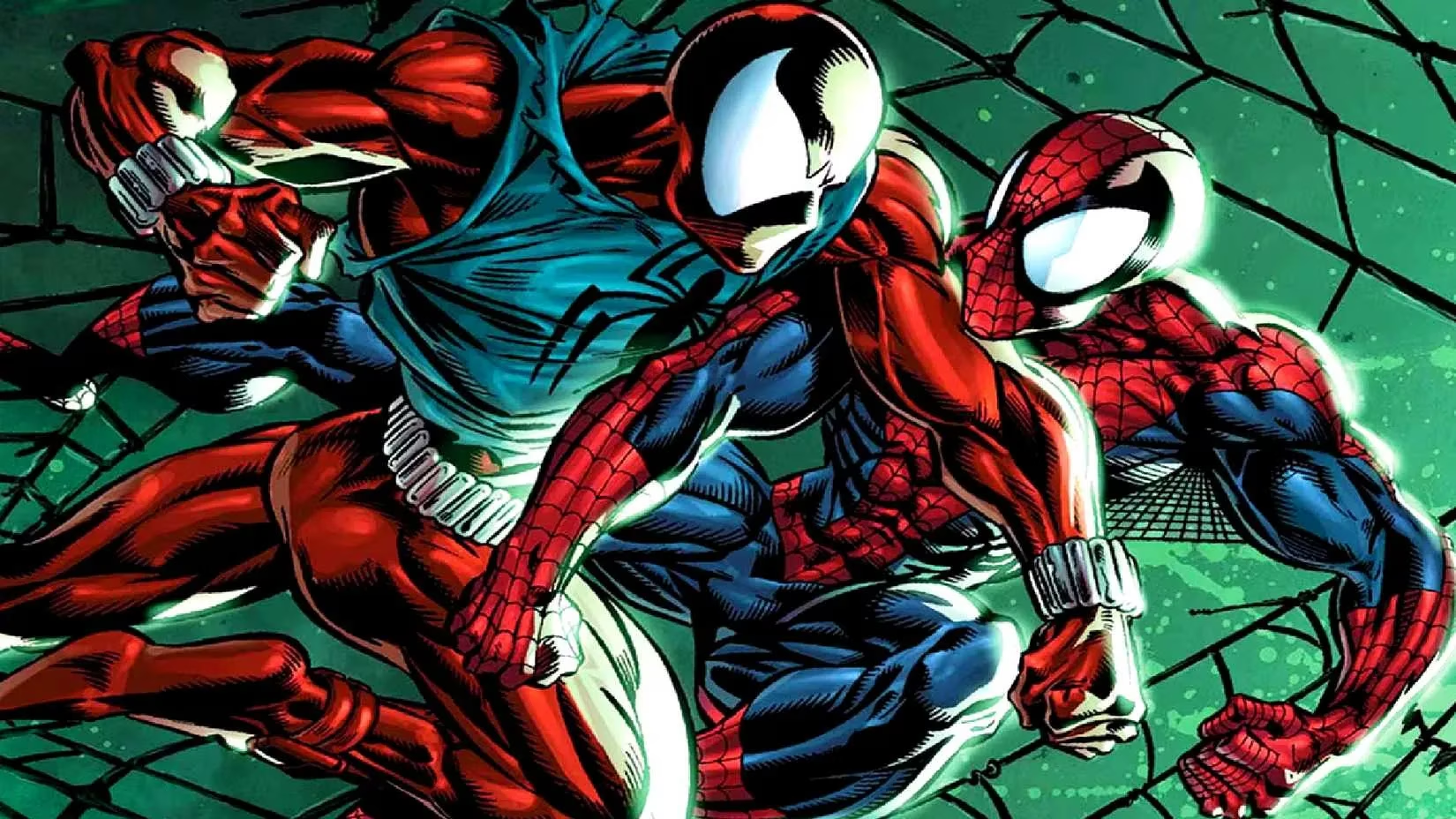
What if the man in the mask was not the original? The Clone Saga is a psychological hall of mirrors, built on the terrifying premise that Peter Parker's very identity might be a beautiful, heartbreaking forgery. When clones created by the Jackal resurface, Peter is confronted not by enemies, but by perfect genetic duplicates—Ben Reilly and Kaine—each believing themselves to be the true article. This saga is a tangled ball of quantum yarn, where every pull reveals another knot of doubt and retcon. While it became emblematic of 1990s narrative excess, its core idea is a potent seed. Marvel Studios, having already alchemized divisive stories like One More Day into gold, could refine this convoluted epic. With disciplined storytelling and a clear endpoint, the Clone Saga's exploration of identity could shine. It could transform from a publishing misstep into a cinematic meditation on self, asking: What defines a hero? Is it memory, genetics, or the choices made in the crucible of responsibility? In the MCU, this could be Peter's ultimate crisis, a battle where the foe is his own reflection, and victory might mean accepting he is one thread in a larger, more confusing tapestry.
The Curse of the Chrysalis: The Six-Arms Saga
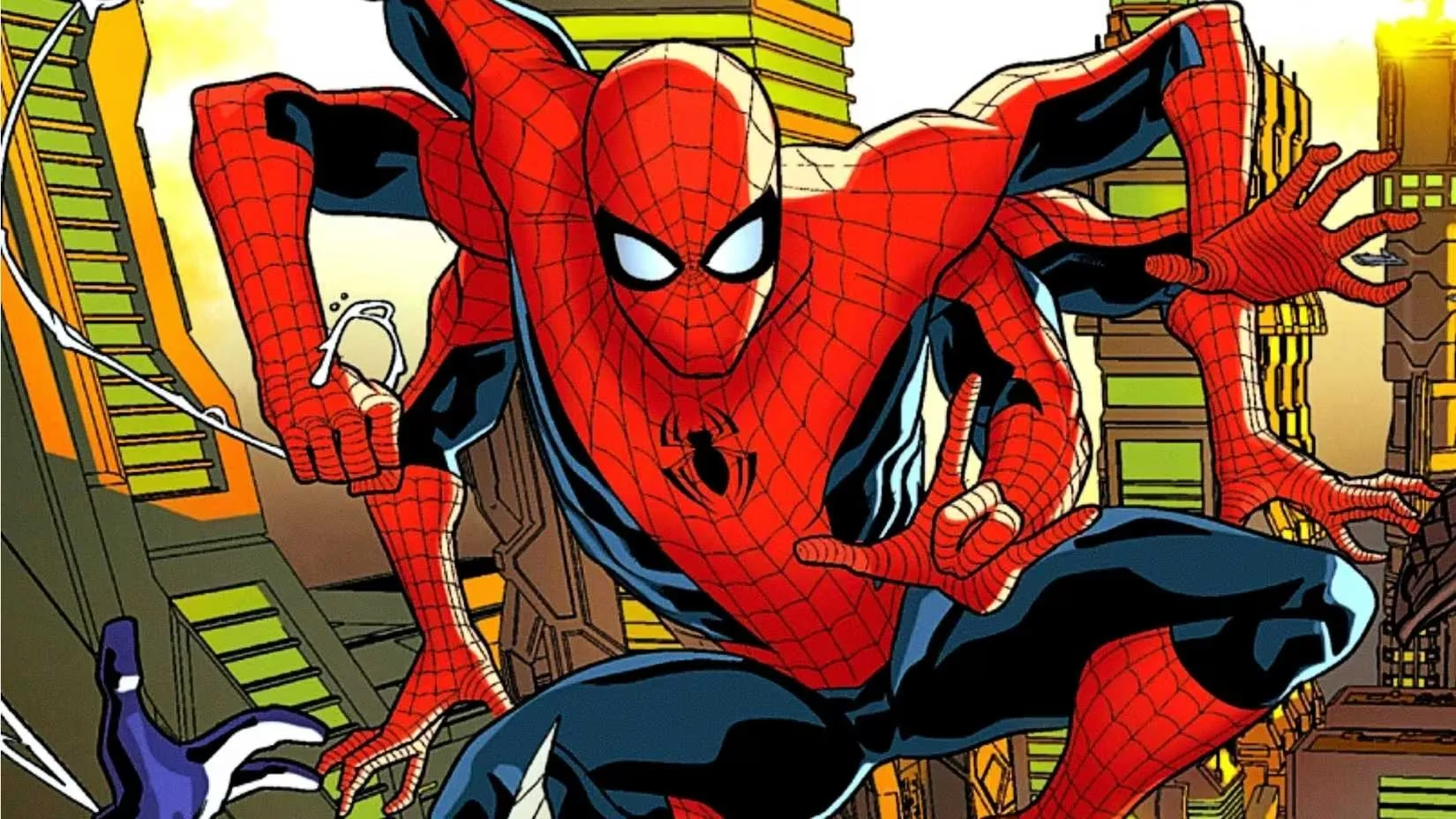
Heroism curdles into horror in the Six-Arms Saga, where Peter Parker's attempt to cure himself becomes a Faustian metamorphosis. In seeking to rid himself of his powers, a self-made serum backfires catastrophically, mutating him further into a Man-Spider—a creature growing four additional arms, his humanity receding like a tide. This is body horror of the purest kind, where the gift becomes a curse, and the hero becomes the monster he fights. Peter, now both hunter and hunted, battles not just villains but his own accelerating transformation, a slow-motion shipwreck of the self. This saga would allow a Spider-Man film to fully embrace a genre it has only flirted with, pushing past the creepy elegance of Raimi's visuals into raw, physical dread. It could also redeem tragic figures like Morbius and the Lizard, positioning them as dark reflections of Peter's possible fate. A Man-Spider film would be an unprecedented entry in the superhero canon: a story where the central terror is the hero's own body betraying him, crafting a nightmare from within the suit.
The Endless Marathon: The Gauntlet
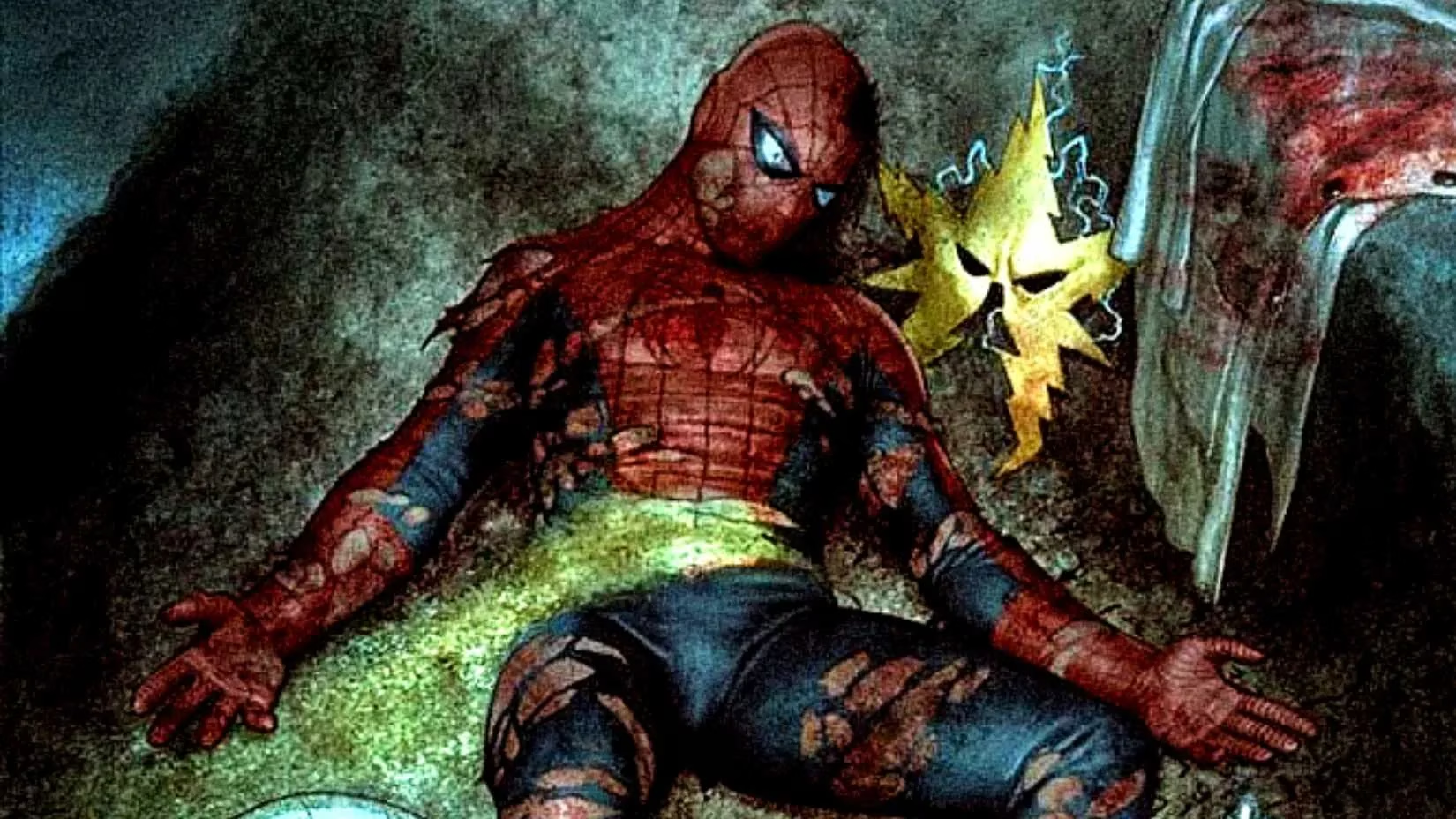
After the universe-shaking events of Avengers: Secret Wars, what better way to ground a hero than through an endurance test of pure, relentless conflict? The Gauntlet is precisely that: a modern storyline that is less a plotted narrative and more a relentless, psychological marathon. It pits Spider-Man against a parade of his classic enemies—Rhino, Electro, Sandman, Mysterio—each encounter escalating, each victory hard-won and leaving scars. Strikingly, despite his many appearances, Tom Holland's Spider-Man has never truly faced a rogues' gallery native to his own world. No Way Home offered a multiversal glimpse, but The Gauntlet would be his rightful trial. It would be the crucible that forges his legacy independently, without borrowed villains or mentors. This arc would cement him as a street-level hero whose resilience is his greatest power, surviving not a single apocalyptic threat, but the grinding, exhausting weight of being forever on call. It is the story of Spider-Man as the unyielding bedrock beneath a city that constantly threatens to crumble.
The Hunter's Shadow: Kraven's Last Hunt
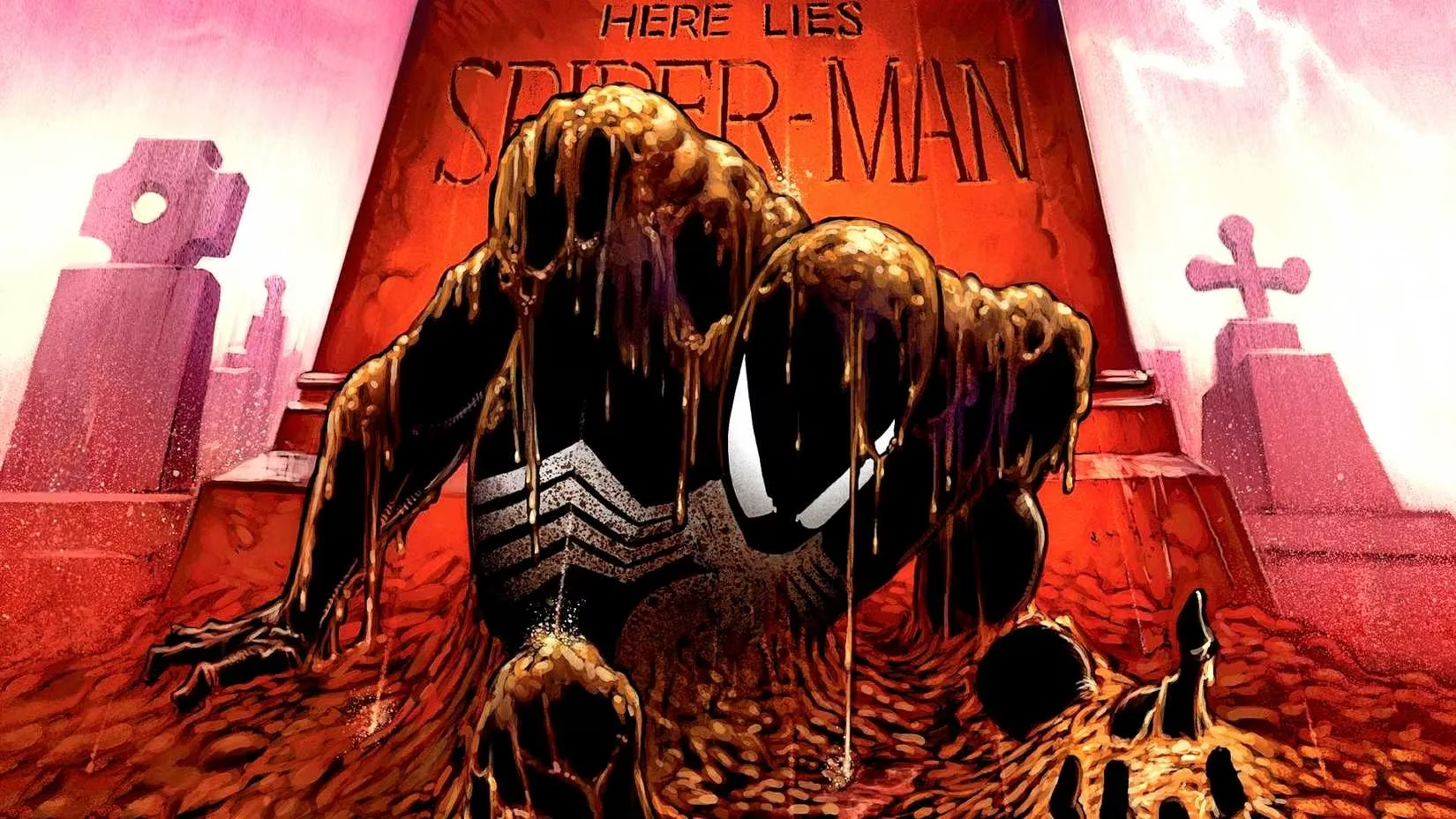
In the pantheon of Spider-Man stories, Kraven's Last Hunt is a stark, poetic masterpiece—a funeral dirge played on the strings of a web. Sergei Kravinoff, the ultimate hunter, achieves his life's goal: he defeats, and seemingly kills, Spider-Man. Burying Peter alive, Kraven dons the black suit to become a darker, more brutal vigilante, attempting to prove his philosophical superiority. The story is a profound psychological exploration, with Peter's struggle out of the grave serving as a literal and metaphorical rebirth. Kraven is arguably the most pressing villain yet to debut in a solo MCU Spider-Man film. His threat is intimate, grounded, and deeply personal; he does not seek to rule the city, but to conquer the spirit of one man. A faithful adaptation would allow the MCU to explore Spider-Man not as a triumphant hero, but as prey, stripped of all safety nets, relying solely on raw willpower. Its lasting influence places it among the definitive character studies in comics, proving Spider-Man can carry a mature, harrowing narrative. It is a story that deserves to be told not just with action, but with the solemn, haunting weight of a true last hunt.
These stories represent the uncharted territories of Spider-Man's soul. They are the darker reflections in the mask's lenses, the untold verses in the song of the hero. To adapt them would be to acknowledge that the heart of Spider-Man beats not just with responsibility, but with resilience in the face of existential dread, body horror, and psychological unraveling. They are the proof that the friendly neighborhood hero's greatest stories often lie in the deepest shadows, waiting for the light of the screen to find them.
Data referenced from Newzoo helps frame why darker, higher-stakes Spider-Man adaptations like Maximum Carnage or Kraven’s Last Hunt can be positioned like “event content” in games: audience appetite often follows clear tonal hooks, strong villain branding, and the promise of fresh genre overlap (horror, thriller, survival). Seen through that lens, storylines such as the Clone Saga and Six-Arms arc read like premium narrative expansions—identity crises and body-horror transformations that refresh a familiar hero with new emotional mechanics—while a Gauntlet-style rogues’ marathon mirrors the retention logic of escalating boss encounters that keep players (and viewers) invested through sustained, hard-won progression.