In DC Comics history, the most heavy-metal moment does not belong to Superman or Batman. It belongs to Wonder Woman. That argument sits at the center of Wonder Woman: Dead Earth, Daniel Warren Johnson's four-issue DC Black Label miniseries from 2020. The story imagines Diana as a battle-hardened Amazon warrior waking into a post-apocalyptic world ravaged by nuclear war, with her most recent memories missing. By 2026, the completed miniseries remains a standout example of how Black Label stories can push iconic characters into grim, mythic territory without losing their core identities.
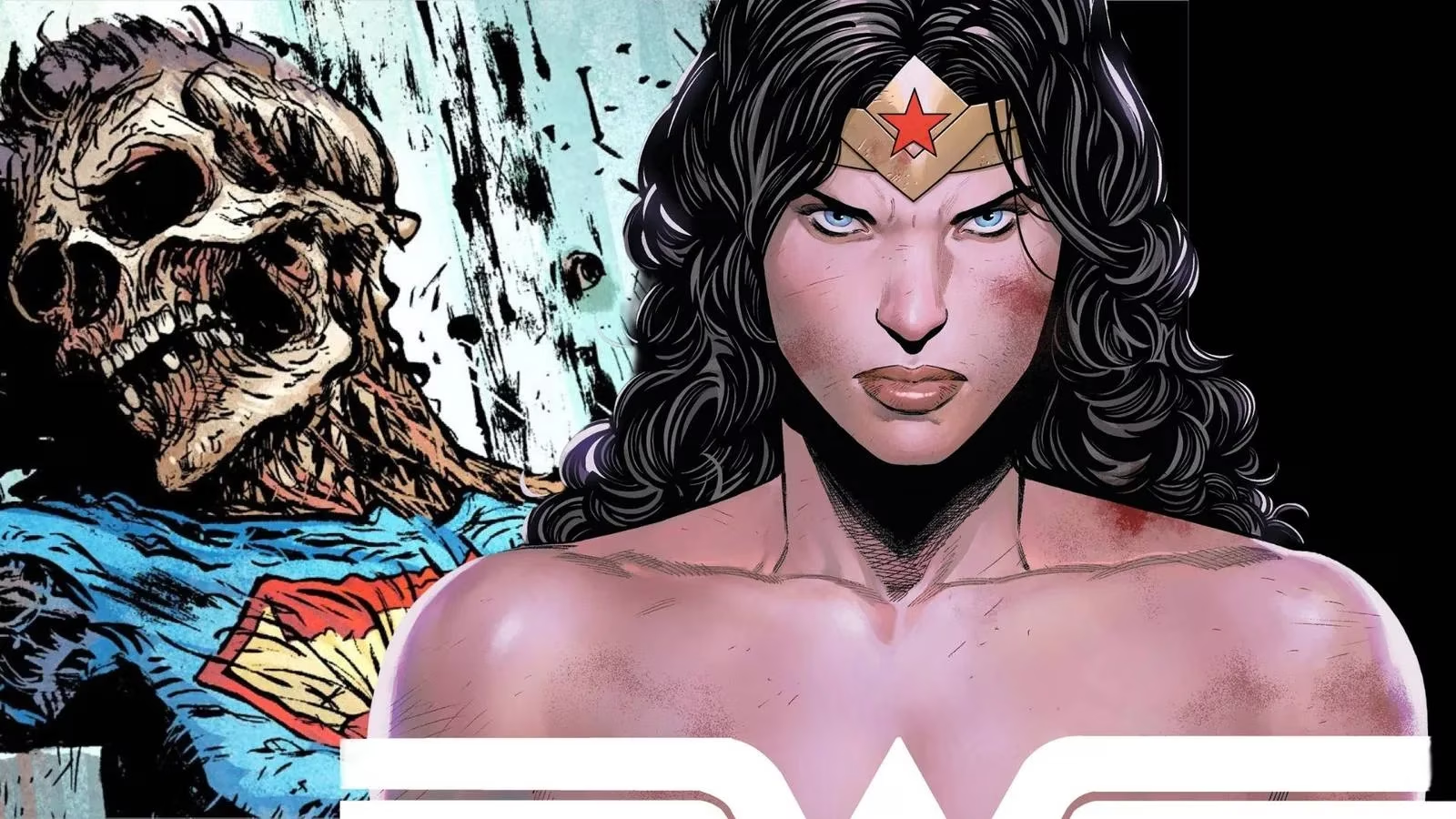
The premise is simple and brutal. Diana does not begin the story as a hero who understands the catastrophe around her. She begins as a survivor with gaps in her memory, forced to piece together what happened to the world and to herself. Her search leads her to the Fortress of Solitude, where she hopes to learn where Superman was when the world needed him most. What she finds there is not reassurance. It is a dark truth that reframes the entire conflict.
A Silent Apocalypse and a Missing Past
Inside the Fortress of Solitude, Diana discovers Clark Kent's skeletal corpse. The image alone would be enough to mark the story as one of DC's harshest alternate-future tales, but Johnson does not stop at shock value. An encounter with one of Superman's robotic attendants jogs Diana's memory, revealing the startling truth that a battle between her and Clark caused the devastation that nearly wiped out humanity. The revelation is horrifying because it turns Wonder Woman into both investigator and cause. She is not simply solving the mystery of a ruined world; she is uncovering her own role in its destruction.
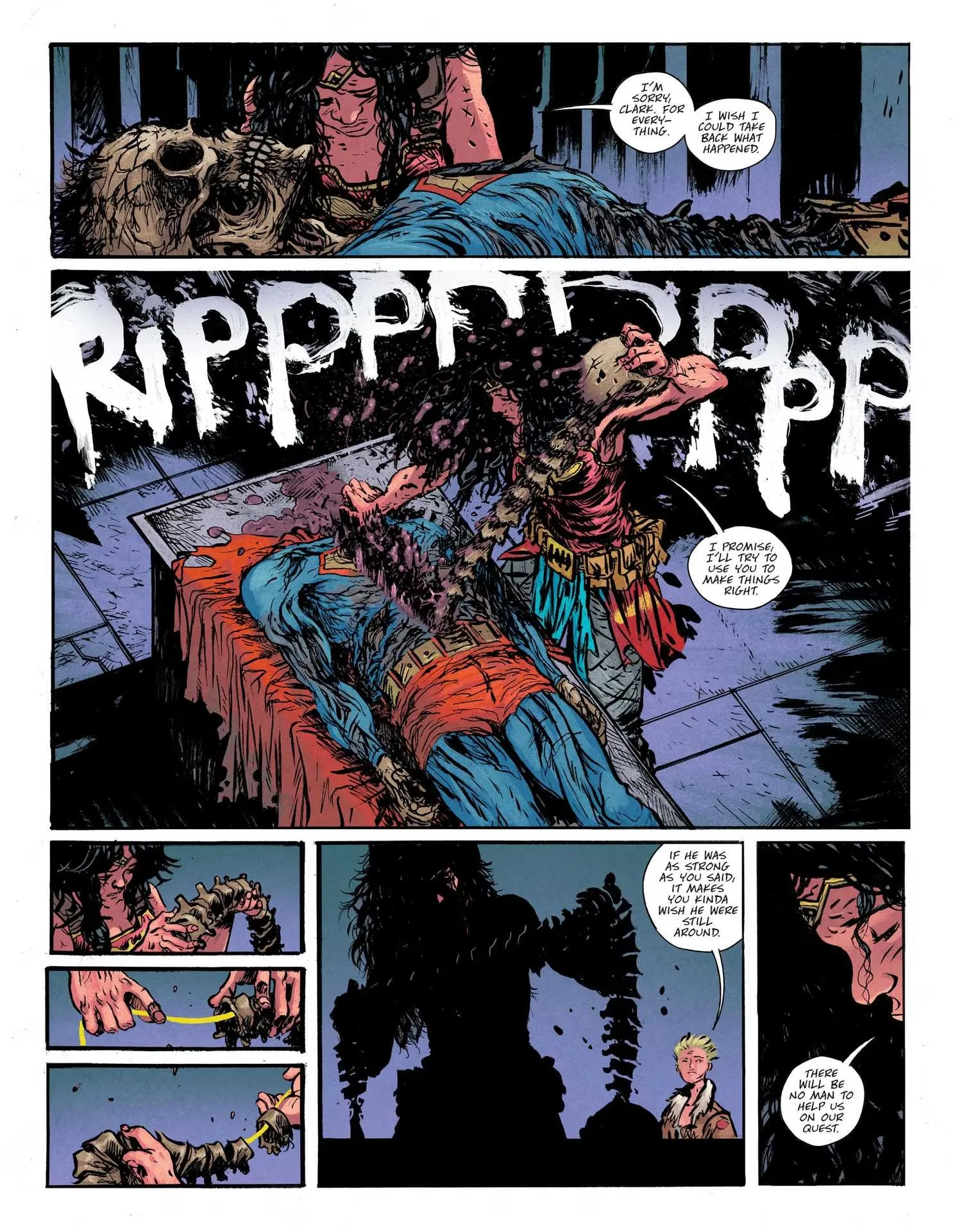
The Fortress also clarifies the physical cost of that battle. Diana learns that she was the one who killed Superman, and that she sustained grievous injuries herself. Those wounds explain her coma and her missing memories. The story does not allow her to hide behind ignorance. Once the truth returns, she must carry it. She pauses to grieve for the world and for Clark, but she also understands that grief cannot undo the past. Her resolution is not to escape guilt but to move forward, save the remnants of humanity, and prevent total extinction.
The Truth Inside the Fortress
That resolve leads to the moment that defines the miniseries. As part of her plan, Diana crafts a new weapon partially fashioned from Superman's spine and skull. She rips the bones from his corpse and strings them onto her Lasso of Truth, creating a brutal instrument that combines Wonder Woman's signature weapon with the grisly remains of the Man of Steel. The result is one of the most metal weapons in DC Comics history. It is shocking, mournful, and strangely fitting: a tool of truth built from the body of the hero who once represented hope.
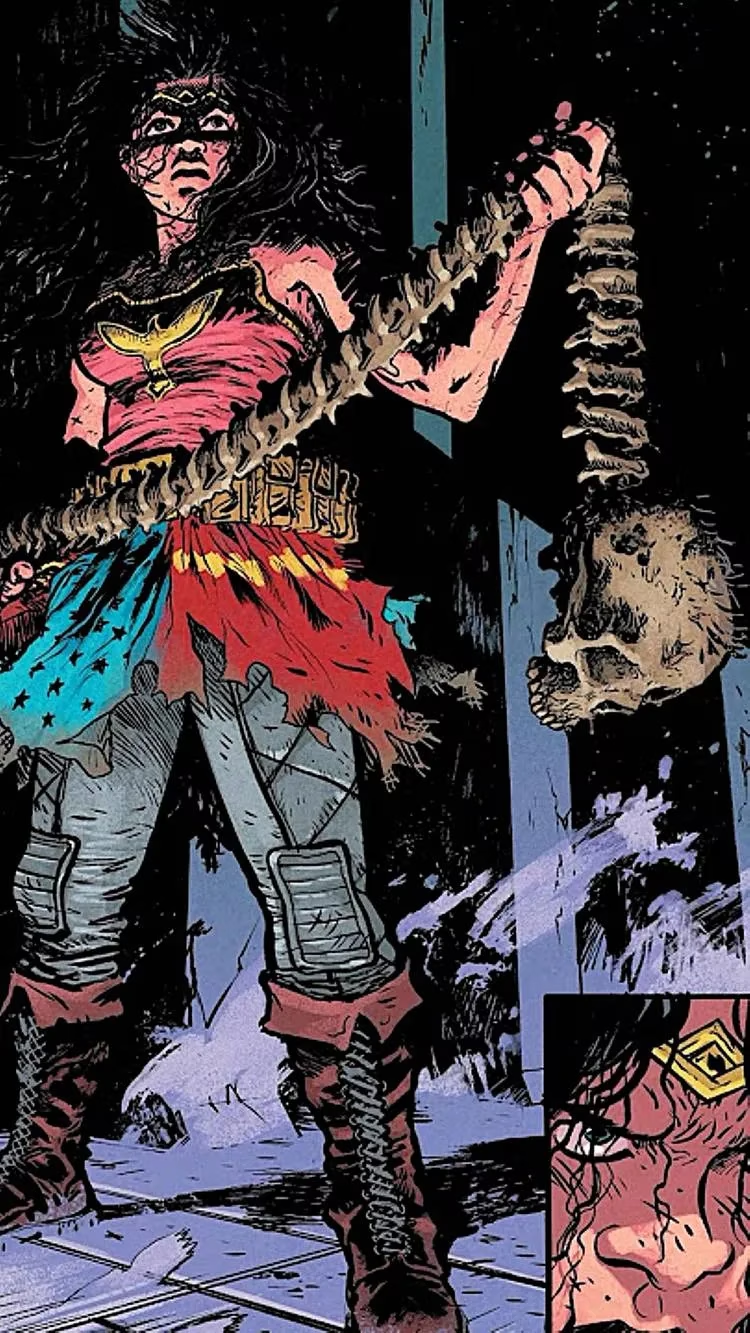
The weapon works on multiple levels. On a surface level, it is a visceral image that signals how far this version of Diana has traveled from standard superhero conventions. On a deeper level, it turns Superman's remains into a reminder of consequence. Diana does not use the bones as a trophy. She uses them as part of a desperate mission to salvage what remains of humanity. The Lasso of Truth already carries symbolic weight, and adding Superman's spine and skull makes that symbolism darker and more personal. Every use of the weapon would recall the battle, the loss, and the responsibility she now accepts.
Why the Moment Endures
The third issue is the chapter where this revelation and weapon-building sequence hit hardest. In 2026, the completed four-issue series can be read as a whole, and that context makes the moment even more effective. Wonder Woman: Dead Earth is not merely a shock-driven Elseworlds story. It is a study of guilt, survival, and the burden of continuing after catastrophe. Diana's origin as an Amazon warrior matters here. She was forged for battle from birth, while Superman grew up as a wholesome farm boy and Batman as a pampered rich kid. That contrast gives the story its edge. When Diana takes up Clark's bones, the act feels less like desecration and more like a hard-earned, terrible necessity.
| Element | Effect |
|---|---|
| 🔥 Post-apocalyptic setting | Strips away familiar superhero safety nets |
| 🦴 Superman's remains | Turns grief into a tangible, disturbing weapon |
| 🪢 The Lasso of Truth | Adds moral weight to a brutal object |
| 💔 Diana's missing memories | Makes revelation and guilt central to the plot |
Key reasons the sequence remains memorable:
-
It gives Wonder Woman a uniquely harsh victory condition.
-
It refuses to let Superman's death be merely decorative.
-
It transforms the Lasso of Truth into an object of mourning and resolve.
-
It keeps Diana active, determined, and morally accountable rather than passive.
Wonder Woman: Dead Earth earns its reputation because it trusts its central character with uncomfortable truths. Diana wakes into ruin, learns that she helped cause it, and chooses to fight for the survivors anyway. The weapon made from Superman's spine and skull is the story's most unforgettable image, but it is not empty spectacle. It is a symbol of a hero who accepts the past, carries its weight, and keeps moving toward whatever hope remains. That is why the most metal moment in DC Comics history belongs to Wonder Woman.